• Research
  • Emissary
  • About
  • Experts
Carnegie Global logoCarnegie lettermark logo
DemocracyIran
  • Donate
{
  "authors": [
    "Ikram Ben Said"
  ],
  "type": "commentary",
  "blog": "Sada",
  "centerAffiliationAll": "dc",
  "centers": [
    "Carnegie Endowment for International Peace"
  ],
  "collections": [],
  "englishNewsletterAll": "menaTransitions",
  "nonEnglishNewsletterAll": "",
  "primaryCenter": "Carnegie Endowment for International Peace",
  "programAffiliation": "MEP",
  "programs": [
    "Middle East"
  ],
  "projects": [],
  "regions": [
    "Tunisia",
    "North Africa"
  ],
  "topics": []
}
Attribution logo

Source: Getty

Commentary
Sada

Women and Democracy Under Threat in Tunisia

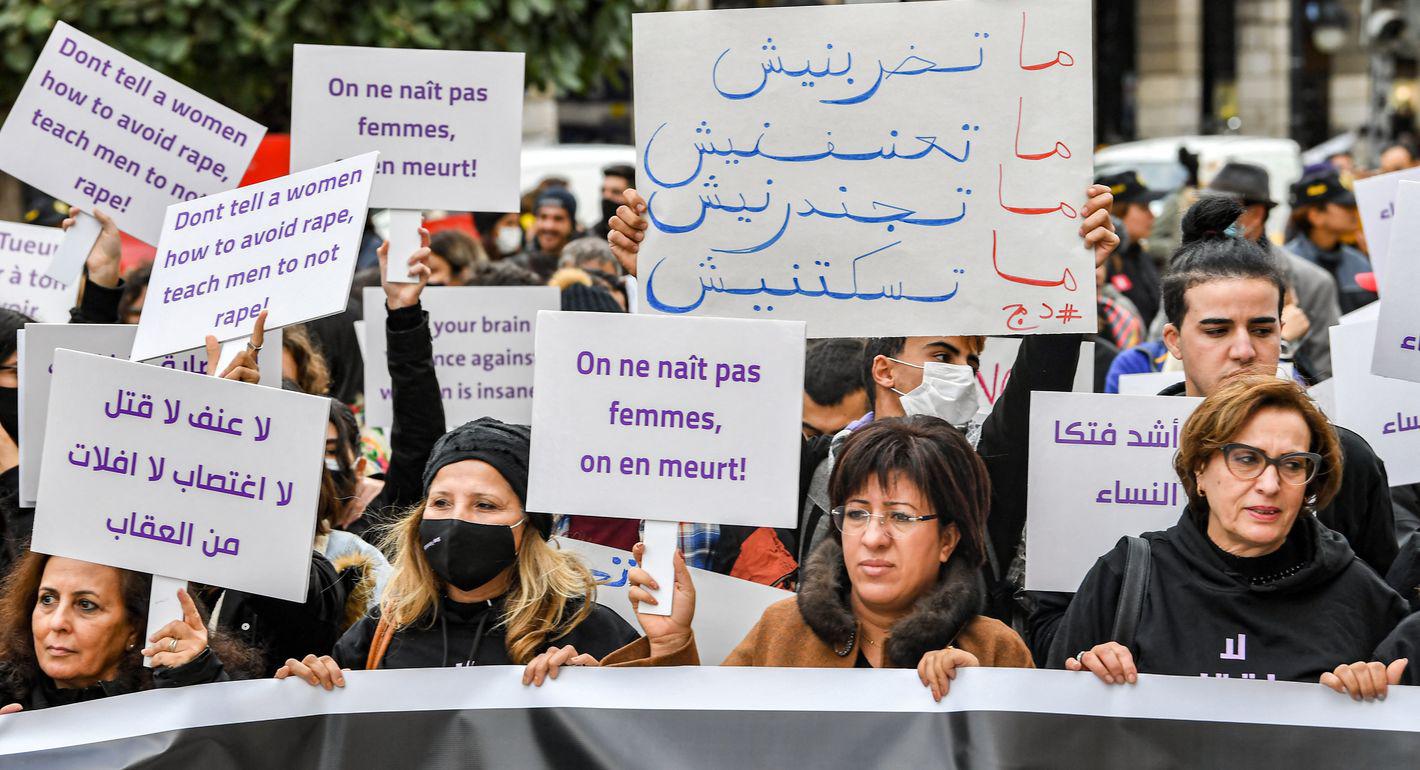
Tunisia has witnessed a disturbing rise in online misogyny and disinformation since President Kais Saied’s July 2021 coup.

Link Copied
By Ikram Ben Said
Published on Oct 19, 2023
Sada

Blog

Sada

Sada is an online journal rooted in Carnegie’s Middle East Program that seeks to foster and enrich debate about key political, economic, and social issues in the Arab world and provides a venue for new and established voices to deliver reflective analysis on these issues.

Learn More
Program mobile hero image

Program

Middle East

The Middle East Program in Washington combines in-depth regional knowledge with incisive comparative analysis to provide deeply informed recommendations. With expertise in the Gulf, North Africa, Iran, and Israel/Palestine, we examine crosscutting themes of political, economic, and social change in both English and Arabic.

Learn More

Bochra Bel Haj Hamida, a lawyer and former Member of the 2014 Tunisian Parliament, is a feminist icon who has stood up for women’s liberation and democratic values for over four decades. Most recently, she served as the head of the Committee on Individual Freedoms and Equality (COLIBE), where she worked to enshrine gender equality in Tunisian law. In reaction to these efforts, as she noted a 2018 interview, she faced online death threats and disinformation, with new posts appearing “almost every ten minutes.” 

As a friend of Bochra, it was shocking to see these posts—orchestrated by her opponents—which claimed that she was working to dismantle Islam in service of a foreign agenda. Sadly, Bochra is far from the only Tunisian feminist activist subject to online harassment in recent years: according to a July 2023 study by #ShePersisted, digital platforms that once played a role in promoting equality and democracy in Tunisia have now become hubs for disinformation and misogyny. Facebook, Twitter, and other social media are being abused to target and silence feminist activists, especially vocal opponents of President Kais Saied’s increasingly autocratic rule.

A study conducted by Aswat Nissa, the Tunisian feminist organization I founded in 2011, reveals a significant escalation of such incidents since July 25th, 2021, when Saied ousted the government and froze the parliament. Women activists who objected to Saied’s interpretation of Article 80 of the constitution—which he invoked to launch the disguised coup—have had their private lives exposed online and endured slut-shaming, objectification, and baseless accusations of betraying Tunisia.

Crucially, the Tunisian government has enabled this kind of online harassment, and the president has personally attacked female activists and public figures. In June 2022, for example, Saied boosted an online defamation campaign against a female judge by accusing her of adultery—part of a wider crackdown on judicial independence. Dictatorships strategically undermine women's rights as a deliberate tactic to erode the foundations of democracy. By stifling women’s political participation and perpetuating gender-based discrimination, they aim to push women to disengage from politics altogether or resort to self-censorship. 

Instead of safeguarding digital rights and promoting inclusivity, the Tunisian government has taken a troubling turn, rolling back women's rights and undoing decades of progress. And rather that fighting against perpetrators of gendered disinformation on social media, Saied recently issued a decree to combat online “fake news”. Human rights groups have argued that the move criminalizes free speech, and the law has already been used to suppress political opposition and silence the remaining voices of dissent.

In our digital age, the dissemination of politically harmful and sexist content should not go unchecked. Social media platforms, especially Meta, must be held accountable when it comes to content moderation in Arabic. Equally vital is the state’s role to ensure the safety of all citizens, by establishing and enforcing robust cybersecurity regulations to help protect individuals from cyber threats, safeguard sensitive data, and promote a more secure online environment. The government must also allocate the required resources to enforce Law 58, which aims to protect women from sexual harassment and all forms of violence, but has not been fully implemented since it passed in 2017.

By targeting a public figure like Bochra Bel Haj Hamida, patriarchy tries to strike fear into our hearts and keep us all in check. This past May, the government escalated its attacks on Bochra by including her, along with other Tunisian dissidents, in a criminal investigation on baseless charges of conspiracy. Yet, Saied and his supporters underestimate the strength and determination of the many Tunisian women who stand on Bochra’s shoulders and continue to express their political opinions loudly and clearly, both online and in the streets.
 
Ikram Ben Said is a Tunisian feminist activist. She is the founder of Aswat Nisaa (Women's Voices) a leading Tunisian feminist organization that advances women's political participation and advocates for feminist public policies.

About the Author

Ikram Ben Said

Ikram Ben Said
TunisiaNorth Africa

Carnegie does not take institutional positions on public policy issues; the views represented herein are those of the author(s) and do not necessarily reflect the views of Carnegie, its staff, or its trustees.

More Work from Sada

  • Commentary
    Sada
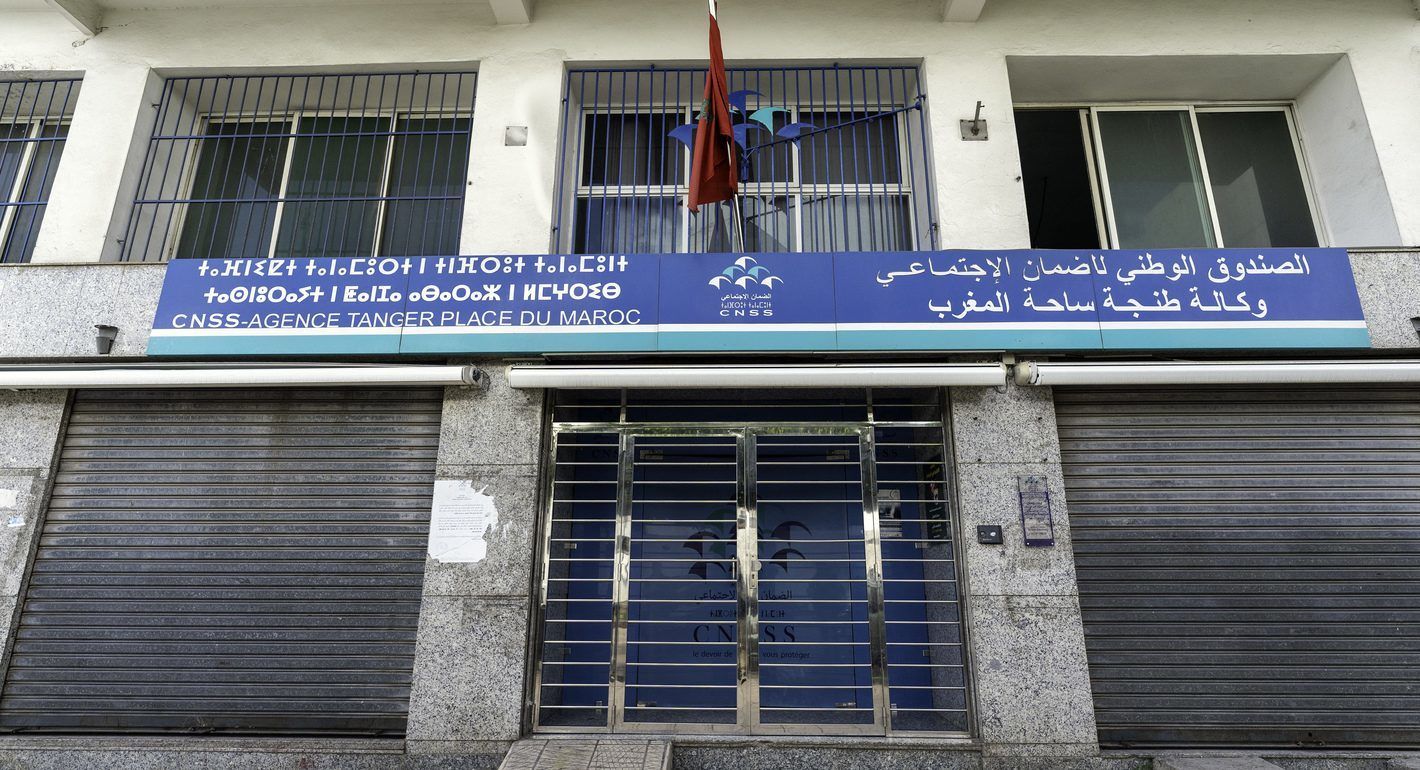
    The Political Economy of Social Data: Opportunities and Risks of Digitizing Morocco’s Social Targeting System

    While Morocco’s shift to a digitized social targeting system improves efficiency and coordination in social programs, it also poses risks of exclusion and reinforces austerity policies. The new system uses algorithms based on socioeconomic data to determine eligibility for benefits like cash transfers and health insurance. However, due to technical flaws, digital inequality, and rigid criteria, many vulnerable families are unfairly excluded.

      Abderrafie Zaanoun

  • Commentary
    Sada
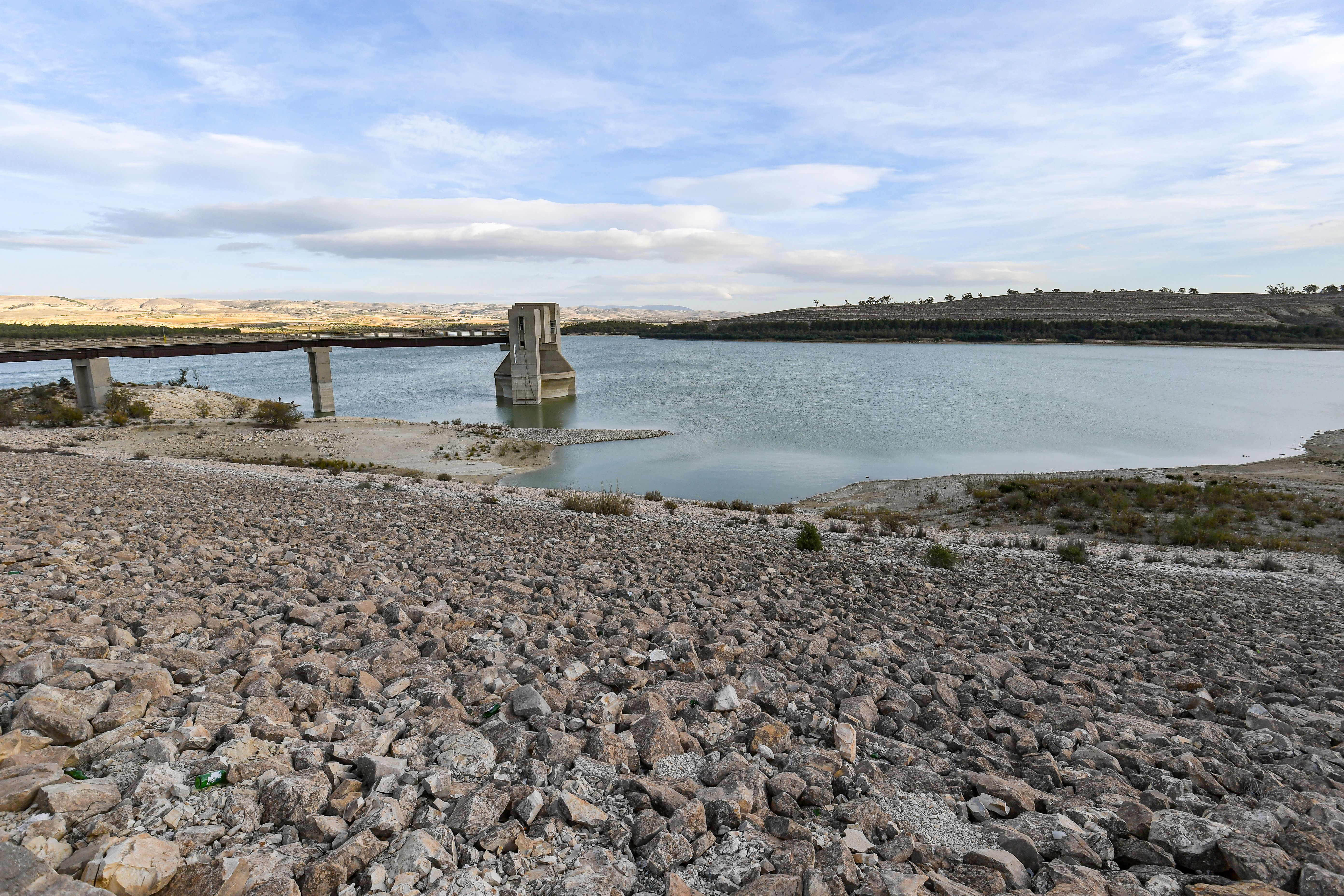
    Securing Tunisia's Constitutional Right to Water: Policy Solutions

    Tunisia is facing a worsening water crisis characterized by widespread protests over access to potable water, particularly in rural areas with underdeveloped supply networks. This situation is exacerbated by climate change, outdated agricultural policies, and industrial water consumption, necessitating comprehensive policy reforms to secure Tunisians’ constitutional right to water and ensure equitable access across the country.

      Noura Omar

  • Commentary
    Sada
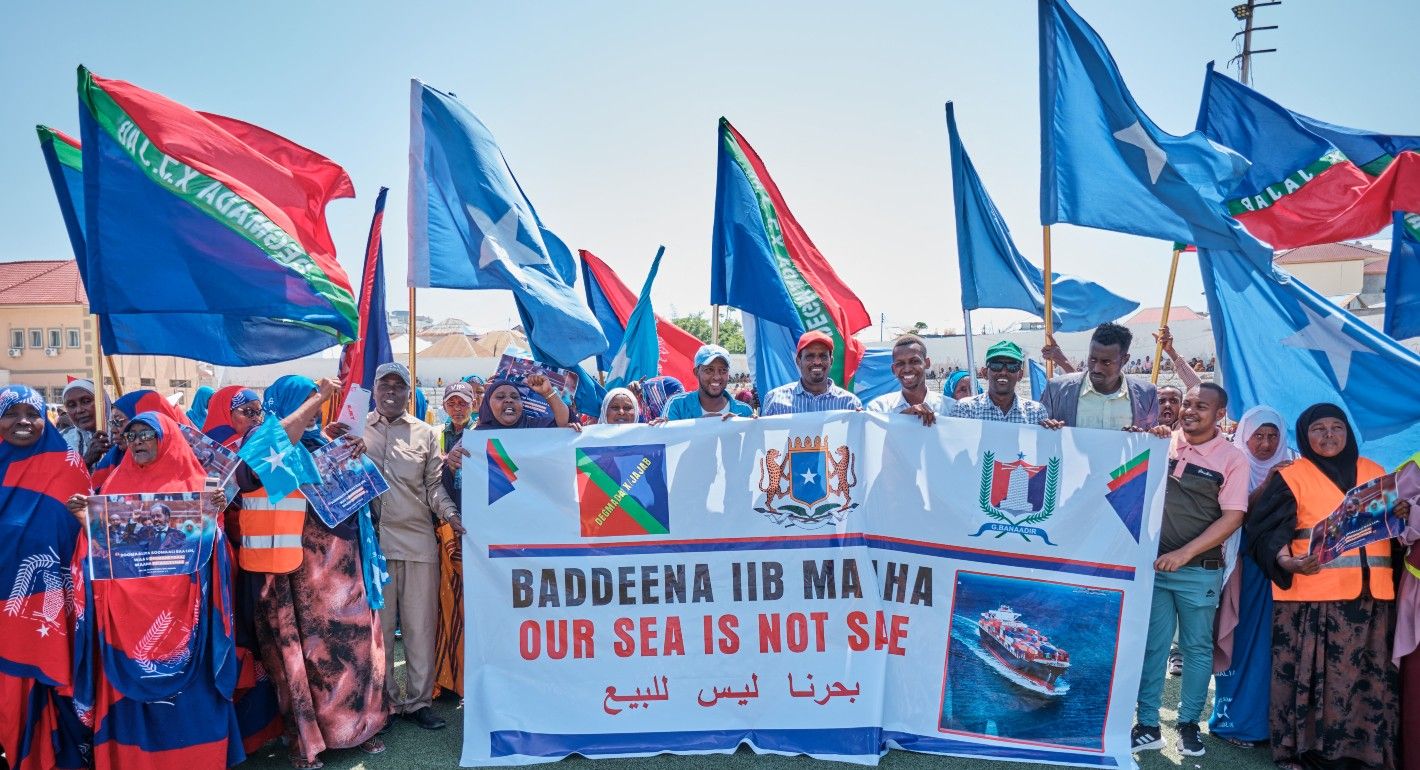
    Somalia’s Strategic Counterbalance to Ethiopian Influence in the Horn of Africa

    As hegemonic Ethiopian ambitions threaten stability in the Horn of Africa, Somalia is building strategic alliances regionally and internationally to counter Ethiopia’s growing political and military influence.

      Hisham Qadri Ahmed

  • Commentary
    Sada
    Morocco’s New Restrictions on Civil Society: A Setback for Anti-Corruption Efforts

    The Moroccan government’s decision to bar civil society from filing public actions in cases of public fund and property offenses has stirred debate, with critics warning it sidelines crucial players in the fight against corruption.

      Hasan Al-Ashraf

  • Commentary
    Sada
    Morocco’s Atlantic Initiative and Potential Challenges to Regional Leadership

    Morocco's Atlantic Initiative seeks to transform the geostrategic landscape of the Sahel and Sub-Saharan regions amid a wave of coups fueled by economic and social decline.

      Abderrafie Zaanoun

Get more news and analysis from
Carnegie Endowment for International Peace
Carnegie global logo, stacked
1779 Massachusetts Avenue NWWashington, DC, 20036-2103Phone: 202 483 7600Fax: 202 483 1840
  • Research
  • Emissary
  • About
  • Experts
  • Donate
  • Programs
  • Events
  • Blogs
  • Podcasts
  • Contact
  • Annual Reports
  • Careers
  • Privacy
  • For Media
  • Government Resources
Get more news and analysis from
Carnegie Endowment for International Peace
© 2026 Carnegie Endowment for International Peace. All rights reserved.