

{
  "authors": [
    "Soukina Nait El-Rayes"
  ],
  "type": "commentary",
  "blog": "Sada",
  "centerAffiliationAll": "dc",
  "centers": [
    "Carnegie Endowment for International Peace"
  ],
  "collections": [],
  "englishNewsletterAll": "menaTransitions",
  "nonEnglishNewsletterAll": "",
  "primaryCenter": "Carnegie Endowment for International Peace",
  "programAffiliation": "MEP",
  "programs": [
    "Middle East"
  ],
  "projects": [],
  "regions": [],
  "topics": []
}
Source: Getty
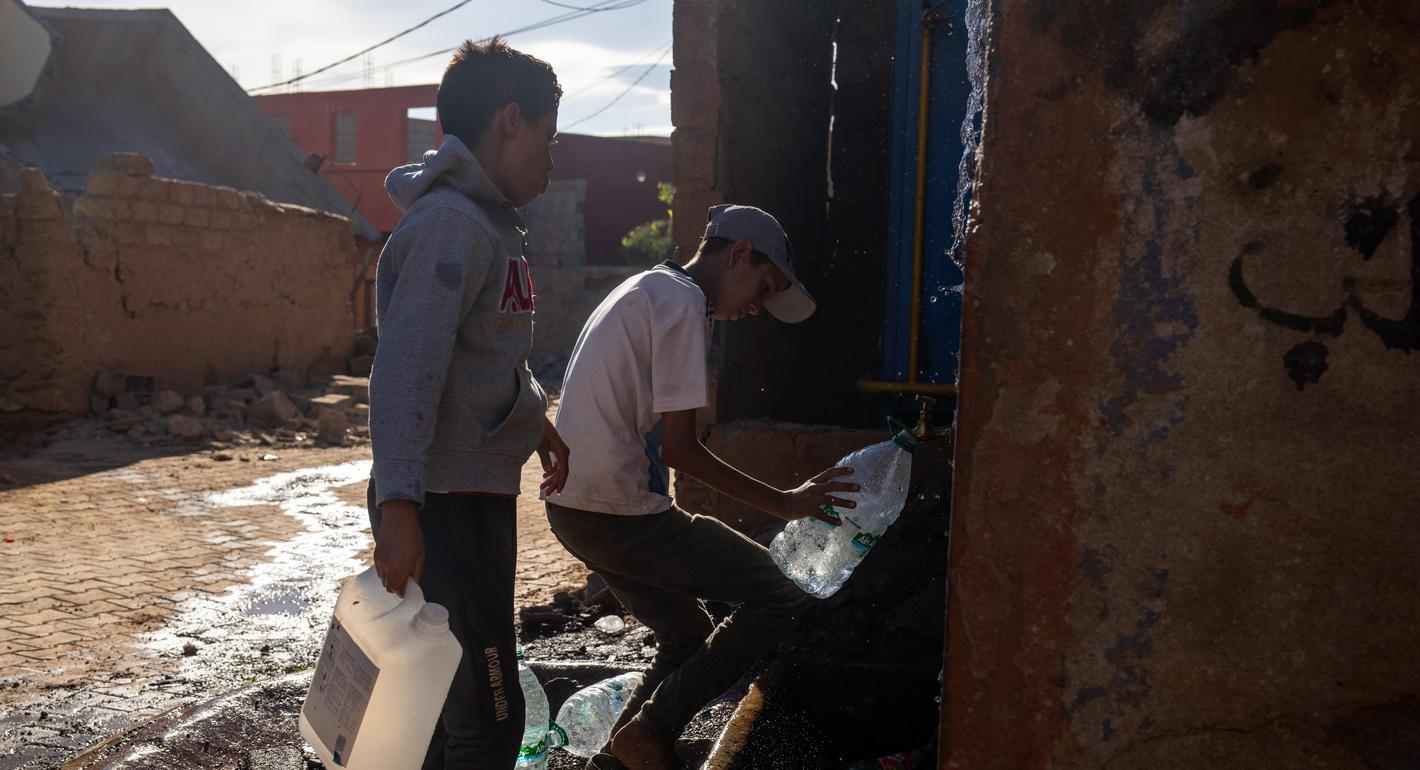
Morocco's Looming Thirst Crisis
Citizens fear a water scarcity catastrophe, especially after officials recently acknowledged the seriousness of the problem.
According to Morocco’s General Directorate of Water, within the Ministry of Equipment and Water, the kingdom’s average dam filling rate across its nine basins has fallen to 23.17 percent—a drop of nearly eight percent, or over 1.3 billion cubic meters of water, compared to the same period last year.
Official data reveals a deficit in several water basins, with significant disparities between dams in the northern and southern regions of the Kingdom. The Oum Er-Rbia basin reported the lowest filling rate at 8 percent, followed by the Souss Massa basin at 14 percent and the Draa Oued Noun basin at 15 percent. Conversely, the highest percentages were recorded in the Loukos basin at 56 percent, Sebou at 49 percent, and Tensift at 40 percent.
Several factors influence the country's water scarcity. Average rainfall has fallen to its lowest levels since the 1970s, with a mere 21 millimeters over the past three months. This coincided with relentless heat waves that increase evaporation and, on top of mud accumulation in dams, result in a loss of tens of millions of cubic meters of water each year. Additionally, human practices and policies—including the cultivation of water-intensive crops, such as watermelons and avocados, as well as wasteful behaviors—further exacerbate the strain on water resources.
Alarm Bells Ringing
Recently, the Moroccan government has sounded the alarm about the water crisis. In December, Nizar Baraka, the Minister of Equipment and Water, emphasized the gravity of the situation when he noted that the country faces an unprecedented level of drought. Baraka highlighted that these conditions have persisted for five years, with the past three months indicating the likelihood of another dry year ahead.
Similarly, on December 26, 2023, the Ministry of Interior sent a letter to governors, employees, and local authorities, warning them about the potential consequences of dwindling rainfall and the critically low dam levels, and urging them to implement stringent measures to ration the use natural water resources. As a part these measures, the ministry suggested raising public awareness of the severity of the water situation, increasing efforts to detect and repair leaks in production and distribution pipelines, and taking steps to combat various forms of fraud in water resource exploitation, such as unauthorized connections and misuse of water pipes.
Furthermore, the ministry has imposed restrictions on watering public parks and green spaces as well as cleaning roads and public areas. It also stipulated that public and private swimming pools may only be filled once a year.
Limited Efficacy
The actions taken thus far have shown limited efficacy, and the water crisis continues to escalate to alarming levels. To address this crisis, water recycling and treatment technologies should be incorporated into agriculture, industry, and green space maintenance. Additionally, farmers must adopt modern irrigation techniques and be encouraged to embrace sustainable practices that can help them rationalize water usage.
Furthermore, there is a need to invest in scientific research on seawater desalination technologies and innovative irrigation systems. Accelerating seawater desalination projects is essential to ensure access to safe drinking water for coastal communities.
Addressing the water crisis in Morocco necessitates a collective effort to raise awareness about the importance of responsible water consumption practices. This will entail cooperation among the government, citizens, associations, and all other stakeholders to ensure sustainable water usage and management practices—and to meet the needs of all Moroccans.
About the Author
Soukina Nait El-Rayes
Carnegie does not take institutional positions on public policy issues; the views represented herein are those of the author(s) and do not necessarily reflect the views of Carnegie, its staff, or its trustees.