In August 2025, the Lebanese government launched one of its most sensitive initiatives since the end of the civil war in 1990: tasking the Lebanese Army with an operational plan to collect weapons from Palestinian refugee camps in Lebanon.In August 2025, the Lebanese government launched one of its most sensitive initiatives since the end of the civil war in 1990: tasking the Lebanese Army with an operational plan to collect weapons from Palestinian refugee camps in Lebanon.
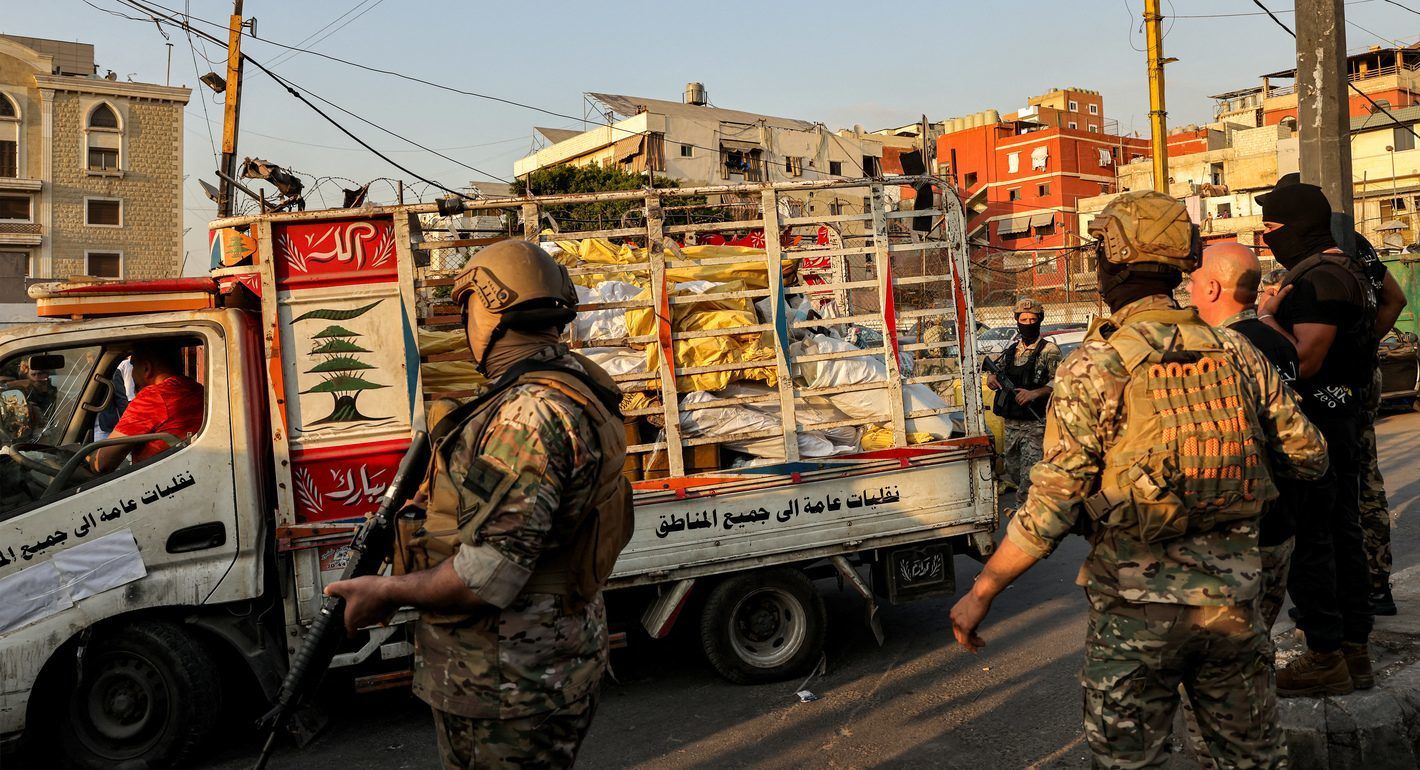
The Lebanese Cabinet’s decision was not merely declarative; it was immediately translated into action across several camps in Beirut—such as Burj al-Barajneh and Shatila—and extended to Tripoli, where the army began supervising and organizing handover mechanisms in coordination with Palestinian factions and under strict security oversight.
This unprecedented move reflects the clear desire of the Lebanese state to shift from rhetoric to implementation, and to revive the long-suspended principle of the “monopoly of arms in the hands of the state”. The choice to begin with the Palestinian camps was deliberate as they represent the least “politically costly” option compared to thornier issues such as Hezbollah’s arsenal. Yet, they still provide a decisive test of the state’s ability to assert authority in a politically, socially, and security-laden environment.
In Beirut, the implementation was symbolic but highly significant. The operation included direct negotiations with Fatah and other factions, with arrangements to collect light and medium weapons in exchange for promises of eased security restrictions and improved living conditions.
In Tripoli, however, the measures proceeded more cautiously because the camps there are tied to fragile social structures and lie in proximity to impoverished Lebanese neighborhoods, which heightens the risk of security frictions. Still, the inclusion of these Northern camps was essential to the success of the disarmament plan as they provided a crucial test of the state’s ability to navigate the issue across varied contexts and levels of complexity.
This fusion of a clear political mandate with a coordinated military plan places Lebanon at a genuine crossroads of sovereignty. For the first time, the state has paired its rhetoric with a timeline and a public implementation strategy, shifting the challenge from upholding the “principle” to proving the “capacity to enforce it.” The ongoing experiment in Beirut and Tripoli will serve as a benchmark for subsequent stages—whether in Sidon, where the intractable Ain al-Hilweh camp looms large, or in the Bekaa and the North, where security concerns overlap with domestic political calculations.
The success of this initiative will hinge on the state’s ability to navigate three central obstacles. First, it must secure a clear and unified political umbrella that shields the army from the risk of backtracking or becoming entangled in internal disputes and rivalries.The success of this initiative will hinge on the state’s ability to navigate three central obstacles.
Second, the process must be anchored in a tangible socio-economic dimension, ensuring that the handover of weapons serves the genuine interests of camp residents rather than appearing as a unilateral concession.
Third, Lebanon must consolidate the supportive regional and international framework—most notably the commitments of the Quintet Committee—ensuring that these commitments evolve beyond declarative statements into concrete instruments of pressure, channels of funding, and credible guarantees for those relinquishing arms.
Enforcing The August 2025 Decision: The Lebanese Army’s Mandate, and the Boundaries of State Power:
In its sessions of August 5 and 7, 2025, the Lebanese Cabinet reaffirmed the principle of the state’s monopoly over arms. It granted the Lebanese Army a clear mandate to devise an implementation plan to be completed by the end of the year. The decision was taken under the weight of mounting international expectations, which increasingly tie financial and military assistance to tangible progress in restoring the state’s sovereign tools. Yet it immediately encountered open resistance from Hezbollah, which denounced the move as a “grave mistake” and a concession to external pressures.
Hezbollah’s objection immediately highlighted the central dilemma of implementation: how can the army advance its mandate without firm political cover, and without provoking a direct confrontation with Hezbollah—a domestic force that commands deep security, political, and economic levers? The answer was to begin with the camps—not merely because they were the “easier entry point” as is often simplistically claimed, but because they offered a testing ground for the available instruments: negotiation, joint committees, limited security arrangements, and a parallel social component intended to lower the costs of compliance with arms handover.
Yet, as soon became evident, this path quickly faltered. The promised social component remained incomplete, Palestinian decision-making proved fragmented, and the anticipated political cover within Lebanon never fully materialized.
Camps as a Preliminary Laboratory: Early Missteps and the Missing Social Plan:
A timetable was set that began with the three Beirut camps—Burj al-Barajneh, Shatila, and Mar Elias—before extending to the Bekaa and the North. Technically, a dual-track approach was formulated: a security–logistics track for collecting weapons according to defined lists and areas under joint supervision, and a social–services track linking disarmament to concrete livelihood incentives that include infrastructure maintenance works, the easing of legal barriers to employment, improved access to health and educational services, and administrative measures to reduce friction between camp residents and the security apparatus.
However, as implementation began, a central gap quickly emerged: the social plan was either effectively absent or appeared generic and underfunded. As a result, willingness to comply with weapons handover declined, while suspicion within the camps over the state’s true intentions deepened. At the same time, internal divisions within Fatah became apparent, as rival factions vied for decision-making authority, political representation, and access to resources. This fragmentation stalled the emergence of a “unified position” that could have provided the operation with a much-needed internal Palestinian legitimacy.
The army thus was left to confront compounded complexity: an official mandate to collect weapons in an environment lacking supportive civil authority and devoid of a service network capable of transforming the decision into tangible benefits for camp residents. The outcome was an early faltering and a continuous political–security “pricing” of each step, without even securing the symbolic breakthrough that might have laid the foundation for trust in subsequent phases.
Challenges of the Lebanese Army: Limited Capabilities, Ambiguous Political Cover, and the Risk of Civilian Friction:
The military institution cannot be tasked with a political and social mission using security tools alone. The army has experience managing delicate points of tension both inside and outside the state, but in this file, it lacks three essential elements. First, an explicit and unambiguous political umbrella that authorizes it to bear the consequences of potential confrontations between soldiers and civilians. Second, a social–service funding mechanism that transforms weapons handover into a tangible gain rather than a “free concession” to the state. And third, reliable mediation channels within each camp, vested with the authority to distribute costs and enforce discipline.
In the absence of these elements, any reliance on security pressure becomes an uncalculated gamble. In crowded, impoverished environments with overlapping interests, even minor incidents between the army and civilians can escalate into large-scale clashes—as illustrated by the rounds of fighting in Ain al-Hilweh in 2023.
The challenge, therefore, is not the army’s military capability, but rather the “engineering of compliance” in the weapons-handover process. The key question is how to cultivate an internal basis of consent among civilians through gradual steps that encourage new behaviors without provoking hostile reactions from opposing factions.
Ain al-Hilweh camp in Sidon represents the most complex case among Palestinian camps in Lebanon. It hosts the largest concentration of factions and organizations, including extremist groups such as Jund al-Sham, Asbat al-Ansar, and remnants linked to al-Qaeda. This fragmented and combustible diversity generates a fragile security environment marked by recurring intra-factional clashes and the absence of a central Palestinian authority capable of imposing discipline. Complicating matters further is the presence of small armed cells that exploit the camp’s density and congested layout to secure safe havens. Ain al-Hilweh is thus perceived as a “soft flank” that regional or extremist actors could exploit to ignite wider confrontations—threatening Lebanese stability and undermining any official plan to consolidate the state’s monopoly over arms.
Hamas Between Cautious Waiting and the Weight of Regional Pressures:
No arrangement can succeed without the internal consensus of the Palestinians. The divisions within Fatah were not a marginal detail but a disabling factor—some factions hardened their stance for internal political reasons, while others sought pragmatic gains in exchange for participating in the weapons-handover process.
This fragmentation weakened the government’s ability to secure unified Palestinian cover and opened the door for more minor factions to inflate their influence through localized vetoes or administrative obstruction.
Hamas, meanwhile, adopted a posture of “cautious waiting”—avoiding both full engagement, which would grant the process easy legitimacy, and outright escalation, which would sever channels of communication.
In March 2025, Lebanon’s Supreme Defense Council issued a direct warning to Hamas, cautioning against the use of Lebanese territory as a platform for launching rocket attacks on Israel. The warning followed a series of strikes from southern Lebanon claimed by groups linked to the movement. It came amid mounting regional and international pressure on the Lebanese state to uphold the principle of confining arms to official institutions and to prevent Lebanon from sliding into an open confrontation with Israel.
The backdrop to this decision lies in the growing military–security activity of Hamas inside Palestinian camps and its extension into southern Lebanon, coupled with Lebanese fears that such dynamics could drag the country into a war it cannot control and further complicate the issue of non-state weapons.
Yet Hamas has a Lebanese specificity: its leadership moves between Qatar and Turkey, making it susceptible to regional currents pushing for Lebanese stability and supporting gradual confinement of arms under state authority.
Doha’s commitment to the outcomes of the “Quintet Committee” in support of Lebanon offers Beirut the chance to frame a “rational bargain” with Hamas—through structured engagement in camp arrangements in exchange for security guarantees, rights protections, and the opening of livelihood channels that directly affect its base. Without bringing Hamas into the equation—whether by neutralizing or integrating it—the weapons handover process will remain an open-ended process, vulnerable to disruptions that block coherent progress.
Are the Weapons of the Palestinian Camps Radically Different from Those of Hezbollah?
The purpose of comparison is not to diminish the Palestinian situation in Lebanon, but to highlight the structural and political differences between the two. Geographically, the camps are confined spaces with high population density, yet they do not occupy the entire Lebanese landscape. This makes them, in principle, more amenable to precise security–civilian governance—provided the necessary tools are available.
In terms of identity, Palestinian armament in Lebanon does not draw support from Lebanon’s diverse political and religious constituencies; rather, it is rooted in the Palestinian refugee experience itself. This dynamic reduces the likelihood that disarmament would trigger a broad sectarian alignment within Lebanon. Moreover, the Palestinian factions remain politically fragmented, externally referenced, and divided by competing interests—conditions that make them more susceptible to partial and piecemeal arrangements, even if such arrangements demand sustained effort.
By contrast, Hezbollah’s weapons are embedded in the core of a broad Lebanese sectarian–political identity. They possess direct regional reach and derive combat legitimacy from Hezbollah’s own narrative. Moreover, Hezbollah sustains extensive economic and service networks that extend its influence well beyond the possession of arms, amounting to a parallel system of governance and regional administration.
Therefore, success in the camps cannot be read as evidence of success in disarming Hezbollah. Rather, it would establish a “measurable normative precedent”: proof that the state can gradually reclaim security and legal tools without triggering all-out confrontation with a powerful armed actor. Such a precedent would also provide the state with a negotiating card in any broader settlement involving borders, guarantees, and political mandates. Here lies the source of Hezbollah’s apprehension: that the disarmament of the camps could become a benchmark, thereby eroding its exceptional status. This explains the party’s political efforts to strip the process of foundational significance—by questioning its timing, casting doubt on its feasibility, and framing it as externally imposed.
Possible Implementation Pathways:
Three realistic pathways can be envisioned, not as mutually exclusive but as potentially overlapping in sequence.
- The “cumulative gradual” path: beginning with small, partial steps in Beirut’s camps, each tied to measurable social incentives, then replicating the model in the Bekaa and the North. Success here presupposes close security–judicial coordination and the presence of local mediation channels capable of controlling the process and containing incidents arising from the arms handover.
- The “tight deal” path: a comprehensive political–security arrangement, brokered under regional auspices, that secures commitments from Hamas, Fatah, and other major factions in exchange for service packages and expanded security guarantees. This pathway requires the direct fulfillment of the Quintet Committee’s commitments and the careful management of Lebanon’s internal balances.
- The “camouflage freeze” path: leaving the file formally open while avoiding substantive steps, relying only on localized measures to ease tensions. This option drains the decision of substance, undermines the state’s credibility, and offers no leverage in broader negotiations.
The choice between these tracks will not be settled by mere rhetoric but by decisive practice—specifically, by the state’s ability to link security enforcement with social compliance in arms handovers, and by the readiness of regional actors to translate political commitments into concrete executive tools.
Early field experience has shown that while the decision exists, the means to convert it into results remain insufficient.
The pathway to success requires addressing a triple imperative:
- A clear political decision that curtails the “multiplicity of decisions” within Lebanese institutions and gives the army explicit cover to absorb the costs of any initial failure.
- A rigorous executive design that ties every security measure to a pre-funded social package, so that weapons surrender appears as a tangible benefit rather than a net loss for camp residents.
- A regional umbrella that converts the Quintet Committee’s commitments into direct channels with the factions—particularly Hamas—in order to reduce the risk of relapse.
Only under these conditions can the weapons-handover process produce a “standard precedent” against which other files may be measured, without falling into the illusion of an easy, automatic transfer of outcomes across radically different environments.
Solutions and Approaches:
The challenge of August 2025 lies not only in collecting Palestinian weapons inside the camps, but in determining whether this exercise can evolve into a broader sovereign policy—one that paves the way for addressing more complex files such as Hezbollah’s arsenal or the question of illegal weapons across Lebanon. To avoid remaining confined to a limited “experiment,” the practical answer must move through a layered path composed of three interconnected circles:
1. The National Circle – Making a Clear Sovereign Decision:
- The Lebanese state must demonstrate that its decision is neither circumstantial nor a mere response to external pressures, but part of a coherent sovereign project.
- This requires aligning the positions of the leaderships of Hezbollah, Hamas, and Fatah and the main political blocs, so that the army is not left exposed in the field without explicit political cover.
- Such unity should be reflected in a single official discourse that assures both Lebanese citizens and Palestinian refugees that the goal is not to target the refugee cause, but to place weapons under the authority of the state in a way that safeguards national stability and restores institutional credibility.
2. The Social–Service Circle – Transforming Security into Tangible Gains:
No security plan can succeed in an impoverished and overcrowded environment, such as the camps, without being accompanied by a parallel service plan. This requires a transparent funding program, administered through state institutions in coordination with UNRWA and international donors. Each stage of arms control must be directly linked to visible improvements in health, education, infrastructure, and access to lawful employment, thereby transforming security compliance into a genuine social interest for camp residents.
3. The Regional Circle – Stabilizing the Arab and International Umbrella:
Lebanon cannot manage a file of this magnitude on its own. The process must therefore be anchored in the framework of the Quintet Committee (Qatar, Saudi Arabia, Egypt, the United States, and France). This umbrella should be translated from rhetorical support into executive tools, through interim arrangements that involve the principal factions—particularly Fatah and Hamas—in defined security commitments in exchange for political and economic guarantees. In this way, external pressure can be reframed as an opportunity: a rational trade-off whereby disarmament in the camps is paired with financial and economic stabilization for Lebanon, providing the Lebanese authorities with an added incentive to stay the course on reforms.
From a Weapons-Handover Test to a Normative Precedent:
Lebanon’s success in collecting Palestinian weapons—even if slowly and incrementally—would establish a standard precedent: practical proof that the state is capable of reclaiming its authority without sliding into civil war or open confrontation. While the differences between the weapons of the camps and those of Hezbollah remain substantial—in structure, legitimacy, and regional backing—the Palestinian experience offers the Lebanese state a valuable political card. It demonstrates that security enforcement, social compliance, and regional diplomacy can be combined in a workable framework.
Such a precedent can be leveraged in any broader Lebanese–regional settlement, transforming the “policy of exclusivity” from a rhetorical slogan into a gradual, generalizable process.
Practical Summary:
The experience of September 2025 should not be reduced to a test of limited results but viewed as the beginning of a long-term sovereign trajectory built on three pillars: a clear political decision, an accompanying social approach, and a supportive regional umbrella. Only on this basis can Palestinian disarmament be understood not as a circumstantial file, but as a foundational step toward constructing a sovereign policy applicable across Lebanon.
Current efforts inside the Palestinian camps thus extend beyond security enforcement, becoming a strategic wager on the Lebanese state’s ability to regain initiative. Every weapon surrendered, every agreement concluded, and every step successfully implemented by the army adds another building block in a broader path toward internal stabilization. This stability is not confined to the camps, but touches the entire Lebanese scene, where the issues of illegal weapons, sectarian balances, and external pressures are intertwined.
If the state succeeds in transforming this test into a permanent policy, it will cease to operate reactively and instead acquire the capacity to formulate a comprehensive approach that links security, politics, and economics. In that case, the collection of Palestinian weapons will no longer appear as a partial resolution of a historical file, but as the starting point of a process that restores institutional credibility and reaffirms the state as the sole authority over arms and decision-making.
In this sense, what is unfolding today in Beirut, Tripoli, Sidon, and the Bekaa Valley is not merely a technical security operation, but part of a broader national project through which the Lebanese government seeks to re-establish stability on solid foundations, break free from the cycle of recurring crises, and move toward a new phase of effective sovereignty and durable stability.