Hizbollah is sometimes cited as a positive example of how inclusion in the political process can moderate Middle Eastern Islamist parties. But Hizbollah is less a model than an exception to the norm; indeed, it is a unique phenomenon in contemporary politics.
Hizbollah has a complex identity comprised of three overlapping faces. Its first, most transparent function is that of a political party in a competitive electoral system. Founded in the 1980s as a Shiite militia, Hizbollah, like Lebanon's other militias, decided to take part in the political process when it resumed after the war. Hizbollah has competed in the three parliamentary elections held in Lebanon since 1990, and currently has nine deputies in parliament. Like other Lebanese parties, Hizbollah engages in patronage and is active within the social and educational domain.
Hizbollah's integration into Lebanese politics has been selective, however. The party has focused on ending Israeli occupation in Lebanon and Palestine, but advocates few domestic policies. Nor has electoral participation moderated its platform. Hizbollah still subscribes to its 1985 founding charter calling for an Islamic state in Lebanon. Hizbollah is the only Islamist party in the Muslim world that fully subscribes to Iran's political and ideological agenda and that enjoys support from three different states: Lebanon, Syria, and Iran. Hizbollah's Iranian-funded satellite television station Al Manar—the only Arabic-language satellite station run by an Islamist party—has transformed Hizbollah into a global party with a world-wide audience.
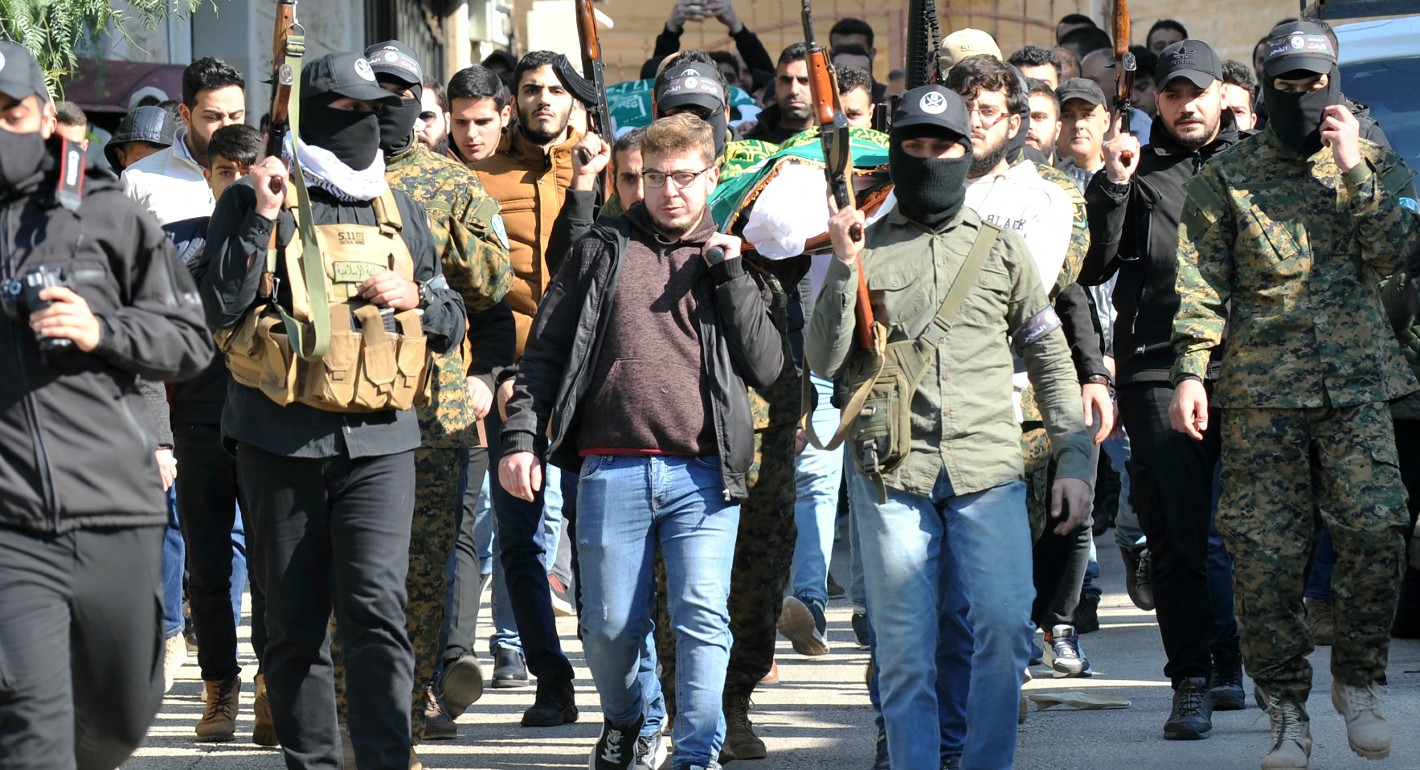
Hizbollah's second face is an armed resistance force directed primarily against Israel. In this regard Hizbollah enjoys a privileged status in postwar Lebanon. Hizbollah maintains an armed force of several thousand men and continues to acquire new weapons. In fact, Hizbollah is the only armed non-state actor in the Arab world that runs an autonomous military and security infrastructure with the full backing of its "host" state. Ironically, the 1996 April Understanding, a U.S.-negotiated agreement to end Israel's Operation Grapes of Wrath incursion into Lebanon, helped to legitimize Hizbollah's resistance identity. The agreement essentially said that Israel and Hizbollah could engage in warfare as long as they did not target civilians.
This anomalous situation was made possible by the chaotic war years, which allowed Hizbollah to grow rapidly, and by the political order that emerged after the war. Lebanon's fifteen-year war ended not by a peace conference, but by an act of war, when the Syrian army and units of the Lebanese army defeated the portions of the Lebanese army loyal to General Michel Aoun. The substitute to a peace conference was a political settlement embodied in the Document of National Understanding, commonly called the Ta'if Agreement, reached by Lebanese deputies in the Saudi city of Ta'if in November 1989.
More than a decade later, Ta'if has not been fully implemented and the component requiring the Syrian army's staged withdrawal from Lebanon by 1992 has been ignored. The uneven relationship between Syria and Lebanon means that final decisions in domestic and especially foreign policy are made in Damascus and not in Beirut. While other militias were required to demobilize after the war, Hizbollah and Palestinian groups are allowed to keep operating. This decision is in line with Syria?s regional and international objectives.
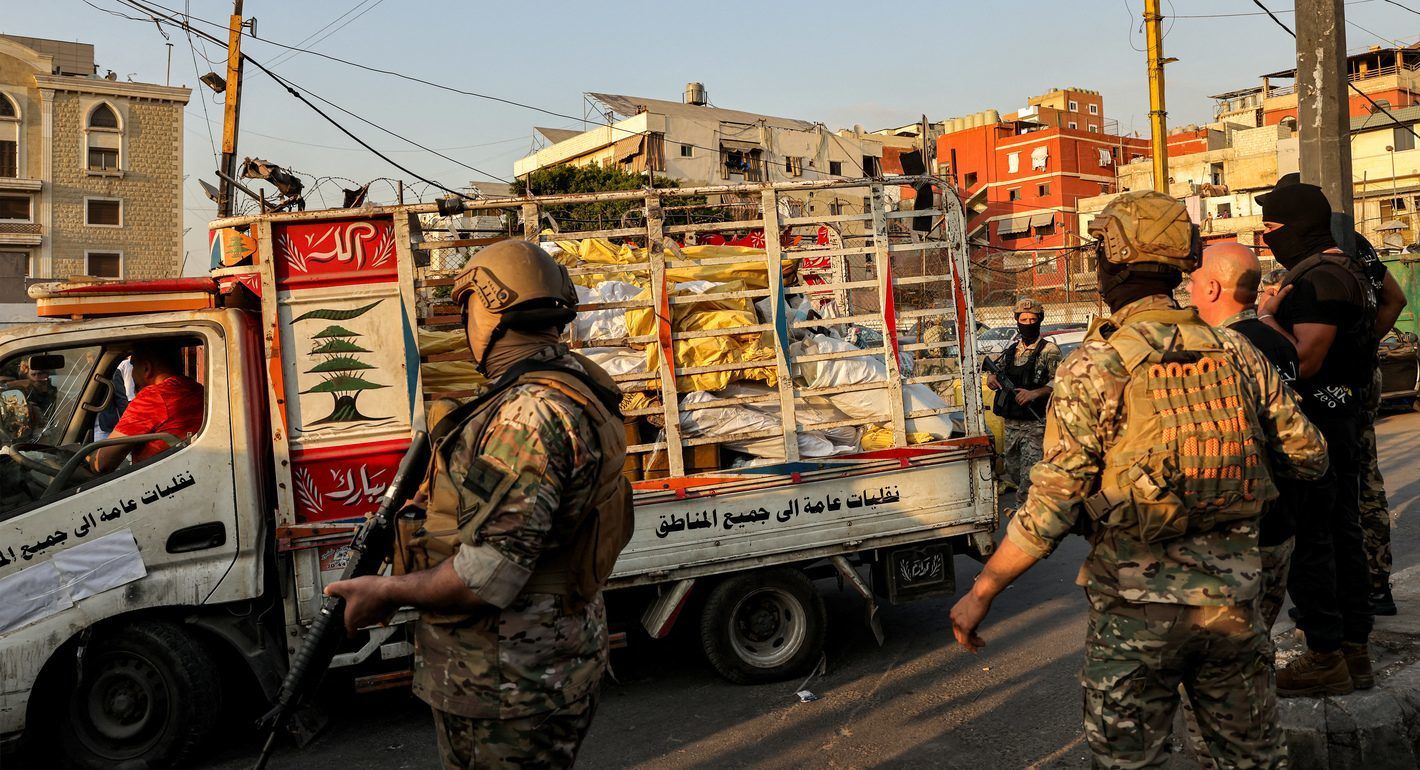
Hizbollah's role in forcing the Israeli withdrawal from South Lebanon in May 2000 greatly enhanced the party's prestige. But because the situation in the South is still unresolved, Hizbollah continues its armed resistance against Israel with Syrian and Lebanese support. Hizbollah is now the only active military force in areas previously controlled by Israel and the South Lebanon Army, since the Lebanese Army is not deployed there. This situation is made possible by the Lebanese government's assertion that the Shebaa Farms territory, occupied by Israel in 1967, is Lebanese territory (the United Nations has declared it Syrian territory). The Syrian government concurs with Lebanon. Thus, the Hizbollah's pursuit of liberating Shebaa through armed action is deemed justified.
The third face of Hizbollah is the most complex and problematic: its role as a terrorist group. Hizbollah's involvement in clandestine operations dates back to the early 1980s. Since the terrorist attacks of September 11, 2001, the United States has increased pressure on Hizbollah, redesignating it as a Foreign Terrorist Organization. But Hizbollah's supporters reject the terrorist label as based mainly on Israeli concerns. Furthermore, they point out that Israel recently took part in a German-mediated prisoner exchange with Hizbollah, and released 400 Palestinian prisoners to the group rather than to the Palestinian Authority—actions that are inconsistent with Israel's designation of Hizbollah as a terrorist organization.
The most important factor in the evolution of Hizbollah's role in Lebanese politics is the security vacuum in South Lebanon. This vacuum is maintained by Syria's deliberate policy of ambiguity, backed by Iran, and implemented by Hizbollah. As long as the vacuum remains, it keeps alive the possibility of a conflict between Israel and Lebanon and Syria, and thus strengthens Hizbollah's role as the party of armed resistance.
Farid El Khazen is professor and chairman of the department of political studies and public adminsitration at the American University of Beirut. His recent publications include The Breakdown of the State in Lebanon 1967-1976 (Cambridge: Harvard University Press, 2000).