

Commentary
The acknowledgment has sparked fears of a new arms race with China and Russia.
Chris O’Meara
{
  "authors": [],
  "type": "legacyinthemedia",
  "centerAffiliationAll": "dc",
  "centers": [
    "Carnegie Endowment for International Peace"
  ],
  "collections": [],
  "englishNewsletterAll": "democracy",
  "nonEnglishNewsletterAll": "",
  "primaryCenter": "Carnegie Endowment for International Peace",
  "programAffiliation": "DCG",
  "programs": [
    "Democracy, Conflict, and Governance"
  ],
  "projects": [],
  "regions": [
    "North America",
    "United States",
    "South America"
  ],
  "topics": [
    "Political Reform"
  ]
}
REQUIRED IMAGE
What happened to campaign-finance reform? Did the McCain-Feingold reform bill—and its successful defense in court—accomplish anything? President Bush is set to shatter all fund-raising records this year. Next time McCain and company set their sights on reform, they should learn from countries like Mexico, Latvia and Thailand that have appointed fair, nonpartisan oversight boards.
Source: Carnegie
Originally published February 25, 2004 in the Orlando Sentinel .
What happened to campaign-finance reform? The burning issue of the 2000 presidential campaign is AWOL in this year's Democratic primaries.
Did the McCain-Feingold reform bill—and its successful defense in court—accomplish anything? President Bush is set to shatter all fund-raising records. The changes also did little to control soft money, which is now funneled through 527s (named for the legislative code that legitimizes their activities). Incidentally, the Federal Election Committee recently limited the role of 527s, but did nothing to dispel the bipartisan consensus that plenty of room for soft money still exists.
"Further congressional action is likely," wrote Supreme Court Justices John Paul Stevens and Sandra Day O'Connor in the majority opinion narrowly upholding the law. It is a reality that campaign reformers understand. Unfortunately, reform discussions remain yet another instance of America's obliviousness to the outside world. Congress seems unwilling to glean any lessons that other countries have learned the hard way.
It's time we pull our heads from the sand. Many developing countries have crafted innovative responses to severe political-finance problems, ranging from incremental reform to wholesale restructuring. Their experiences provide crucial insights for the world's only superpower.
No perfect model exists. But the most successful systems operate under unprejudiced oversight bodies, allow complete funding transparency and anticipate counterproductive legislation.
It's hard to overstate the value of a fair, nonpartisan oversight board. Mexican campaign finance, for example, remains marred by loopholes that allow spending beyond the legal limits (savvy anonymous donors can exploit the law to give unlimited contributions). Yet the country's Federal Election Institute is worthy of emulation.
Unlike appointments to our FEC—which are allocated according to political affiliation—the IFE's members don't have partisan ties and must be acceptable to all major parties. The public respects the IFE for its impartiality and its vigorous pursuit of finance abuses. The institute recently fined one party, the PRI, $90 million for taking public money from the state-run oil company. It was an amazing display of independence given that the PRI ruled Mexico for more than 70 years and remains the largest party in parliament. Mexico is still quite corrupt, but much less so thanks to the IFE.
Funding transparency is equally important. Candidates will always want to collect more money than their opponents, but effective disclosure allows voters to know which candidate took money from which special interests.
Take Latvia's recent campaign legislation. Although changes enacted in 2002 reduced how much individuals and companies could donate, spending continues to spiral out of control, just like in the United States.
The culprit is a continued lack of transparency. Government watchdogs tolerate illegal practices, like filing false reports and using fake companies to channel illicit funds. Latvia's electoral commission further exacerbates the problem because it is neither fully independent nor seriously committed to reform. The United States has at least partial transparency, but the quarterly report system and the prevalence of soft money often make it difficult to determine who is sponsoring what message.
Finally, American reformers should learn to be wary before enacting potentially counterproductive laws. Thailand's most enduring electoral problem—widespread vote buying—stems from a well-intentioned 1979 ban on films and entertainers at political rallies. No longer able to offer free entertainment, politicians simply paid voters directly for their support.
For decades, Thai reformers struggled against the corruption they unleashed. In 1997, a new constitution granted the electoral commission expansive powers, including the ability to set spending limits, cancel elections on the mere suspicion of corruption, and offer modest public financing. Yet vote buying and other corrupt habits remain so thoroughly embedded that even draconian measures have little effect.
While direct vote buying is not a problem here, American reformers should think long and hard about how political parties might adapt to a crackdown on unsavory campaign activities. Thailand's problem parallels our Congress' unsuccessful efforts to ban soft money. McCain-Feingold shows it is much easier to prevent corruption from arising, than to stomp it out after it is entrenched.
America does not possess a monopoly on finance-related corruption. Next time McCain and company set their sights on reform, they should learn from other countries that continue to struggle with these issues. Otherwise, future reforms, much like the last batch, won't accomplish more than the illusion of change.
Geoffrey J. Swenson is a Junior Fellow with the Democracy and Rule of Law Project at the Carnegie Endowment for International Peace.
Carnegie does not take institutional positions on public policy issues; the views represented herein are those of the author(s) and do not necessarily reflect the views of Carnegie, its staff, or its trustees.

The acknowledgment has sparked fears of a new arms race with China and Russia.

Chris O’Meara

Smaller powers cannot go it alone, but Canadian history shows that integration with the United States will not always be benign.
Paul Samson

The summit may be remembered as a fatal blunder, when Washington, Beijing, and the AI industry collectively chose ceremony over action.

Jeffrey Prescott
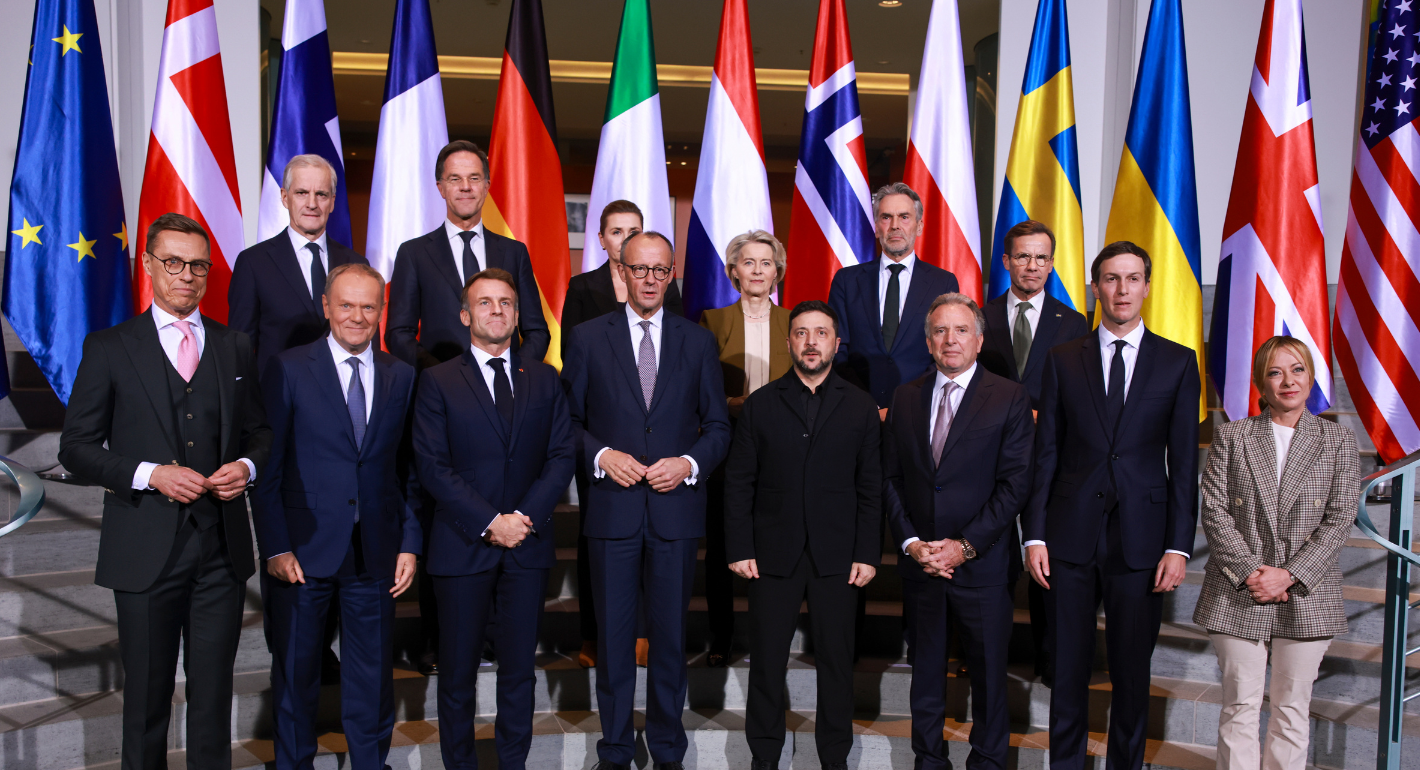
European NATO countries are wrestling with the possibility of U.S. disengagement from the alliance. With the continent’s security increasingly uncertain, governments must restore the credibility of their collective defense.



Hans-Dieter Lucas, Adam Thomson, Pierre Vimont
Soft power on its own is insufficient to meet U.S. national security needs, but hard power also has its limits. Soft power allows for more effective and efficient use of hard power than hard power alone, as it encourages cooperation and compliance which deters the need for hard power.

Sarah Yerkes