Commentary
Montenegro and Albania are frontrunners for EU enlargement in the Western Balkans, but they can’t just sit back and wait. To meet their 2030 accession ambitions, they must make a strong positive case.
Dimitar Bechev, Iliriana Gjoni
{
  "authors": [
    "Nathan J. Brown",
    "Nathan J. Brown"
  ],
  "type": "legacyinthemedia",
  "centerAffiliationAll": "dc",
  "centers": [
    "Carnegie Endowment for International Peace"
  ],
  "collections": [],
  "englishNewsletterAll": "democracy",
  "nonEnglishNewsletterAll": "",
  "primaryCenter": "Carnegie Endowment for International Peace",
  "programAffiliation": "DCG",
  "programs": [
    "Democracy, Conflict, and Governance",
    "Middle East"
  ],
  "projects": [],
  "regions": [
    "Middle East",
    "Palestine",
    "Kuwait"
  ],
  "topics": [
    "Political Reform",
    "Foreign Policy"
  ]
}
Source: Getty
The problem of using democracy as a tool for taming Islamists is not that it fails but that it works far more slowly and uncertainly than policymakers can tolerate. As a long-term solution, however, there is probably no sounder approach than using democracy to incorporate Islamist movements as normal political actors.
Source: International Herald Tribune

A disaster is occurring in Palestine, to be sure. But before we rush to abandon democracy, we should turn our attention to a more genteel political crisis that has been occurring in Kuwait. The oil minister, a member of the ruling family, recently provoked harsh parliamentary criticism when he spoke admiringly of one of his predecessors in the post, a relative accused of bilking state coffers of untold millions. But while some have tried to bring the minister down, members of Kuwait's Islamic Constitutional Movement have tried to defuse the crisis by securing an apology from the minister. They are motivated not merely by agreeable sentiments but also by the fact that they currently hold a position in a cabinet that they hardly wish to see collapse.
While Kuwait's Islamic Constitutional Movement, or ICM, is thus acting as a normal political party, Hamas has both been forced and chosen to act outside the rules of the democratic game. But both movements share a common origin - they are local offshoots of the Muslim Brotherhood, an organization founded in Egypt in 1928. The different paths followed by the ICM and Hamas show what democracy can - and cannot - do to domesticate Islamists.
When Islamist movements are offered democratic openings, they generally take them. And as they operate within democratic systems, they generally moderate their positions. Democracy does affect them. But there are two problems: Democracy works slowly and it is hardly the only factor at work.
There are three factors operating in the Arab world that often undermine the effectiveness of democratic mechanisms in converting Islamists into normal political parties. First is the set of international conflicts that beset the region. When war and peace become more pressing concerns than domestic politics, international actors quickly lose interest in democracy. And authoritarian regimes can use such conflicts to hold the specter of Islamist triumph to justify limiting democracy. It is no accident that Kuwait and Morocco - far removed from the Israeli-Palestinian arena - have been more successful in integrating Islamists than Egypt or Palestine.
Second, Islamists are more easily integrated when there are credible countervailing forces within the society. But liberal, secular, and leftist parties have proven to be weak in most Arab states. With authoritarian regimes and Islamists facing each other directly, there is little room for the bargaining of democratic politics. In recent conversations with Egyptian leaders of the Muslim Brotherhood, I have been struck by their clear interest in a revitalized opposition - not only because of dedication to pluralist principles (though there is some evidence of that), but also because of the calculation that if they stand alone they will not be able to press for the opening they desire.
Third, Arab regimes communicate quite clearly that democratic politics may only go so far. When a leading Jordanian Brotherhood leader suggested that his party was capable of winning an election and governing - surely a tame statement for a politician in a democratic system - the regime reacted as if he had issued a revolutionary threat. In the dispute between Hamas and Fatah, the law was generally on Hamas's side, but that did not prevent Fatah and President Mahmoud Abbas from constantly threatening to act unconstitutionally. Islamists in many countries are debating how much it is worth it to play the rules of the democratic game, knowing that those rules are fixed against them - and that if they still win, they will find the game overturned.
In recent weeks, Hamas has shown two faces. Some of its leaders have called for unity and observance of the constitution, swearing that they had nothing against Fatah but only against those within the rival movement plotting a coup. But on the streets of Gaza, their followers carried out summary executions and spoke of an Islamic state. The leaders were not so much insincere as ineffectual.
Thus, the problem with using democracy as a tool for handling domestic differences is not that it fails but that it works far more slowly and uncertainly than policymakers can tolerate. As a long-term solution, there is probably no sounder approach than using democracy to incorporate Islamist movements as normal political actors. But until we find ourselves able and willing to work according to a long-term strategy, democracy will continue to disappoint - and occasionally even horrify us - with its results.
Nathan Brown, a senior associate at the Carnegie Endowment for International Peace, is a professor of political science and international affairs at George Washington University.

Nonresident Senior Fellow, Middle East Program
Nathan J. Brown, a professor of political science and international affairs at George Washington University, is a distinguished scholar and author of nine books on Arab politics and governance, as well as editor of five books.
Nonresident Senior Fellow, Middle East Program
Nathan J. Brown, a professor of political science and international affairs at George Washington University, is a distinguished scholar and author of nine books on Arab politics and governance, as well as editor of five books.
Carnegie does not take institutional positions on public policy issues; the views represented herein are those of the author(s) and do not necessarily reflect the views of Carnegie, its staff, or its trustees.
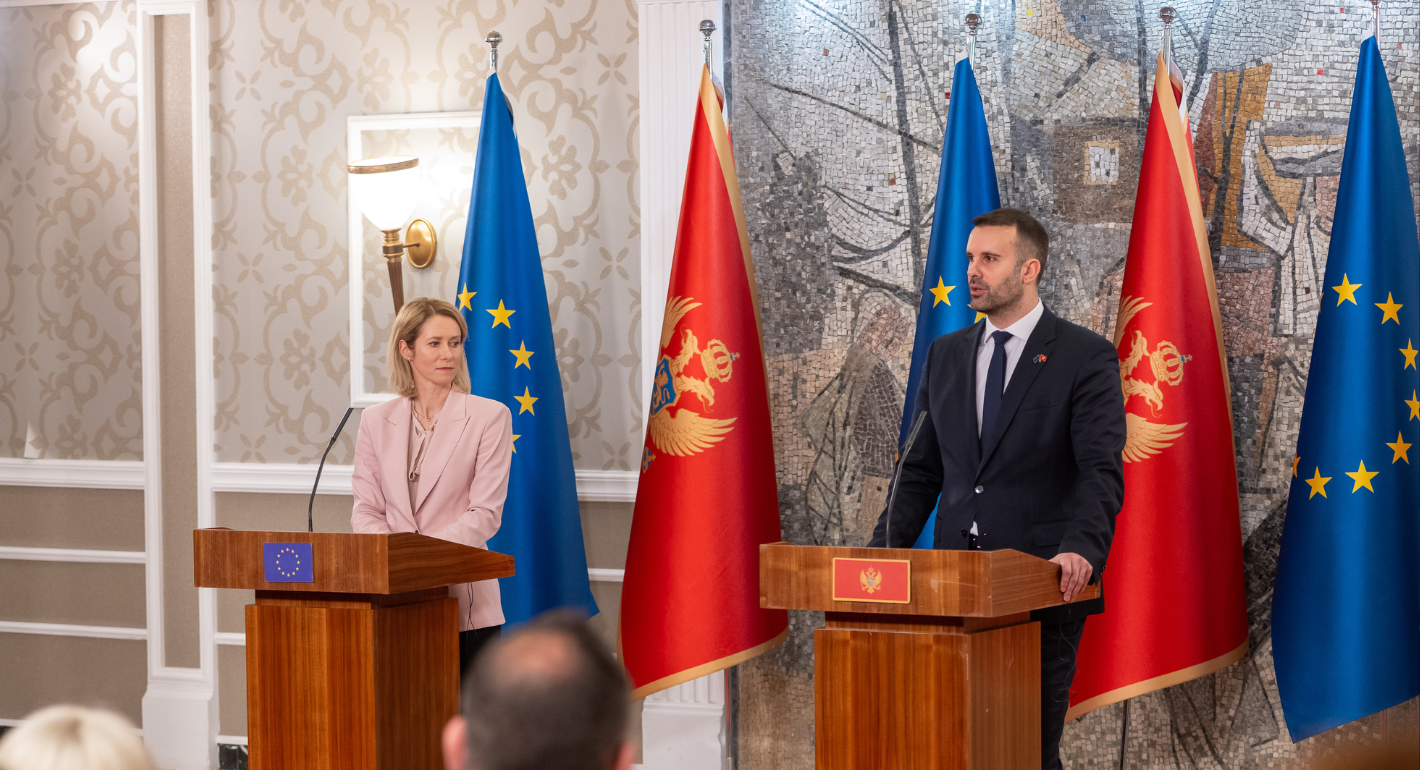
Montenegro and Albania are frontrunners for EU enlargement in the Western Balkans, but they can’t just sit back and wait. To meet their 2030 accession ambitions, they must make a strong positive case.


Dimitar Bechev, Iliriana Gjoni

Despite long-standing differences, China and Vietnam are reinforcing common ground for collaboration, especially in public security. This internal security–centered diplomacy offers a strengthened road map for how China moves forward with Southeast Asia.
Sophie Zhuang

Climate mobility interventions can vary, but they all present opportunities to unlock transformative results that mitigate costs associated with inaction.

Alejandro Martin Rodriguez

Four Middle East experts analyze the region’s reactions and next steps.



Amr Hamzawy, Andrew Leber, Eric Lob, …

As the war between the United States, Israel, and Iran continues, Carnegie scholars contribute cutting-edge analysis on the events of the war and their wide-reaching implications. From the impact on Iran and its immediate neighbors to the responses from Gulf states to fuel and fertilizer shortages caused by the effective shutdown of the Strait of Hormuz, the war is reshaping Middle East alliances and creating shockwaves around the world. Carnegie experts analyze it all.