

Commentary
Funding Ukraine remains a priority for European leaders. As Russia’s war of aggression heads into another winter, two feasible options to mobilize support for Kyiv should be fast-tracked.
Vladyslav Rashkovan, Gregory P. Wilson
{
  "authors": [
    "Yaping Wang"
  ],
  "type": "legacyinthemedia",
  "centerAffiliationAll": "dc",
  "centers": [
    "Carnegie Endowment for International Peace",
    "Carnegie Europe"
  ],
  "collections": [],
  "englishNewsletterAll": "asia",
  "nonEnglishNewsletterAll": "",
  "primaryCenter": "Carnegie Endowment for International Peace",
  "programAffiliation": "AP",
  "programs": [
    "Asia"
  ],
  "projects": [],
  "regions": [
    "East Asia",
    "China",
    "Western Europe",
    "France",
    "Germany",
    "Asia",
    "Europe"
  ],
  "topics": [
    "Political Reform"
  ]
}
Source: Getty
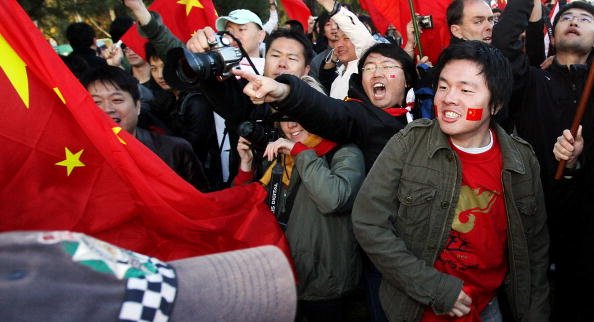
The Dalai Lama problem has been in the way of an EU-China "strategic partnership" for a long time, and there continues to be miscalculations on both sides about each other's stand on this issue.
Source: South China Morning Post

At the end of last month, Premier Wen Jiabao attended the World Economic Forum in Davos, after which he visited Germany, Spain, Britain and the EU headquarters in Brussels - but, notably, not France.
In contrast, China's relations with Germany seem quite warm. Yet it was only in 2007 that German Chancellor Angela Merkel met the Dalai Lama, causing Beijing to call off several talks with German officials. At the time, China enjoyed good ties with Paris. Plus c¸a change.
The Dalai Lama problem has been in the way of an EU-China "strategic partnership" for a long time, and there continues to be miscalculations on both sides about each other's stand on this issue.
Any leader who meets the Dalai Lama can expect trouble from Beijing, which seems not to recognise how widely revered he is in the west. But Europeans also fail to recognise that, for all the symbolic significance of meeting the Dalai Lama, it rarely, if ever, brings about any tangible improvement in human rights for Tibetans.
"Tibet is a non-issue for Europe. We have no interest in getting involved, none whatsoever," Stanley Crossick, director of the European Policy Centre affirmed after China cancelled the EU-China summit. "We only want it to be settled peacefully."
Still, China doesn't seem to have communicated well with Europe on the difficulties in the negotiations with the Dalai Lama, especially on the Five-Point Peace Plan, which is usually considered in the west as the "master plan" of a peaceful resolution of the Tibetan issue.
The plan, first presented by the Dalai Lama as part of an address to the US Congress Human Right Caucus in September 1987, proposes that Tibet be given the status of a "peace zone" and that the Tibetan people be granted self-determination in their own land.
However, people in the west might not know that the "land" in question was not referring to the Tibet Autonomous Region, which people usually consider "Tibet". Rather, it refers to a "Greater Tibet", a concept of a homeland developed by Tibet's government-in-exile but which has never existed in history. "Greater Tibet" covers five main areas where the Tibetan minorities now reside - the autonomous region, the whole of Qinghai province, western parts of Sichuan, areas of Yunnan and a corner of Gansu, which altogether constitute about a quarter of China's territory. This "price" the Dalai Lama proposed is too high. No wonder the Chinese do not want to negotiate with him.
The Dalai Lama also proposed that "for the Tibetans to survive as a people, it is imperative that the population transfer is stopped and Chinese settlers return to China". But this is ethnic cleansing through expulsion. For all the same reasons, the Chinese see this plan as highly unacceptable. But the Europeans usually do not understand this.
Nor do European leaders seem to realise the political implications and contradictions inherent in meeting the Dalai Lama. They claim that they receive him simply as a "spiritual leader" or a "Nobel Peace Prize winner", though he is in fact the political leader of Tibet's exile government in India. A meeting between a head of state and the leader of an exile government is undeniably significant. It also contradicts the EU's long-standing "One China" policy, and its recurring claim that it has "no interest to intervene" in Tibet.
European leaders need also to be more sensitive to matters of timing; Beijing's concerns with Europe are greatly heightened by the upcoming March 10 anniversary.
But the Chinese must recognise that they are not well served by reacting with angry statements whenever western leaders meet the Dalai Lama. Consternation and threats of reprisals or rewards for meeting or not meeting the Dalai Lama have never stopped European leaders anyway.
The Chinese must also recognise that, while the Tibetan issue is a domestic affair, it also has international implications.
The Dalai Lama problem has impeded relations between Europe and China for a long time. Only when they recognise the need to play to each other's audiences, as well as their own, will Chinese and European leaders be able to reach a compromise on the future of Tibet.
Yaping Wang
Former Senior Editor
Yaping Wang was senior editor of the Asia Program’s monthly web-based newsletter, Carnegie China Insight.
Carnegie does not take institutional positions on public policy issues; the views represented herein are those of the author(s) and do not necessarily reflect the views of Carnegie, its staff, or its trustees.

Funding Ukraine remains a priority for European leaders. As Russia’s war of aggression heads into another winter, two feasible options to mobilize support for Kyiv should be fast-tracked.


Vladyslav Rashkovan, Gregory P. Wilson

While the EU and European governments are embracing the much-lauded middle-power moment, this entails three difficult conundrums.

Richard Youngs

Ex-president Gurbanguly Berdimuhamedov remains interested in politics, but his son Serdar, Turkmenistan’s current president, is becoming increasingly independent and willing to break with his father’s legacy. If their covert rivalry goes too far, both risk losing power.

Galiya Ibragimova

Europe is facing rising populism internally as well as external pressures from Russia, China, Turkey, and the United States.

Dimitar Bechev

A notable degree of participative democracy has firmly arrived in Europe. But to have more far-reaching impact, democratic deliberation needs to move into a radically new phase.
Richard Youngs