

In The Media
Jessica Tuchman Mathews
{
  "authors": [
    "Jessica Tuchman Mathews"
  ],
  "type": "legacyinthemedia",
  "centerAffiliationAll": "",
  "centers": [
    "Carnegie Endowment for International Peace",
    "Carnegie Russia Eurasia Center"
  ],
  "collections": [],
  "englishNewsletterAll": "",
  "nonEnglishNewsletterAll": "",
  "primaryCenter": "Carnegie Endowment for International Peace",
  "programAffiliation": "",
  "programs": [],
  "projects": [],
  "regions": [
    "North America",
    "United States"
  ],
  "topics": [
    "Nuclear Policy"
  ]
}
Source: Getty
U.S. ratification of the Comprehensive Test Ban Treaty will enhance global security and provide greater leverage over states like Iran and North Korea that are unwilling to play by the rules.
Source: International Herald Tribune

To many, this was shocking. After more than 1,000 tests there was nothing of military value left for the United States to learn unless it wanted new warheads. The Cold War had been over for a decade and the U.S. arsenal already had more warheads than imaginable targets. American conventional superiority was enormous and growing.
Now, as the debate begins anew, in a world where so much has changed, we are about to learn whether this time we can let go of the past.
In 1999, there were technical reasons to worry whether a testing ban could be verified and whether American weapons could remain reliable indefinitely without testing. These worries have been erased. A global monitoring system has been built that can detect an explosion as small as one-tenth of a kiloton, and 10 times smaller in many critical regions.
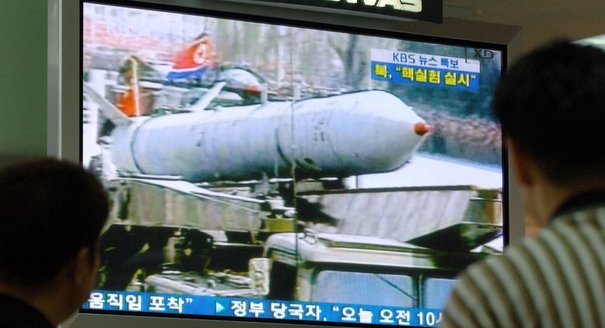
North Korea’s small underground test in 2006 was instantly detected by 22 of the system’s nearly 300 stations, including one 7,000 kilometers away. Within two hours, the data had been analyzed and sent to the Comprehensive Test Ban Treaty’s (CTBT) member states.
Will there ever be 100 percent certainty? No, but 99.9 percent is good enough. When — if — the treaty enters into force, nothing of military significance will be able to elude the completed system.
A bigger concern a decade ago was whether the United States could develop a computer powerful enough to assure the reliability of the warheads without testing them. We can do that, said the scientists, if we can reach a goal of 100 teraflops (one hundred trillion floating operations per second). It was a big stretch. One of those who helped set the goal later remarked: “I remember handing my answer in, thinking that they would kick me out of the room because it was insane at the time.”
Not surprisingly, senators found this a slim reed to rely on.
As it happened, scientists reached the goal in 2005 and blasted past it. Last year, the U.S. Department of Energy announced that its newest supercomputer had achieved 10 times more.
That leaves geopolitics. The CTBT requires that 44 named states ratify the treaty before it can come into force. In addition to the United States, eight remain. Among them, Indonesia has announced that when the U.S. ratifies, it will immediately follow. China is expected to do so as well. Once it does, India should be able to fulfill the pledge it made to the United Nations 11 years ago, that it would not be one of a handful of states to stand in the way. If India ratifies, Pakistan will.
That leaves Egypt, Israel, North Korea and Iran. Egypt has linked its approval to a Mideast peace, but as a leader of the Non-Aligned Movement — whose members have overwhelmingly approved the treaty — it faces pressures from that direction. And, if the United States has ratified, it would face pressure from the provider of the annual aid that keeps its economy afloat.
If only North Korea and Iran remain, the more than 160 nations that have joined the treaty will not allow them to block it. An amendment will be drawn that allows provisional entry into force without them.
But another outcome is possible: If the United States and others ratify the treaty, pressure can be put on Iran to prove that when it says it has no intention of developing nuclear weapons, it means it. A signature on a treaty alone wouldn’t stop cheating, but it would be one more legal norm boxing Tehran in.
Iran uses the areas of vagueness in the Nonproliferation Treaty to skip and dance along the edges of the law, but its pride and self-image would militate against being caught in a flagrant violation. There’s nothing debatable about the meaning of a nuclear test.
None of this is a sure thing. What we do know is that absent U.S. ratification, none of it can happen. Washington and its allies cannot pressure others to do what the United States won’t. So, after 17 years of a voluntary, unilateral test ban, the United States bears most of the costs of the treaty without its benefits.
The positive reason to ratify is that giving up nuclear tests enhances security.
Since 1999, we have learned that a nonproliferation system designed against threats from states must be rebuilt to eliminate loopholes and to contain new threats from commercial groups and from terrorists.
Iraq, Iran and North Korea exploited a critical vagueness in the NPT that must be fixed. In 2003, the news broke that a multinational, commercial network was selling bomb technology. On 9/11 Americans awoke to the terrorist threat, and we have since learned of some terrorists’ nuclear ambitions.
But 20 years after the end of the Cold War, the non-nuclear states feel that the weapons states haven’t upheld their end of the NPT bargain: to move toward disarmament. They are, therefore, unwilling to discuss necessary new restrictions until they see movement. Ratifying the test ban is a necessary first step.
So the second Senate debate on the test ban treaty pits an old way of thinking about nuclear war against today’s totally different threat.
Countering proliferation requires military strength, which we have in abundance, and a willingness to connect the dots to political and diplomatic initiatives to which we have grown unaccustomed.
What’s at stake is making the world safe for existing fissile material and for the nuclear energy that will be needed to deal with climate change, and keeping the world’s nuclear weapons states at nine.

Distinguished Fellow
Mathews is a distinguished fellow at the Carnegie Endowment for International Peace. She served as Carnegie’s president for 18 years.
Recent Work
Jessica Tuchman Mathews
Jessica Tuchman Mathews
Carnegie does not take institutional positions on public policy issues; the views represented herein are those of the author(s) and do not necessarily reflect the views of Carnegie, its staff, or its trustees.

U.S. trading partners in Asia are closely watching the dispute for signs of how it may affect their own interests.

Barbara Weisel
By abandoning past U.S. pro-democracy policies and adopting several lines of pro-autocratic action, the Trump administration has fundamentally repositioned the United States vis-à-vis democracy in the world.

Thomas Carothers
Chinese strategists are once again debating whether American power is declining and whether U.S. hegemony is experiencing irreversible decay.
Wu Xinbo
Congress should ask tough questions about the agreement’s more unique features and whether they advance U.S. interests or compromise them.

Jane Darby Menton

To remain effective, organizations need to master new media and legitimacy markers to make a once-in-a-century shift.


Renée DiResta, Rachel Kleinfeld, Margot Treadwell