

Commentary
Despite the agreement’s uncertainty, it’s still a significant development in regional and nuclear policy.
{
  "authors": [
    "Jane Darby Menton"
  ],
  "type": "commentary",
  "blog": "Emissary",
  "centerAffiliationAll": "dc",
  "centers": [
    "Carnegie Endowment for International Peace"
  ],
  "englishNewsletterAll": "ctw",
  "nonEnglishNewsletterAll": "",
  "programAffiliation": "NPP",
  "programs": [
    "Nuclear Policy"
  ],
  "regions": [
    "Saudi Arabia",
    "United States"
  ],
  "topics": [
    "Nuclear Policy",
    "Foreign Policy"
  ]
}
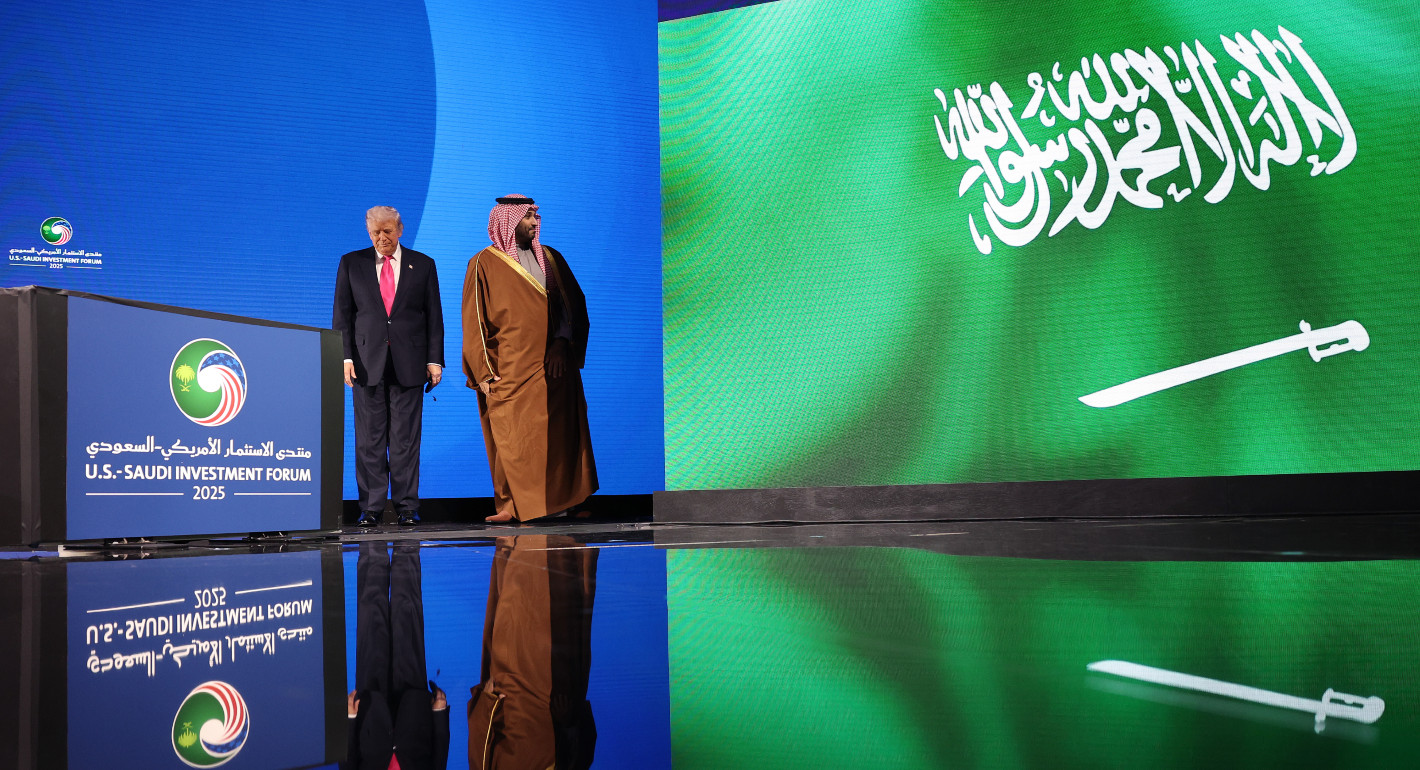
Trump and MBS arrive at an event at the Kennedy Center on November 19, 2025, in Washington. (Photo by Win McNamee/Getty Images)
Congress should ask tough questions about the agreement’s more unique features and whether they advance U.S. interests or compromise them.
After months of speculation, the civil nuclear cooperation agreement between the United States and Saudi Arabia is now with Congress for review.
The rollout of this deal—known as a 123 agreement, after the relevant section of the U.S. Atomic Energy Act—has been dogged by uncertainty, alarmism, and mixed messaging. So far, most commentary has focused on its departures from the U.S. nonproliferation “gold standard.” Specifically, this deal will not require Riyadh to forgo fuel cycle activities that would be conducive to a nuclear weapons program (enrichment and reprocessing), or to accept the Additional Protocol (AP), the highest standard of International Atomic Energy Agency (IAEA) safeguards.
While this could invite jokes about Trump’s otherwise infamous metallic proclivities not applying to the Saudis, a more important question remains: Has Washington not only forgone the gold standard, but in this case replaced it with a gilded one?
Supporters claim that “gold standard policy” is a misleading yardstick for evaluating the Saudi deal, and they have a valid point. Of the twenty-six 123 agreements that the United States has in place today, only two (with the UAE and Taiwan) meet the golden criteria. And in a moment of incipient global nuclear expansion, especially when rival suppliers (namely China and Russia) dominate the nuclear marketplace, discussions on which export policies best serve U.S. interests are prudent.
Saudi Arabia’s resistance to the letter of the gold standard has been firm over a decade of halting negotiations. The administration of former president Joe Biden also explored ways to navigate these constraints while upholding long-standing U.S. priorities, including nonproliferation. The administration of President Donald Trump now claims that its deal meets this mark.
It is up to Congress to test that proposition. A key (and nonstandard) selling point of this deal is that it allegedly secures a privileged role for the United States in the Saudi nuclear program. But the public text leaves some important questions unanswered. Policymakers should use the mandatory review period to home in on where the text diverges not only from the gold standard but standard U.S. nuclear cooperation agreements, the implications of these divergences, and whether they advance U.S. interests or compromise them.
Unsurprisingly to anyone who has been tracking nuclear issues in the Middle East, enrichment remains the most contentious issue. The United States rarely cooperates with other countries on enrichment, given the potential for such capabilities to support a nuclear weapons program. To even contemplate it in the Saudi case is highly anomalous.
Critics argue that enabling U.S. cooperation on enrichment with a state whose leader has explicitly threatened to pursue the bomb (if Iran does) would enable proliferation and lower the bar for other states that want to inch closer to the nuclear weapons threshold. Yet for months, officials have portrayed this interpretation of their deal as unfairly alarmist. Trump himself posted that “There will be no enrichment of material! . . . The United States is not opposed to Civil (Non-Enriched) Nuclear Facilities.”
The actual text of this agreement does not obligate the United States to supply sensitive technologies to the kingdom or authorize the transfer of restricted data, presumably to include enrichment technology. But critics will find little solace in a deal that explicitly “establishes a potential future pathway to cooperation on uranium enrichment in the United States and Saudi Arabia” and even details hypothetical parameters around these activities. Reference to a possible joint study on enriching to much higher levels than Iran was permitted under the Joint Comprehensive Plan of Action has already grabbed headlines.
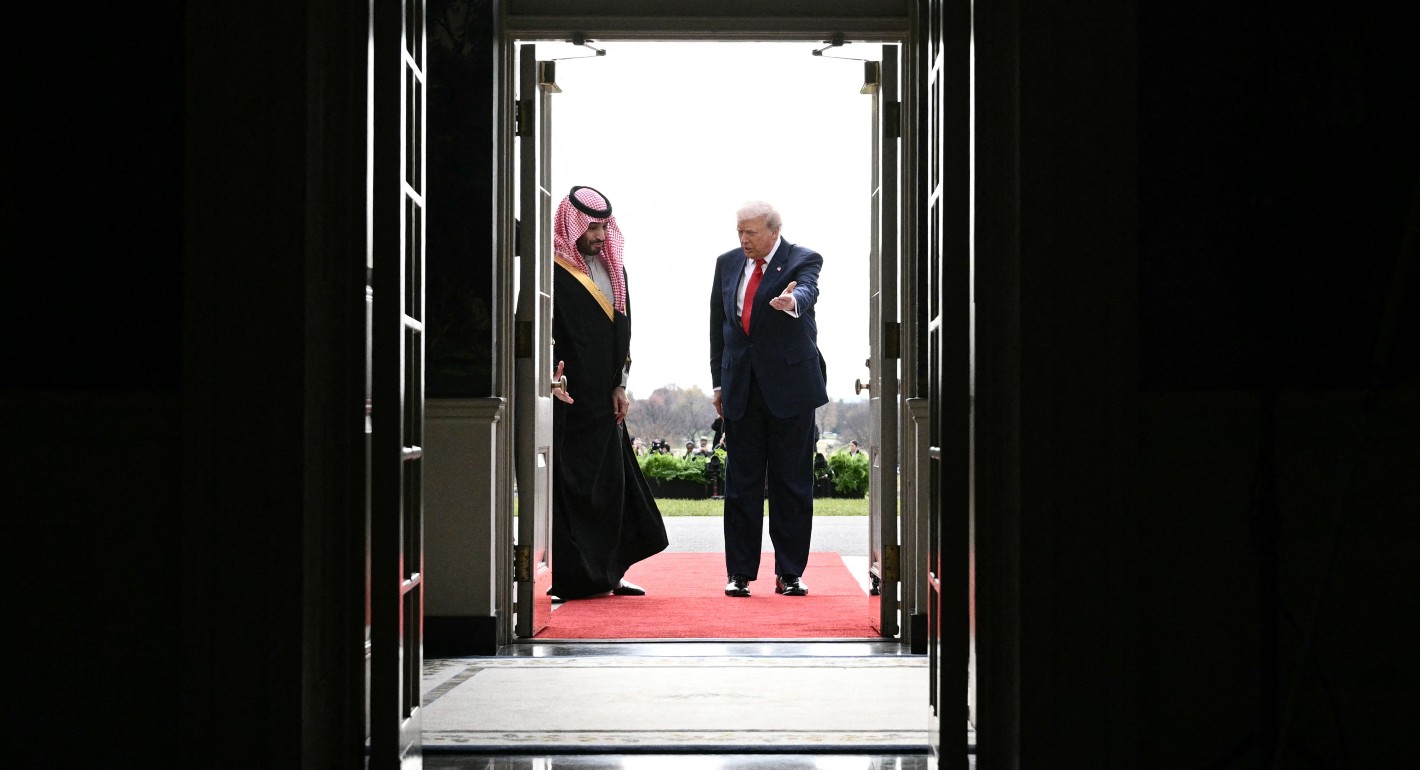
Despite the agreement’s uncertainty, it’s still a significant development in regional and nuclear policy.
In addition to bucking long-standing U.S. policy, these concessions seem gratuitous for a state with a nascent nuclear program. All 123 agreements require that partners obtain consent from Washington for sensitive activities involving materials or equipment acquired or produced under their auspices, but they do not usually spell out such contingencies. Washington and Riyadh may have reached other understandings behind closed doors, but they are not available for public scrutiny.
In practice, by requiring a two-year “Joint Enrichment and Conversion Study” before any decision to proceed, this deal may effectively kick the can down the road. For now, it’s hard to imagine that the study would conclude enrichment in the kingdom is justified on commercial or national security grounds. U.S. Energy Secretary Chris Wright said as much in a recent press conference: “Certainly, there’s no reason in the near term to bring enrichment to Saudi Arabia. They don’t even have a nuclear reactor yet.”
Indeed, most states have concluded that purchasing enriched uranium on the global marketplace is cheaper than producing it domestically and does not trigger the same concerns about ulterior motives. In Saudi Arabia’s case, retaliation from a neighbor whose enrichment facilities were recently bombed by Israel and the United States is another consideration.
This agreement could challenge the status quo by spurring others to request similar treatment. The UAE’s gold standard 123 agreement permits revision if a neighbor secures more permissive terms from the United States, and Washington has already opened the door to enrichment and reprocessing for South Korea. But much will depend on how this deal is implemented and what both parties expect it to deliver. If at some point Saudi Arabia and the United States were to decide that cooperation on enrichment should proceed, working out the mechanics would likely be a lengthy undertaking, with additional requirements and restrictions.
Given the stakes, Congress should press for clarity on a range of issues, including the parameters of the joint study, the security and proliferation risks of sensitive technology transfers, and how to handle backlash from Iran or other 123 partners. Is agreeing in principle to enrichment cooperation with a partner that doesn’t operate any reactors necessary? What happens if the study concludes that domestic enrichment is not justified? How would a complex and controversial export project impact the more pressing task of reviving domestic enrichment capacity? Transparency would help Congress and the policy community parse contradictory messaging and decide how to proceed.
The deal’s approach to international monitoring also deviates from standard practice—and not just the gold standard. Rather than insisting that Saudi Arabia implement an AP, the administration opted for a bespoke bilateral arrangement.
The AP was developed to enhance the IAEA’s ability to detect clandestine nuclear weapons programs after proliferation crises in Iraq and North Korea exposed gaps in standard safeguards arrangements. More than 140 states now have APs, and the United States has required them of its nuclear partners since the administration of president George W. Bush. At a recent press conference, Wright seemingly conflated AP adoption with the gold standard, claiming that only two U.S. nuclear partners have made this commitment. In fact, only two have not—and the states in question, Argentina and Brazil, are party to a unique regional safeguards arrangement in partnership with the IAEA.
The Saudi deal does call for what IAEA Director General Rafael Grossi described as “added layers of very stringent verification,” via a bilateral safeguards agreement (BSA). The unclassified text indicates that the BSA, whose details will be further specified in implementing arrangements, will consist of provisions “similar to aspects of” the AP and will apply to “aspects of Saudi Arabia’s nuclear program and, in particular, cooperation with the United States.”
Here, too, Congress should press for more information. The key issue is coverage: Does the administration envision Saudi Arabia’s nuclear program expanding beyond the purview of its agreement with the United States? If so, would additional safeguards not apply to such facilities or activities? Greater specificity on which aspects of the BSA may be dissimilar to an AP and how “covered sites” will be defined would also be instructive. For example, it is not clear whether the IAEA would be able to access facilities and locations beyond those covered in the BSA to provide assurances on the absence of undeclared nuclear activities in the kingdom (a key provision of APs). It is also unclear who would foot the bill for supplementary safeguards (though the agreement states that the IAEA will be reimbursed and that “US and Saudi Arabia may contribute to the reimbursement of agency costs.”)
Perhaps the most novel feature of the Saudi deal, and a key selling point for the Trump administration, is what the agreement calls “an unprecedented commercial provision” wherein Saudi Arabia agrees to partner with the U.S. nuclear industry and “qualified suppliers” for nuclear power reactors, nuclear reactor fuel, and all other aspects of the fuel cycle.
The White House is effectively pitching the Saudi 123 agreement as a commercial proposition that will inject cash into the U.S. nuclear industry and help it rebuild experience exporting reactors (most likely Westinghouse’s AP1000). Exclusivity commitments—which have been reported but are not detailed in the public text—would also box out other potential nuclear supply competitors, namely China and Russia.
Here, too, the specifics matter, especially as the extent of U.S. involvement in Saudi Arabia’s nuclear program will impact how robust other bespoke provisions prove to be. Two confidential side-letters were transmitted alongside the agreement, which may include additional details on the commercial provision. But Congress should ask pointed questions about how deep commitments to buy American go, how long any period of exclusivity lasts, whether and how it is tied to the enrichment question, and whether U.S. and Saudi officials have a clear and shared understanding of these linkages.
Supporters argue that the alternative to this deal is de facto abandonment to U.S. adversaries of a lucrative and strategically salient market. Other suppliers unquestionably would be keen to step in, and they historically do not ask for the same assurances that the United States does. That said, neither China nor Russia has expressed much interest in transferring more sensitive capabilities like enrichment to their clients. Congress should ask the administration to clarify if this has changed.
Controversies aside, this agreement will likely enter force. Stopping the Saudi 123 agreement would require a joint resolution from Congress with a veto-proof majority. (Whether Trump’s late-breaking demand that Saudi Arabia join the Abraham Accords derails implementation is another matter.)
Reasonable people can, and should, debate the real trade-offs of the Saudi deal. U.S. companies, for example, stand to benefit from a successful agreement, although misaligned expectations could still jeopardize possible gains. The deal’s more idiosyncratic provisions may also be difficult or undesirable to replicate in other cases. For instance, Washington may not consider a BSA to be sufficient in states that work or hope to work with non-U.S. nuclear suppliers.
The review period is a chance to ask pointed questions about an agreement that could implicate U.S. commercial and strategic interests for at least the next thirty years—and to get the administration on the record where the public text is vague on key issues. While geopolitics and a rapidly evolving global nuclear industry may call for standards of a different metal, for now, Congress should focus on figuring out what this one is made of.
Understand the world with the latest from our scholars around the world.

Fellow, Nuclear Policy Program
Jane Darby Menton is a fellow in the Nuclear Policy Program at the Carnegie Endowment for International Peace and director of the Carnegie International Nuclear Policy Conference.
Recent Work

Andrew Leber, Jane Darby Menton



Sophia Besch, Eric Ciaramella, Steve Feldstein, …
Carnegie does not take institutional positions on public policy issues; the views represented herein are those of the author(s) and do not necessarily reflect the views of Carnegie, its staff, or its trustees.

Nuclear and maritime communities face a long and challenging journey to deploy commercial nuclear applications at sea.


Jamie Kwong, Toby Dalton
Despite the agreement’s uncertainty, it’s still a significant development in regional and nuclear policy.
Andrew Leber, Jane Darby Menton
By burying disagreements in imprecision, the new deal risks same fate as its predecessors.

James M. Acton

Tehran may conclude that its ability to disrupt the global economy via the Strait of Hormuz provides enough deterrence to begin quietly rebuilding its nuclear program.

Jane Darby Menton, Mohammad Ayatollahi Tabaar
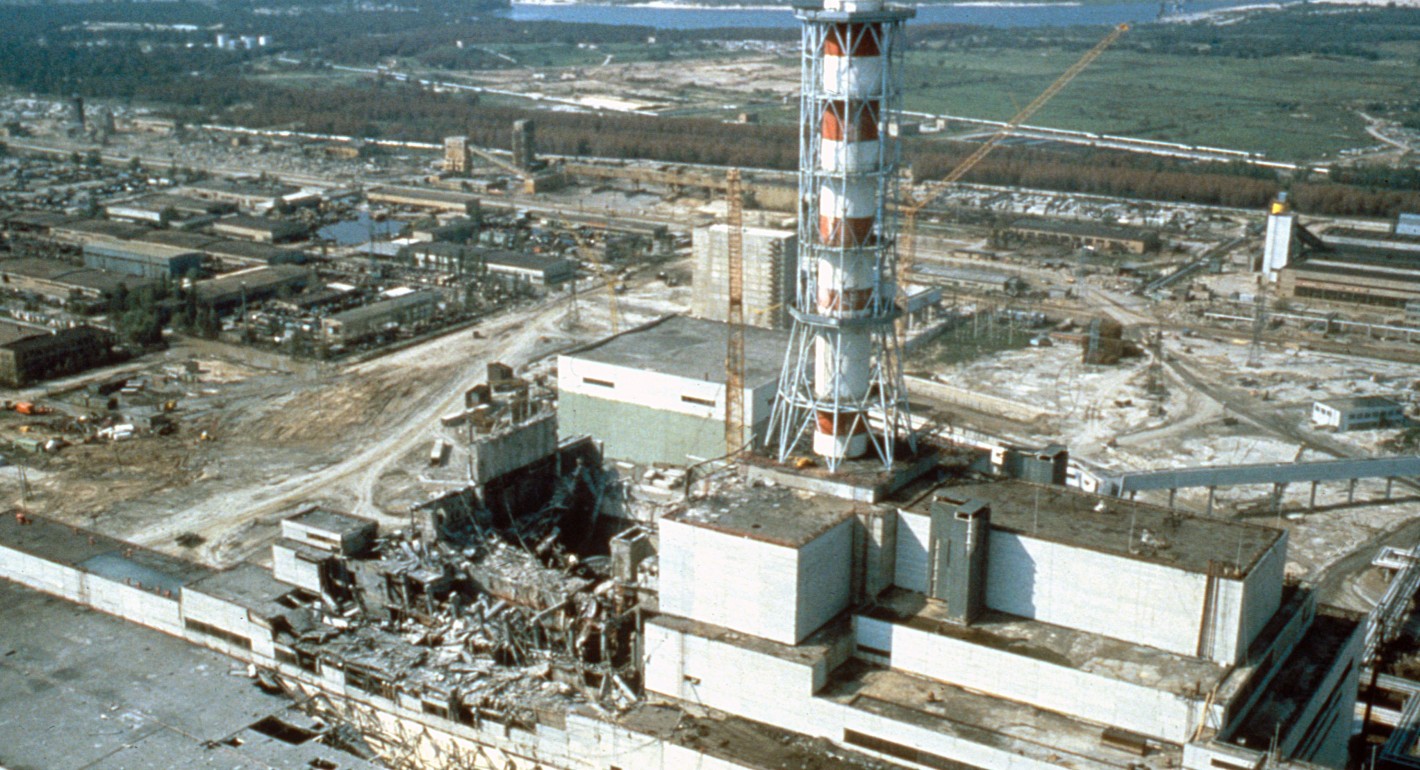
The 1986 incident showed that a nuclear accident anytime is a nuclear accident for all time.

Corey Hinderstein