• Research
  • Emissary
  • About
  • Experts
Carnegie Global logoCarnegie lettermark logo
DemocracyIran
  • Donate
{
  "authors": [
    "Michele Dunne"
  ],
  "type": "legacyinthemedia",
  "centerAffiliationAll": "dc",
  "centers": [
    "Carnegie Endowment for International Peace",
    "Carnegie Europe"
  ],
  "collections": [],
  "englishNewsletterAll": "menaTransitions",
  "nonEnglishNewsletterAll": "",
  "primaryCenter": "Carnegie Endowment for International Peace",
  "programAffiliation": "MEP",
  "programs": [
    "Middle East"
  ],
  "projects": [],
  "regions": [
    "Middle East"
  ],
  "topics": [
    "Political Reform",
    "Democracy",
    "Security",
    "Foreign Policy"
  ]
}
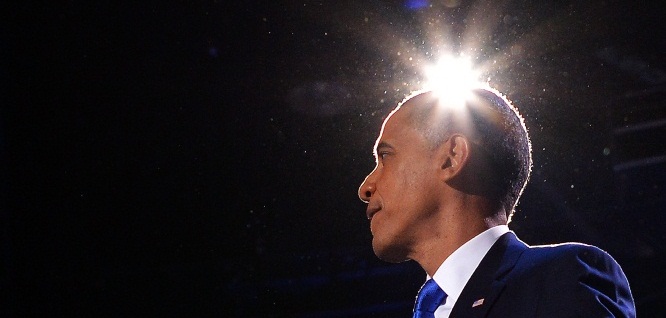
Source: Getty

In The Media

One Year of Obama in the Middle East: Have Transatlantic Differences Narrowed?

U.S. rhetoric has become more closely aligned with European positions on the Arab-Israeli peace process and democracy and human rights promotion in the Middle East, but there has not been a significant increase in transatlantic cooperation on these issues.

Link Copied
By Michele Dunne
Published on Feb 1, 2010
Program mobile hero image

Program

Middle East

The Middle East Program in Washington combines in-depth regional knowledge with incisive comparative analysis to provide deeply informed recommendations. With expertise in the Gulf, North Africa, Iran, and Israel/Palestine, we examine crosscutting themes of political, economic, and social change in both English and Arabic.

Learn More

Source: FRIDE Policy Brief

One Year of Obama in the Middle East: Have TransatUnder the Obama administration, the United States has moved closer to European positions on the Arab-Israeli peace process and the promotion of democracy and human rights in the Middle East, at least at the level of rhetoric. There has been no significant increase, however, in transatlantic cooperation on these questions. The United States is still trying to keep the initiative on Arab-Israeli issues to itself, and has not engaged European partners so far in its evolving policy on democracy issues. The Obama administration is coming under increasing criticism in the United States and the Middle East for ineffective policies on both of these topics, which is likely to lead to some rethinking over the next six months and could open the way to closer cooperation or, alternatively, greater friction with Europe. Early indications suggest that President Obama might disengage from Arab-Israeli diplomacy for the present in favour of other priorities.

This report was written for FRIDE and presented at an event jointly hosted by FRIDE, CEPS and the Heinrich Boll Foundation.

About the Author

Michele Dunne

Former Nonresident Scholar, Middle East Program

Michele Dunne was a nonresident scholar in Carnegie’s Middle East Program, where her research focuses on political and economic change in Arab countries, particularly Egypt, as well as U.S. policy in the Middle East.

    Recent Work

  • Research
    Islamic Institutions in Arab States: Mapping the Dynamics of Control, Co-option, and Contention
      • +6

      Yasmine Farouk, Nathan J. Brown, Maysaa Shuja Al-Deen, …
  • Research
    From Hardware to Holism: Rebalancing America’s Security Engagement With Arab States
      • +8

      Robert Springborg, Emile Hokayem, Becca Wasser, …

Michele Dunne
Former Nonresident Scholar, Middle East Program
Michele Dunne
Political ReformDemocracySecurityForeign PolicyMiddle East

Carnegie does not take institutional positions on public policy issues; the views represented herein are those of the author(s) and do not necessarily reflect the views of Carnegie, its staff, or its trustees.

More Work from Carnegie Endowment for International Peace

  • Trump walking toward Xi, both with arms extended to shake hands
    Commentary
    Emissary
    The U.S. and China Need an AI Hotline. Here’s How to Build It.

    It should address the shortcomings of previous crisis communication efforts and adapt to the demands of frontier AI.

      • Lucy Luo

      Lucy Luo

  • Commentary
    Carnegie Politika
    Leaving Russian-Speakers Without Representation Is a Risk for Latvia

    If the Russian-speaking community in Latvia cannot articulate their interests without being seen as disloyal, they could end up embracing a pro-Kremlin agenda.

      Sergejs Potapkins
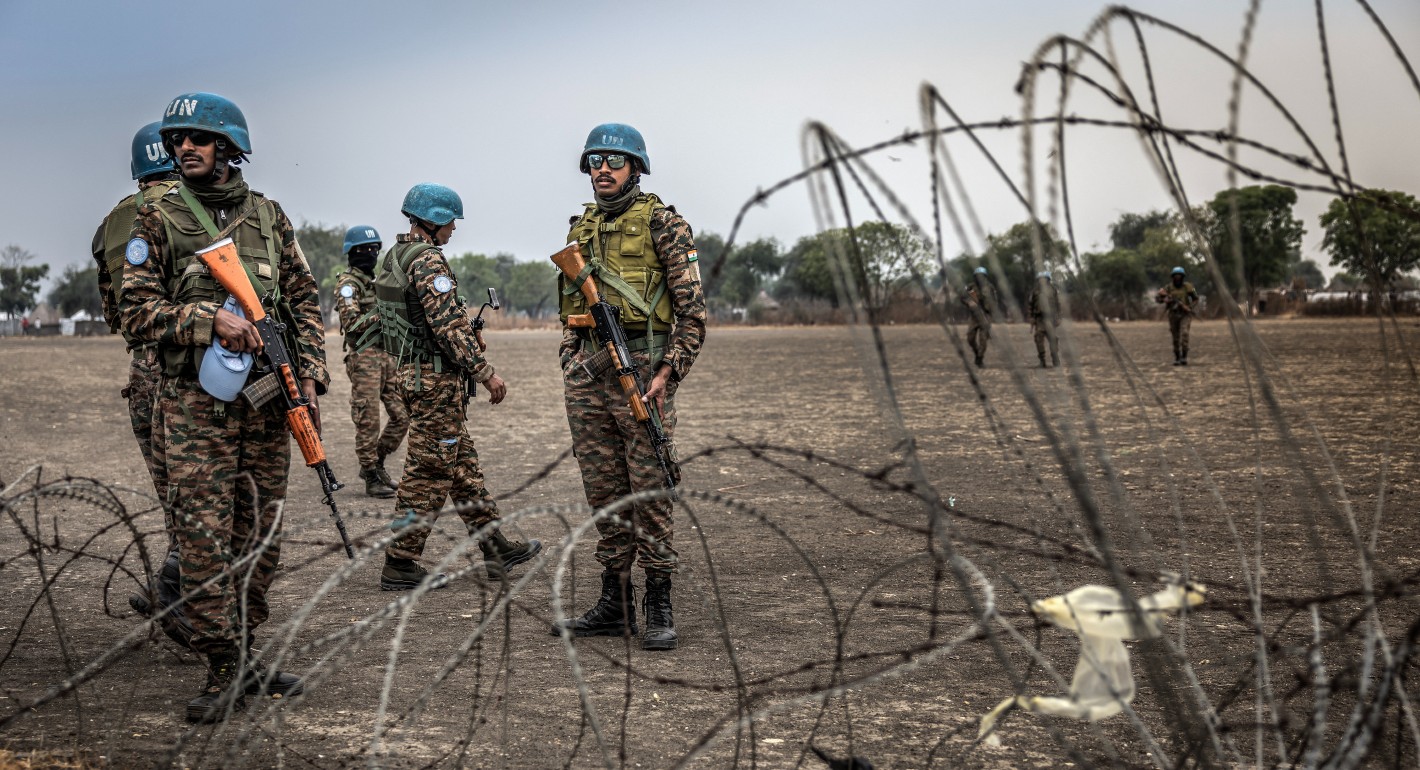
  • Soldiers standing behind barbed wire
    Commentary
    Emissary
    The UN Isn’t Declining. It’s Decomposing.

    Washington’s decision to support some UN functions while letting others wither is pulling the organization apart at the seams.

      Stewart Patrick, Theodore Zaritsky

  • Commentary
    Strategic Europe
    Taking the Pulse: Does the EU Have a Germany Problem?

    Are Germany’s economic, industrial, and political struggles becoming a liability for the EU’s ability to rise to the geopolitical moment?

      • Rym Momtaz

      Rym Momtaz, ed.

  • Commentary
    Carnegie Politika
    Putin Has Been a Hindrance, Not a Help, to United Russia’s Election Campaign

    Russia’s ruling party would have benefited from Putin appearing as its distant patron, but as an active frontman imposing his views on the public, he has done nothing but harm both the party’s election campaign and the ruling system overall.

      Andrey Pertsev

Get more news and analysis from
Carnegie Endowment for International Peace
Carnegie global logo, stacked
1779 Massachusetts Avenue NWWashington, DC, 20036-2103Phone: 202 483 7600
  • Research
  • Emissary
  • About
  • Experts
  • Donate
  • Programs
  • Events
  • Blogs
  • Podcasts
  • Contact
  • Annual Reports
  • Careers
  • Privacy
  • For Media
  • Government Resources
Get more news and analysis from
Carnegie Endowment for International Peace
© 2026 Carnegie Endowment for International Peace. All rights reserved.