Article
Pieter Bottelier
{
  "authors": [
    "Pieter Bottelier"
  ],
  "type": "legacyinthemedia",
  "centerAffiliationAll": "dc",
  "centers": [
    "Carnegie Endowment for International Peace"
  ],
  "collections": [],
  "englishNewsletterAll": "asia",
  "nonEnglishNewsletterAll": "",
  "primaryCenter": "Carnegie Endowment for International Peace",
  "programAffiliation": "AP",
  "programs": [
    "Asia"
  ],
  "projects": [],
  "regions": [
    "East Asia",
    "China",
    "North America"
  ],
  "topics": [
    "Economy"
  ]
}
Source: Getty
China recently surprised many economists by raising its official loan interest rate in an effort to ward off higher inflation and prevent the further development of a potentially dangerous property bubble.
Source: Voice of America

Pieter Bottelier, Senior adjunct professor of China studies at Johns Hopkins University says China raised the interest rates to try to ward off some serious economic problems. Those problems, he says, are much higher inflation than the government feels comfortable with and a property bubble of quite significant proportions and potentially dangerous for the economy. He says the interest rate hike reflects a high level of concern about inflation and was an effort to bring an overheating economy down to earth.
Oh! It is undoubtedly serious. It's a major phenomenon, but it's not national. It's essentially limited to the major cities on the east coast and a few tier one interior cities and Hainan Island. The national averages do not show the bubble phenomenon.
I think that's all part of it. It's very complex, but the interest rate adjustment is, I think, clearly intended to help cool down the economy and achieve a soft landing. The economy had been overheating since the second-half of 2009. But, by itself, if will not accomplish that, that miracle. There is, in my view, a high probability that China's economy will continue to grow fairly fast, but not at these terrible rates we have seen in recent years. My expectation is that the growth rate, partly because of natural pressures, partly because the government, I think, wants to achieve it, will come down in the next several years to a more sustainable level of around 7 percent.
The adjustment in interest rates is not going to do anything automatically for the exchange rate. If they want to continue moving in the right direction and achieve greater independence for domestic monetary policy they will have to make the rate more flexible. That's what they said they would do. But, there's no immediate connection between the interest rate adjustment and the exchange rate.

Former Nonresident Scholar, International Economics Program
Bottelier was a nonresident scholar in Carnegie’s International Economics Program and senior adjunct professor of China studies at the School of Advanced International Studies (SAIS), the Johns Hopkins University. His work currently focuses on China’s economic reform and development.
Recent Work
Pieter Bottelier
Pieter Bottelier
Carnegie does not take institutional positions on public policy issues; the views represented herein are those of the author(s) and do not necessarily reflect the views of Carnegie, its staff, or its trustees.
Five problems—and solutions—to make it actually work as a tool of great power competition.

Afreen Akhter
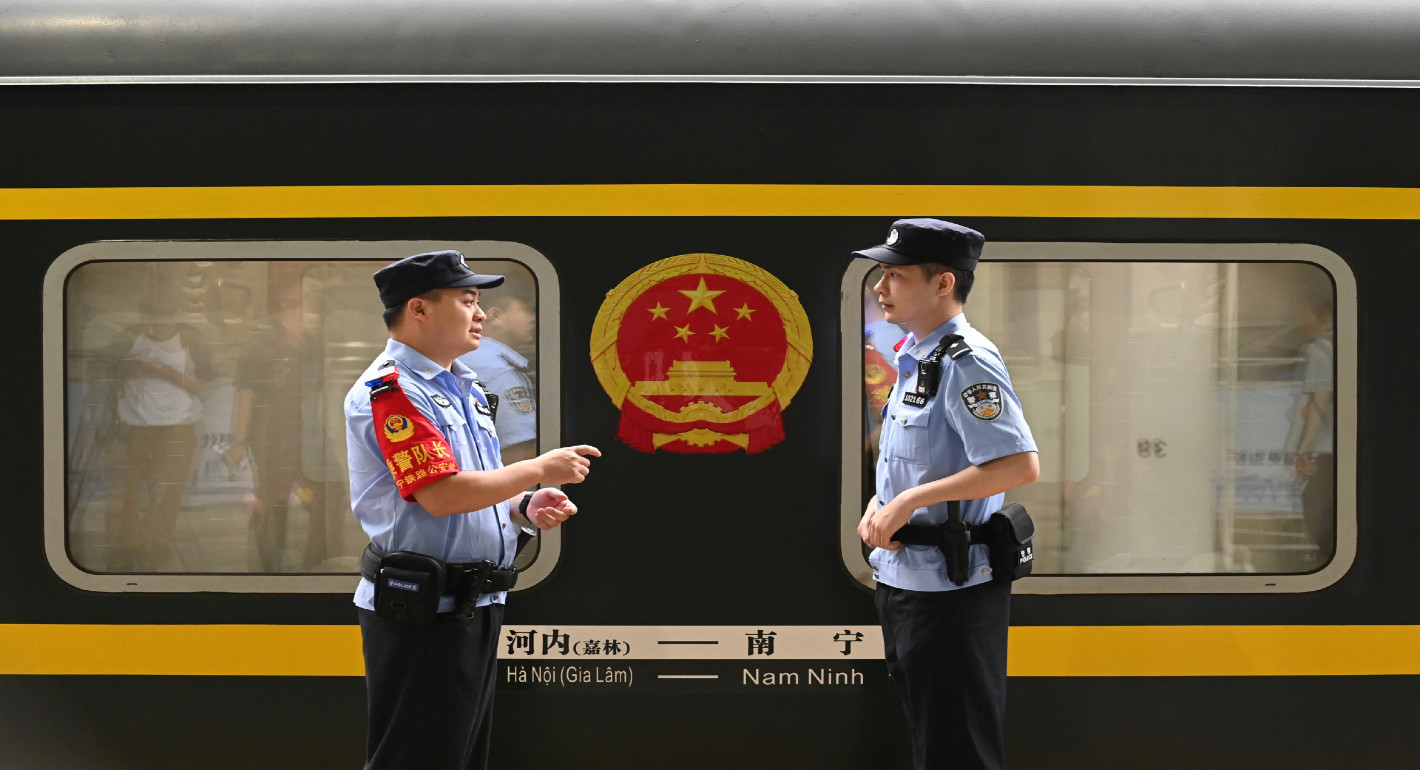
Despite long-standing differences, China and Vietnam are reinforcing common ground for collaboration, especially in public security. This internal security–centered diplomacy offers a strengthened road map for how China moves forward with Southeast Asia.
Sophie Zhuang

As the war between the United States, Israel, and Iran continues, Carnegie scholars contribute cutting-edge analysis on the events of the war and their wide-reaching implications. From the impact on Iran and its immediate neighbors to the responses from Gulf states to fuel and fertilizer shortages caused by the effective shutdown of the Strait of Hormuz, the war is reshaping Middle East alliances and creating shockwaves around the world. Carnegie experts analyze it all.

Governments now deploy online platforms to shape public opinion and influence collective cognition. This is acutely apparent between China and Taiwan.
Frank Cheng-Shan Liu

Across Asia, China is better positioned to withstand energy shocks from the fallout of the Iran war. Its abundant coal capacity can ensure stability in the near term. Yet at the same time, the country’s energy transition away from coal will make it even less vulnerable during the next shock.

Damien Ma