• Research
  • Emissary
  • About
  • Experts
Carnegie Global logoCarnegie lettermark logo
DemocracyIran
  • Donate
{
  "authors": [
    "Nima Gerami",
    "Pierre Goldschmidt"
  ],
  "type": "legacyinthemedia",
  "centerAffiliationAll": "dc",
  "centers": [
    "Carnegie Endowment for International Peace"
  ],
  "collections": [],
  "englishNewsletterAll": "ctw",
  "nonEnglishNewsletterAll": "",
  "primaryCenter": "Carnegie Endowment for International Peace",
  "programAffiliation": "NPP",
  "programs": [
    "Nuclear Policy"
  ],
  "projects": [],
  "regions": [
    "Middle East",
    "Iran"
  ],
  "topics": [
    "Nuclear Policy"
  ]
}
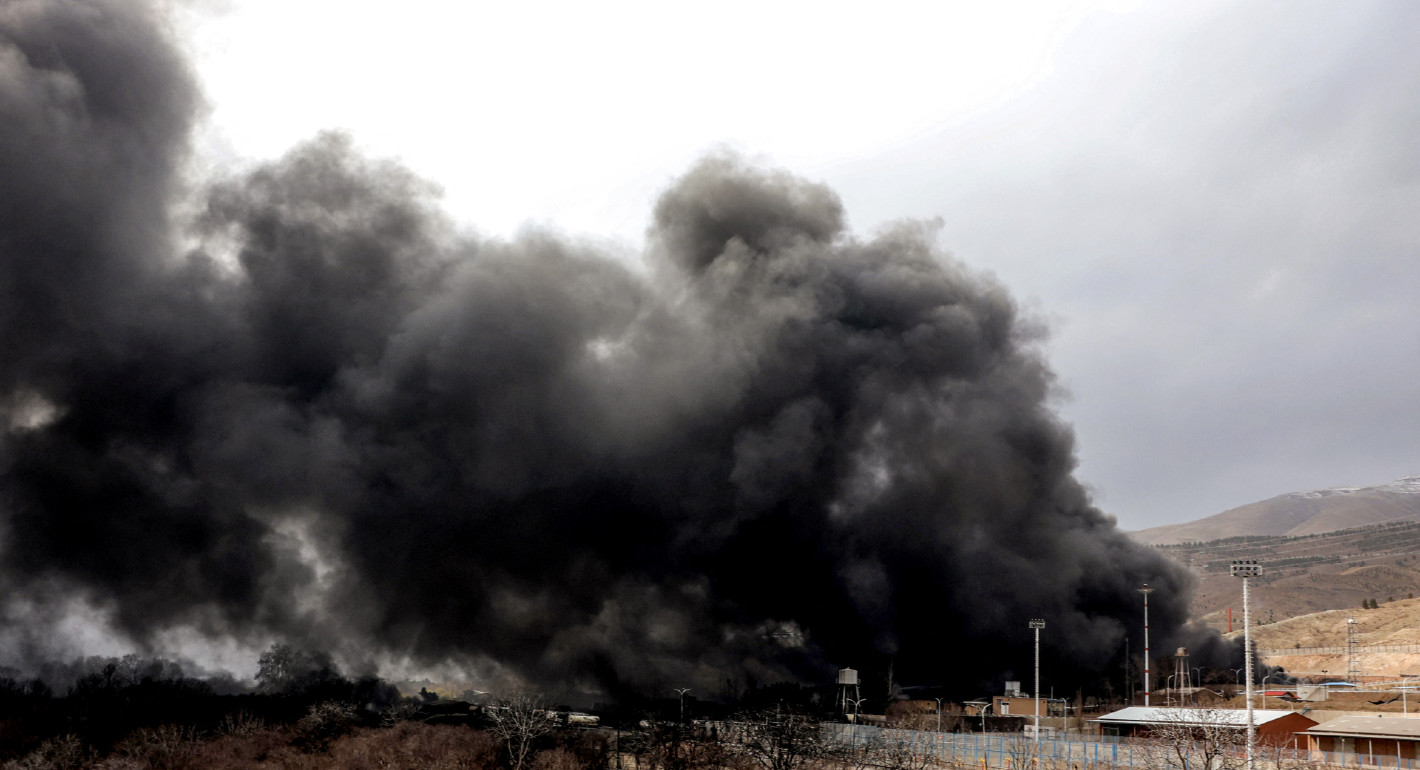
Source: Getty

In The Media

The International Atomic Energy Agency's Decision to Find Iran in Non-Compliance, 2002–2006

The public revelations of Iran's clandestine nuclear activities in August 2002 unleashed one of the most intensive and highly publicized inspections in the history of the International Atomic Energy Agency.

Link Copied
By Nima Gerami and Pierre Goldschmidt
Published on Dec 6, 2012
Program mobile hero image

Program

Nuclear Policy

The Nuclear Policy Program aims to reduce the risk of nuclear war. Our experts diagnose acute risks stemming from technical and geopolitical developments, generate pragmatic solutions, and use our global network to advance risk-reduction policies. Our work covers deterrence, disarmament, arms control, nonproliferation, and nuclear energy.

Learn More

Source: National Defense University

On August 14, 2002, at a press conference in Washington, DC, the National Council of Resistance of Iran (NCRI), an exiled Iranian opposition group, drew worldwide attention when it publicly accused Iran of clandestinely developing nuclear weapons. Alireza Jafarzadeh, then-U.S. media spokesperson for the NCRI, described two “top secret” nuclear facilities being constructed in Iran at Natanz and Arak under the guise of front companies involved in the procurement of nuclear material and equipment. Noting that media attention had focused on Iran’s publicly declared civilian facilities, Jafarzadeh claimed that “in reality, there are many secret nuclear programs at work in Iran without knowledge of the International Atomic Energy Agency (IAEA),” the international body responsible for verifying and assuring compliance with safeguards obligations under the 1968 Nuclear Non-Proliferation Treaty (NPT).

Nearly 3 months before the NCRI’s press conference, the U.S. Government reportedly briefed the IAEA on Iran’s clandestine nuclear activities. The IAEA had received briefings from several member states since the early 1990s that indicated possible undeclared nuclear activities in Iran. Yet IAEA inspectors needed Iranian authorities to provide physical access to any suspected sites in order to verify the absence of undeclared nuclear material and activities. The public revelations of Iran’s clandestine nuclear activities in 2002 unleashed one of the most intensive and highly publicized inspections in the history of the IAEA. In the shadow of the political divisions wrought by the U.S.-led military campaign against Iraq, the IAEA Board of Governors—the Agency’s main policymaking body composed of 35 member states—delayed the decision to find Iran in non-compliance with its NPT safeguards agreement.

The process for determining non-compliance depends on the technical and legal findings of the IAEA Secretariat—the Agency’s technical arm—and the political judgments made by the IAEA Board. However, the lack of an established definition of non-compliance makes the decisionmaking process one of the most challenging tasks faced by the IAEA, which has a statutory obligation to report non-compliance to the UN Security Council (UNSC) and the General Assembly. Since the IAEA was first established in 1957, the Agency’s Board of Governors traditionally made its decisions based on a rule of consensus widely celebrated as the “Spirit of Vienna.” All previous safeguards violations were routinely reported as non-compliance by the IAEA to the UNSC (Iraq in 1991, Romania in 1992, and North Korea in 1993 and 1994). In the case of Iran, it took more than 2 years for the IAEA Board to reach a formal finding of non-compliance. This case study examines the IAEA’s approach to determining non-compliance with NPT safeguards agreements, as exemplified by past experience with Iran, and addresses the following questions: How did the IAEA decide to find Iran in non-compliance and refer the case to the UNSC? Who were the primary actors involved and how did they seek to advance their positions? How did the internal politics of the IAEA and changing geopolitical circumstances shape the Agency’s decisionmaking process?

This case study was originally published at the National Defense University's Center for the Study of Weapons of Mass Destruction.

About the Authors

Nima Gerami

Former Research Assistant, Nuclear Policy Program

Pierre Goldschmidt

Former Nonresident Senior Associate, Nuclear Policy Program

Goldschmidt was a nonresident senior associate at the Carnegie Endowment.

Authors

Nima Gerami
Former Research Assistant, Nuclear Policy Program
Pierre Goldschmidt
Former Nonresident Senior Associate, Nuclear Policy Program
Pierre Goldschmidt
Nuclear PolicyMiddle EastIran

Carnegie does not take institutional positions on public policy issues; the views represented herein are those of the author(s) and do not necessarily reflect the views of Carnegie, its staff, or its trustees.

More Work from Carnegie Endowment for International Peace

  • Research
    Book Review of Enduring Hostility: The Making of America’s Iran Policy

    A review of a detailed account of how antipathy toward Tehran has assumed a life and logic of its own in Washington, DC.

      • Jane Darby Menton

      Jane Darby Menton

  • Aerial view of Yemeni refugee tents displaced by war
    Article
    In Yemen, Climate Finance Must Respond to Entrenched Instability

    The world’s climate adaptation funds must adapt to address the ways that climate change is deepening state fragility.

      Ray Salvatore Jennings, Paul Andrew Mayewski

  • Commentary
    Carnegie Politika
    Simmering U.S.-Iran Conflict Is Moscow’s Ideal Outcome

    Ongoing uncertainty in the Middle East allows Moscow to both increase its influence in Tehran and continue to enjoy the financial windfall of higher oil prices.

      Nikita Smagin

  • Commentary
    President Lee Jae Myung: A Year in Power

    President Lee marked his first year in office after one of the most tumultuous periods in South Korean politics. Though Lee has enjoyed a high approval rating, a large majority in the National Assembly, and foreign policy victories, Lee and his party’s political fortunes depend on generating economic growth, learning the right lessons from the recent local elections, and managing contentious factional strife within his political base.

      Chung Min Lee

  • Commentary
    Carnegie Politika
    Multiple Wars Are Ruining Central Asia’s Efforts to Diversify Its Trade Routes

    This year’s wars have made alternative routes to transit through Russia no less risky for Central Asian countries.

      Galiya Ibragimova

Get more news and analysis from
Carnegie Endowment for International Peace
Carnegie global logo, stacked
1779 Massachusetts Avenue NWWashington, DC, 20036-2103Phone: 202 483 7600
  • Research
  • Emissary
  • About
  • Experts
  • Donate
  • Programs
  • Events
  • Blogs
  • Podcasts
  • Contact
  • Annual Reports
  • Careers
  • Privacy
  • For Media
  • Government Resources
Get more news and analysis from
Carnegie Endowment for International Peace
© 2026 Carnegie Endowment for International Peace. All rights reserved.