

Q&A
Stephen Tankel
{
  "authors": [
    "Stephen Tankel"
  ],
  "type": "other",
  "centerAffiliationAll": "dc",
  "centers": [
    "Carnegie Endowment for International Peace"
  ],
  "collections": [],
  "englishNewsletterAll": "ctw",
  "nonEnglishNewsletterAll": "",
  "primaryCenter": "Carnegie Endowment for International Peace",
  "programAffiliation": "SAP",
  "programs": [
    "South Asia"
  ],
  "projects": [],
  "regions": [
    "South Asia",
    "India",
    "Pakistan"
  ],
  "topics": [
    "Security"
  ]
}
Source: Getty
India has been confronting jihadist violence for decades. Yet these dynamics remain underexplored and difficult to comprehend, particularly in terms of ties to external jihadist groups.
Source: Wilson Center
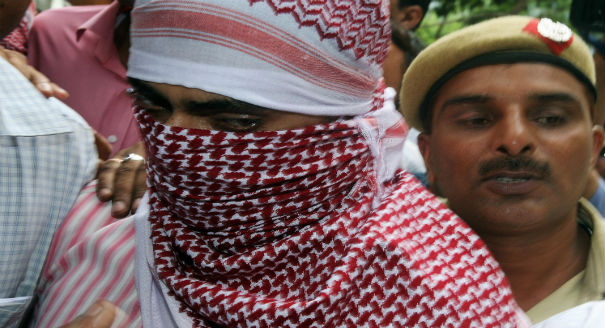
India has been confronting jihadist violence for decades. Yet these dynamics remain underexplored and difficult to comprehend, particularly in terms of ties to either the Pakistani state or nonstate Pakistani and Bangladeshi jihadist groups. Expeditionary terrorism by Pakistani militants typically receives the most focus, but indigenous actors benefiting from external support are responsible for the majority of jihadist attacks within India. The Indian Mujahideen (IM) network that announced its presence in 2007 is only the latest and most well-known manifestation of the indigenous Islamist militant threat. A few Indian Muslims have been launching terrorist strikes—often with Pakistani support and sometimes on their own—for more than twenty years. Despite this steady drumbeat of at least partly indigenous attacks, Indian officials did not acknowledge the problem until the end of the 2010s. Instead, the overwhelming majority of attacks were blamed on nonstate Pakistani and Bangladeshi groups. Little attention was paid to investigating the dynamics of the Indian networks involved in perpetrating them. This contributed to a knowledge gap in understanding Indian jihadism. U.S. analysts, policymakers, and practitioners have highlighted the paucity of information regarding the nature and scale of the indigenous Indian jihad threat, the degree to which indigenous networks could threaten U.S. interests in India or across wider South Asia region, and the nebulous ties between Indian jihadist networks and Pakistan-based groups.
This report seeks to address these and other questions. It argues that the Indian Mujahideen—the primary indigenous jihadist threat—is part of a larger universe of Islamist militant entities operating in India, many but not all of which are connected to external entities such as the Pakistani militant group Lashkar-e-Taiba (LeT) and the Bangladeshi Harkat-ul-Jihad-al-Islami (HuJI-B). It also asserts that the IM should not be viewed as a formal organization, but instead is best understood as a label for a relatively amorphous network populated by jihadist elements from the fringes of the Students Islamic Movement of India (SIMI) and the criminal underworld. The improper use of the IM label for all indigenous jihadist violence contributes to confusion about its composition and cohesion. Today, the decentralized IM network has a loose leadership currently based in Pakistan, but moving between there and the United Arab Emirates (UAE) and the Kingdom of Saudi Arabia. The IM connects to and sometimes attempts to absorb smaller cells and self-organizing clusters of would-be militants. Finally, this report illustrates that the Indian jihadist movement formed organically and as a result of endogenous factors, specifically communal grievances and a desire for revenge, but is more lethal and more resilient than it otherwise would have been, thanks to external support from the Pakistani state and Pakistan- and Bangladesh-based militant groups. In other words, external support was a force multiplier for Indian militancy rather than a key driver of it. Although the IM receives support from LeT, it should not be viewed as an affiliate within the same command-and control hierarchy. This distinguishes the IM from some of the other LeT cells or operatives active in India.
Former Nonresident Scholar, South Asia Program
Tankel was a nonresident scholar at the Carnegie Endowment, where his research focuses on insurgency, terrorism, and the evolution of nonstate armed groups.
Recent Work
Stephen Tankel
Stephen Tankel
Carnegie does not take institutional positions on public policy issues; the views represented herein are those of the author(s) and do not necessarily reflect the views of Carnegie, its staff, or its trustees.

A deep dive into the policy ecosystems behind battery development in China, South Korea, Japan, the European Union (including some of its member states), the United States, Canada, and India.



Milo McBride, Herbert Crowther, Darcie Draudt-Véjares, …

The Horn of Africa countries are among those facing a new security calculus.


Andrew Leber, Lesley Anne Warner

The European far right might fail to steer EU policy in the direction Russia wants, but they will create enough chaos inside Europe to benefit the Kremlin.

Dimitar Bechev

The new U.S.–Denmark–Greenland agreement will help Washington exert political, economic, and financial dominance under the guise of security. Yet, it acknowledged Copenhagen’s and Nuuk’s sovereignty on the island.

Marc Pierini

A summer of escalation in the Black Sea has hurt Ukraine economically and is exacerbating world food security. A truce is needed—as is a broader reframing of Europe’s Ukraine strategy.

Thomas de Waal