

Commentary
The European far right might fail to steer EU policy in the direction Russia wants, but they will create enough chaos inside Europe to benefit the Kremlin.
Dimitar Bechev
{
  "authors": [
    "Neha Ansari"
  ],
  "type": "legacyinthemedia",
  "centerAffiliationAll": "dc",
  "centers": [
    "Carnegie Endowment for International Peace"
  ],
  "collections": [],
  "englishNewsletterAll": "ctw",
  "nonEnglishNewsletterAll": "",
  "primaryCenter": "Carnegie Endowment for International Peace",
  "programAffiliation": "NPP",
  "programs": [
    "Nuclear Policy"
  ],
  "projects": [],
  "regions": [
    "South Asia",
    "India",
    "Pakistan"
  ],
  "topics": [
    "Foreign Policy"
  ]
}
Source: Getty
The Pakistan army’s divide-and-rule strategy may have created another monster, one that has more resources and resonance and causes more bloodshed.
Source: National
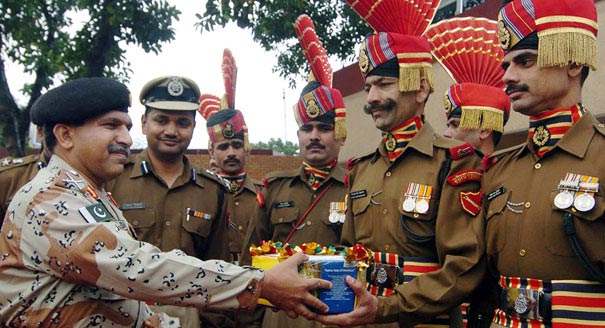
An emotional ceremony took place at the Wagah-Attari border post separating Pakistan and India on November 3, a day after at least 60 lives were lost in a brutal suicide attack. The bomber struck when people were exiting the compound on the Pakistani side after the daily military parade ended at dusk. An attack of this magnitude was the first of its kind since the military began its offensive on June 15.

Neha Ansari
Former Visiting Researcher, Nuclear Policy Program
Neha Ansari is a visiting researcher in Carnegie’s Nuclear Policy Program. Her research focuses on South Asia, particularly strategic relations between Afghanistan, Pakistan, and India.
Carnegie does not take institutional positions on public policy issues; the views represented herein are those of the author(s) and do not necessarily reflect the views of Carnegie, its staff, or its trustees.

The European far right might fail to steer EU policy in the direction Russia wants, but they will create enough chaos inside Europe to benefit the Kremlin.

Dimitar Bechev
Washington needs to recognize that influence in the Western Hemisphere comes from presence, delivery, and reliability. It also must recognize that while the United States remains the key external actor, it no longer operates in a permissive environment and cannot presume deference from regional players who have other options, namely China.
Juan S. Gonzalez

Minsk clearly expected the dialogue with Washington to yield more results, in particular the lifting of EU sanctions and permission to export potash.

Artyom Shraibman

A summer of escalation in the Black Sea has hurt Ukraine economically and is exacerbating world food security. A truce is needed—as is a broader reframing of Europe’s Ukraine strategy.

Thomas de Waal

Why governance of rapidly evolving technology will be distributed and complex.


Stewart Patrick, Scott Singer