

Commentary
Evan A. Feigenbaum
{
  "authors": [
    "Evan A. Feigenbaum"
  ],
  "type": "legacyinthemedia",
  "centerAffiliationAll": "dc",
  "centers": [
    "Carnegie Endowment for International Peace"
  ],
  "collections": [],
  "englishNewsletterAll": "asia",
  "nonEnglishNewsletterAll": "",
  "primaryCenter": "Carnegie Endowment for International Peace",
  "programAffiliation": "AP",
  "programs": [
    "Asia"
  ],
  "projects": [],
  "regions": [
    "North America",
    "United States",
    "Central Asia"
  ],
  "topics": [
    "Foreign Policy"
  ]
}
Source: Getty
The Central Asia 5+1 initiative offers a forum that will inject the United States directly into the regional conversation.
Source: Voice of America
As Secretary of State John Kerry begins his Central Asia tour, Carnegie’s Evan Feigenbaum, former Deputy Assistant Secretary of State for the region, spoke to Navbahor Imamova, VOA Uzbek, about the U.S. role in this part of the world and the challenges Washington faces there. Feigenbaum suggested that the Central Asia 5+1 initiative is a good forum that will inject the United States directly into the regional conversation but draws off prior U.S. experience, including the Bush-era Trade and Investment Framework Agreement with Central Asia. Cynicism over the effort to promote regional economic integration stems from perceptions among regional elites that the U.S. role has been mostly “talk” rather than action, but also from the fact that the United States brings little tangible investment to the table yet has been a greater enthusiast of regional cooperation than the Central Asian governments themselves. Feigenbaum argued that such cynicism does not negate the importance of trying to promote regional cooperation. There is a substantial body of research that shows that noncooperation regionally erects significant transaction costs that hinder growth. Cooperation could, therefore, spur growth. But what is more, China, among others, is making tangible investments that have begun to overcome such obstacles in some areas, such as through the construction of new cross-border pipelines. Before 1991, regional cooperation was unnecessary because the Soviet authorities in Moscow could simply compel cooperation by administrative fiat. Cooperation in a post-independence environment has proved to be hard but nonetheless can be achieved with the right tools. Feigenbaum explored some of these tools in the interview. He also examined at some length the involvement of China and Japan in Central Asia. He contrasted Beijing’s and Tokyo’s activities with the U.S. role, arguing that there are ways, for example, for the United States and Japan to concert their agendas and piggyback on existing initiatives, such as the Asian Development Bank’s Central Asia Regional Economic Cooperation program.
This interview was originally broadcast by Voice of America.

Vice President for Studies
Evan A. Feigenbaum is vice president for studies at the Carnegie Endowment for International Peace, where he oversees work at its offices in Washington, New Delhi, and Singapore on a dynamic region encompassing both East Asia and South Asia. He served twice as Deputy Assistant Secretary of State and advised two Secretaries of State and a former Treasury Secretary on Asia.
Recent Work
Evan A. Feigenbaum
Evan A. Feigenbaum
Carnegie does not take institutional positions on public policy issues; the views represented herein are those of the author(s) and do not necessarily reflect the views of Carnegie, its staff, or its trustees.
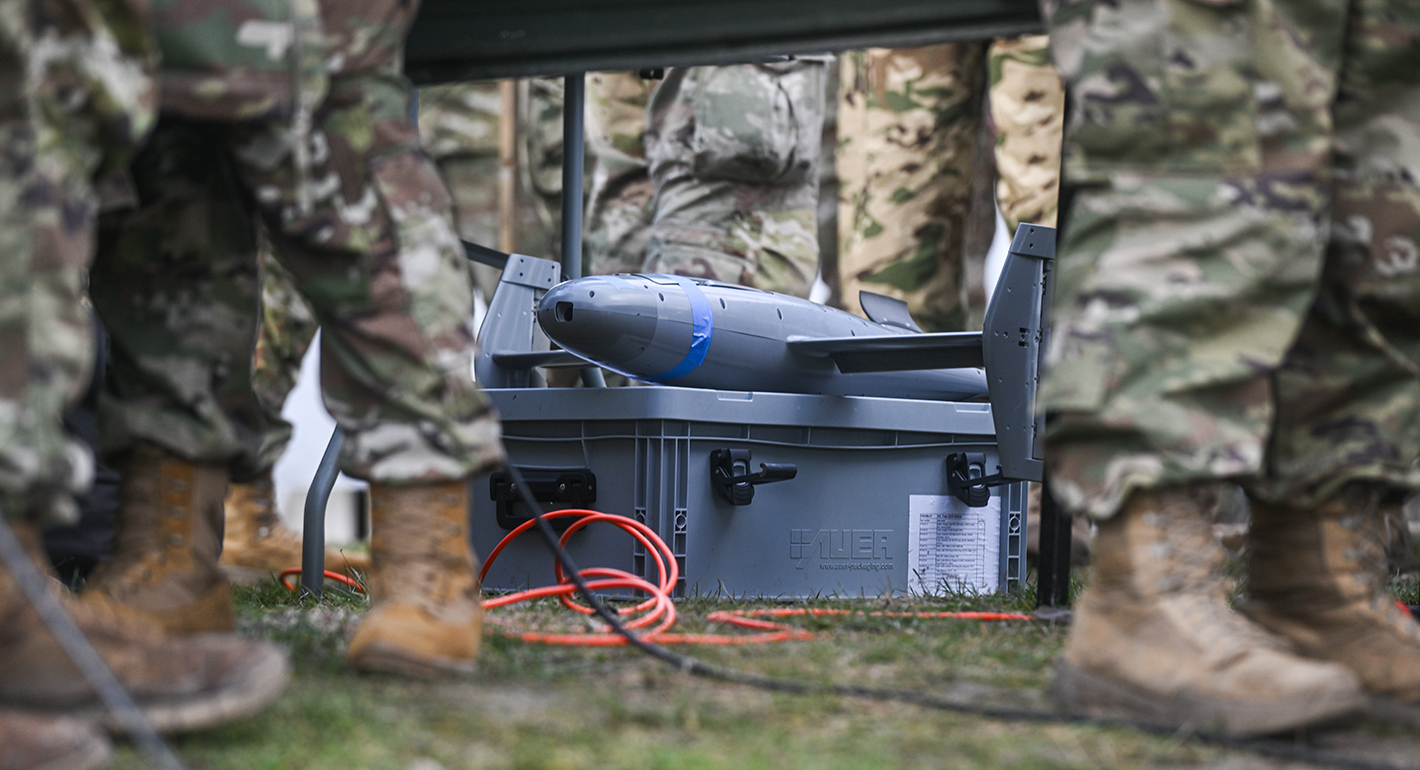
The Pentagon is calling for a rapid AI transformation. Autonomous drones offer a case study in the eight bottlenecks the U.S. military must navigate to realize that vision.
Jake Steckler

Most migrants may have left Ceuta, but the effects may linger.


Alejandro Martin Rodriguez, Sarah Yerkes

There is a transnational far-right populist movement that links middle powers in a global movement that extends well beyond Trump.


Christopher S. Chivvis, Rohan Mukherjee, Milan Vaishnav

When faced with fuel shortages in the past, Central Asian governments could always count on additional supplies from Moscow. That safety net no longer exists.

Galiya Ibragimova

Saied’s main accomplishment has been to destroy a decade’s worth of democratic progress.
Sarah Yerkes