

Research
- +4
Milan Vaishnav, Rahul Verma, Rukmini S., …
{
  "authors": [
    "Christophe Jaffrelot"
  ],
  "type": "legacyinthemedia",
  "centerAffiliationAll": "dc",
  "centers": [
    "Carnegie Endowment for International Peace"
  ],
  "collections": [],
  "englishNewsletterAll": "ctw",
  "nonEnglishNewsletterAll": "",
  "primaryCenter": "Carnegie Endowment for International Peace",
  "programAffiliation": "SAP",
  "programs": [
    "South Asia"
  ],
  "projects": [],
  "regions": [
    "South Asia",
    "India"
  ],
  "topics": [
    "Political Reform",
    "Democracy"
  ]
}
Source: Getty
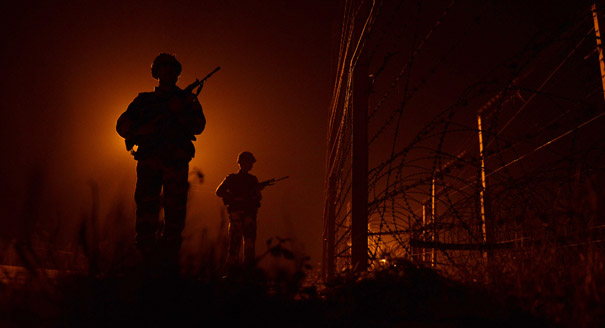
The shrinking of police forces in India has resulted in some state governments contracting out the enforcement of law and order to vigilantes.
Source: Indian Express
Vigilantes hit the headlines every other day in “new India”. But this phenomenon is not that new and exists elsewhere as well. It gained momentum under previous union governments, especially in BJP-ruled states. As a result, the Bajrang Dal’s cultural policing of a “deviant” artist like M.F. Husain forced him to leave the country.
But vigilantism has grown so fast in the last few years that its new forms differ not just in degree from the earlier versions, but also in kind. The development of the gau rakshak movement suggests such an interpretation. Like the Bajrang Dal in the 1980s-1990s, the Gau Rakshak Dal has acquired quasi-national dimensions. It has branches in 10 states, all in northern and western India. But it relates differently to the state.
This phenomenon can be explained by the shrinking of the police forces in the context of the neoliberal strategy of streamlining state agencies. Uttar Pradesh, for instance, lacks 1,01,619 policemen. Last month, the Supreme Court directed the state to start recruiting 30,000 constables a year till 2020. It also directed that 3,000 posts at the sub-inspector level should be filled annually from January 2018 till January 2021. Tamil Nadu and Karnataka were also asked to fill 45,000 vacancies.
In a situation such as this, some state governments may subcontract the enforcement of law and order to vigilantes. However, such an interpretation of the rise of vigilantism, one that has recently become popular among social scientists across the world, needs to be qualified in the case of India since only the governments sympathetic to the rakshaks have outsourced law enforcement to these vigilantes.
Maharashtra and Haryana, two states which have recently introduced new laws banning beef, are a case in point. In Maharashtra, the state government partly outsourced implementation of the beef ban to gau rakshaks. It created the post of “Honorary Animal Welfare Officer” and placed one such officer in each district. All the publicly-known applicants for these posts have been rakshaksfrom the various militias, which had been, till then, stopping “traffickers” unofficially.
In Haryana, where the Gau Rakshak Dal claims to have 5,000 activists, gau rakshaks with hockey sticks patrol the 240-km highway between Chandigarh and Delhi, halting trucks they believe might be transporting beef or live cows.
A similar devolution of power and outsourcing of cultural policing is also taking place in UP, where the Hindu Yuva Vahini, an outfit created by Yogi Adityanath in 2002, continues to report to him even after he assumed the UP chief minister’s office.
What makes Hindu nationalism resort to vigilantism today? There at least three reasons. First, the RSS, since its inception, intended to transform society from the inside by infusing in it its own sense of discipline, which it thought was necessary to defend the Hindus more effectively. It is not just by chance that the movement’s founder, K.B. Hedgewar, decided to use British police uniforms for the swayamsevaks. The RSS intended to give society its own police as early as the1920s.
Such an orientation was well in tune with the original meaning of the word “vigilantism”: In 19th century US, vigilance committees were created to protect the frontier and its pioneers.
Secondly, Hindu nationalists claim to represent society at large and do not want the state to prevail over society. The latter has to regulate itself, as the emphasis on social order and “harmony” — or hierarchy — in the Hindutva doxa suggests. This approach gives the job of policing a greater legitimacy. After all, the people’s will is beyond the law; it is the law. This is something the judiciary has started to internalise as shown by courts factoring “the religious sentiments” of the people (of the majority community to be precise) in some of their decisions.
This facet of Hindu nationalism has clear affinities with the populist repertoire. For the populist leader, the people prevail over the rule of law and public institutions at large. In fact, the vigilantes and their leader supremo (a key component in every populist dispensation) are on the same wavelength for this very reason: They overwhelm public institutions and neutralise them.
Last but not least, the fact that the vigilantes “do the job” is very convenient for the rulers . The state is not guilty of violence since this violence is allegedly spontaneous and if the followers of Hinduism are taking the law into their hands, it is for a good reason — for defending their religion. The moral and political economies of this arrangement are even more sophisticated: The state cannot harass the minorities openly, but by letting vigilantes do so, it keeps majoritarian feelings satisfied.
The private armies, which may be useful for polarising society before elections are also kept happy — not only can they flex their muscles, but they usually extort money (violence mostly occurs when they cannot do so, as is evident from the recent cases of lynching).
Such a scenario has unfolded elsewhere. The verb, “to lynch”, derives from the name of Charles Lynch (1736-1796), a Virginia planter who created irregular courts in the name of “justice of the peace”. He targeted Loyalists (people who held allegiance to Great Britain after the American Revolution) and then held summary trials for such people in an informal court. Such extra-legal activities were emulated by many experts in self-help justice-making on the frontier and then in San Francisco in the 19th century where WASPs initiated “vigilance committees” to discipline Irish migrants. Such rough justice was justified on grounds that the state’s performance was weak and its legitimacy was limited compared to the prestige of the pioneers and the revolutionaries.
Today, however, except some Maoists and a few leftists, most vigilantes of the world try to impose a moral order and their rule in an ethno-nationalist perspective. In Russia, vigilantes — equally good at using (different kinds of) hockey sticks — target gays and Black people. Till recently, in Northern Ireland, paramilitaries enforced their own law in the areas they controlled by using kneecapping to punish petty criminals.
Yet, physical violence is not the only means employed in vigilantism. Naming and shaming was another vigilante practice in 19th century USA, where the activists also indulged in tarring and feathering. The Indian variant of this technique was used by the Shiv Sainiks who blackened the face of Sudheendra Kulkarni because he had invited the former Pakistan minister, Khurshid M. Kasuri, to a book launch.
But “naming and shaming” is usually more sophisticated today thanks to the internet and social media: These innovations have given birth to digital vigilantism. In Russia, the “Occupy Pedophilia” movement is an expert in this domain, whereas in India trolls have been compared to “storm troopers” by the late B. Raman.
Yet, the rule of law may show some resilience. After all, last year, the Gau Raksha Dal leader Satish Kumar was arrested on charges that included rioting and extortion.
This article was originally published in the Indian Express.

Former Nonresident Scholar, South Asia Program
Jaffrelot’s core research focuses on theories of nationalism and democracy, mobilization of the lower castes and Dalits (ex-untouchables) in India, the Hindu nationalist movement, and ethnic conflicts in Pakistan.
Recent Work

Milan Vaishnav, Rahul Verma, Rukmini S., …
Christophe Jaffrelot
Carnegie does not take institutional positions on public policy issues; the views represented herein are those of the author(s) and do not necessarily reflect the views of Carnegie, its staff, or its trustees.

China’s political future will be shaped between now and next October. As the Communist Party enters its intense “campaign season” to prepare for a major political transition in 2027, reading Beijing's actions and responses may become more difficult as domestic politics weigh on its behavior more than usual.

Damien Ma
Despite public disputes over trade and immigration, the strategic partnership’s foundations remain sturdy.
Sameer Lalwani

Putin’s conservative staffing policies and search for ever greater control have cemented parliament’s transformation into a bureaucratic appendage of the executive branch.

Andrey Pertsev

Ex-president Gurbanguly Berdimuhamedov remains interested in politics, but his son Serdar, Turkmenistan’s current president, is becoming increasingly independent and willing to break with his father’s legacy. If their covert rivalry goes too far, both risk losing power.

Galiya Ibragimova

A notable degree of participative democracy has firmly arrived in Europe. But to have more far-reaching impact, democratic deliberation needs to move into a radically new phase.

Richard Youngs