

Commentary
Chung Min Lee
{
  "authors": [
    "Chung Min Lee"
  ],
  "type": "legacyinthemedia",
  "centerAffiliationAll": "dc",
  "centers": [
    "Carnegie Endowment for International Peace"
  ],
  "collections": [
    "Inside Korea"
  ],
  "englishNewsletterAll": "asia",
  "nonEnglishNewsletterAll": "",
  "primaryCenter": "Carnegie Endowment for International Peace",
  "programAffiliation": "AP",
  "programs": [
    "Asia"
  ],
  "projects": [],
  "regions": [
    "North America",
    "United States",
    "East Asia",
    "South Korea",
    "North Korea"
  ],
  "topics": [
    "Security",
    "Foreign Policy"
  ]
}
Source: Getty
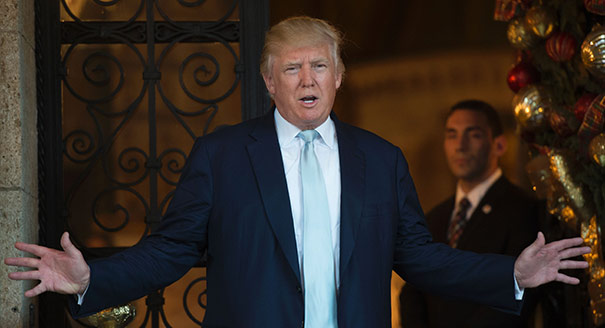
Trump and South Korean President Moon Jae-in ought to respond to the regime of Kim Jong Un jointly and without any ambiguity.
Source: Washington Post
At approximately 12:29 p.m. Sunday in Punggye-ri, North Korea, a 6.3-magnitude earthquake was detected — it reportedly marked the country’s sixth nuclear test and by far its largest yet. More detailed analysis will follow in the days ahead, including whether the North’s claim of having successfully detonated a hydrogen warhead is credible. In the meantime, this is hardly the moment to show daylight between Seoul and Washington — as President Trump appears to be doing.
Before Sunday’s test, news reports spoke of Trump’s impending decision to withdraw from the U.S.-South Korea free-trade agreement (KORUS). Such a move is unjustified in the first place. But after Pyongyang’s most threatening nuclear test so far, withdrawing from KORUS would send the worst possible signal to North Korea and China. If the White House proceeds to drop KORUS even after the test, it will severely damage one of America’s staunchest and important allies in Asia by throwing the U.S.-South Korea alliance to the wolves.
Trump and South Korean President Moon Jae-in ought to respond to the regime of Kim Jong Un jointly and without any ambiguity. For Trump, the temptation to hint about a preventive strike against North Korea will surely grow. Some members of Congress may advocate for a such a blow to end North Korea’s nuclear threat once and for all. But a preventive strike is the worst possible option for South Korea.
Any preventive strike on North Korean nuclear sites will result in North Korean attacks on U.S. bases in South Korea, as well as on civilian targets. Even if a small-yield nuclear weapon were dropped in Seoul, hundreds of thousands would die, and millions would suffer from radiation poisoning. South Korea as we know it — the world’s 12th-largest economy, the sixth-largest trading power and Asia’s most vibrant democracy — would cease to exist.
Trump has every right to protect the welfare and safety of American citizens. But so, too, does Moon for 50 million South Koreans, as well as the hundreds of thousands of Americans and foreigners living in the country. Moon is entitled to disagree with the White House on a preventive attack. Real-time and verifiable intelligence is always in short supply when it comes to North Korea, and Trump must be prepared for a full-fledged war if he decides on a U.S. first strike.
For his part, Moon must end all engagement with North Korea. His proposal to jump-start inter-Korean dialogue has been rebuffed by Kim. Moon wants to reopen the shared Kaesong Industrial Complex and resume tourist trips if South-North relations improve. But a North Korea that has hydrogen bombs is not a partner. Moon must put his foot down on advisers who advocate extensive engagement with the North, provision of massive humanitarian assistance or the toning down of U.S.-South Korea military exercises. No one is against dialogue, but the Moon administration’s one-sided love affair with Pyongyang must end.
For now, the two allies and Japan must sing from the same page. This means going through with the rest of the Terminal High Altitude Air Defense (THAAD) missile-defense deployments in South Korea and accelerating deterrence and defense assets. Many in Seoul have talked about the reintroduction of U.S. tactical nuclear weapons into South Korea. That’s one option. South Korea’s offensive capabilities against North Korea can no longer be stymied by tacit pressures from Washington. That doesn’t mean South Korea should pursue its own nuclear deterrent as Britain, France and Israel have done. But South Korea cannot rely solely on U.S. deterrence; it has to accelerate the development and deployment of its own offensive weapons that can hit all North Korean targets.
If there’s a need to tamper with KORUS, the goal should be renegotiation, not unilateral U.S. abrogation. It’s true that United States has a $28 billion trade deficit in goods and services with South Korea, mostly in automobiles and electronics. But imports of American cars have risen since KORUS was signed — and the U.S. service surplus of $6.9 billion in 2011 rose to $10.7 billion in 2016. In 2016, South Korea imported $591 million in arms from the United States, or nearly 38 percent of its total arms imports. South Korea also provides $831 million for defense cost-sharing and assumed $767 million of the cost of building a U.S. military base in Pyeongtaek — the largest in Asia.
If Washington wants a trade war with South Korea, it will get one. The newly appointed minister of trade, Kim Hyun-jong, negotiated KORUS, and no one should doubt his brains or brawn. But a fight between the allies only benefits North Korea and China. As Sun Tzu reminds us in “The Art of War,” many a campaign has been ruined through lack of cooperation, especially in the case of allied armies.
This is no time for a dispute between Seoul and Washington. No ally has been as loyal as South Korea. For Washington, now is not the time to begin a trade war with Seoul. And for Seoul, now is not the time for flaky assumptions about North Korea. We need a united front; there is no other option.
This article was originally published in the Washington Post.

Senior Fellow, Asia Program
Chung Min Lee is a senior fellow in Carnegie’s Asia Program. He is an expert on Korean and Northeast Asian security, defense, intelligence, and crisis management.
Recent Work
Chung Min Lee
Carnegie does not take institutional positions on public policy issues; the views represented herein are those of the author(s) and do not necessarily reflect the views of Carnegie, its staff, or its trustees.
Despite public disputes over trade and immigration, the strategic partnership’s foundations remain sturdy.

Sameer Lalwani
It signals a new era of tech diffusion and warfare.

Steve Feldstein

With its public finances in shambles, the far right polling at 35 percent ahead of the 2027 presidential election, and a growing protest movement, is France’s crisis a threat to the EU’s geopolitical awakening?

Rym Momtaz, ed.

Russia’s AI-driven propaganda campaigns operate in a fragmented, chaotic, and often illogical manner. That’s not necessarily a problem for the Kremlin, though: It’s much easier to mimic genuine public debate that way.

Ilya Klishin

Ahead of a tough winter for Ukraine, Donald Trump’s swing back toward Russia bodes ill. But instead of panicking, Kyiv’s European allies are focusing on action.
Rym Momtaz