

Research
- +10
Rosa Balfour, Frances Z. Brown, Yasmine Farouk, …
{
  "authors": [
    "Moisés Naím"
  ],
  "type": "legacyinthemedia",
  "centerAffiliationAll": "",
  "centers": [
    "Carnegie Endowment for International Peace"
  ],
  "collections": [],
  "englishNewsletterAll": "",
  "nonEnglishNewsletterAll": "",
  "primaryCenter": "Carnegie Endowment for International Peace",
  "programAffiliation": "",
  "programs": [],
  "projects": [],
  "regions": [
    "North America",
    "United States"
  ],
  "topics": [
    "Democracy",
    "Civil Society"
  ]
}
Source: Getty
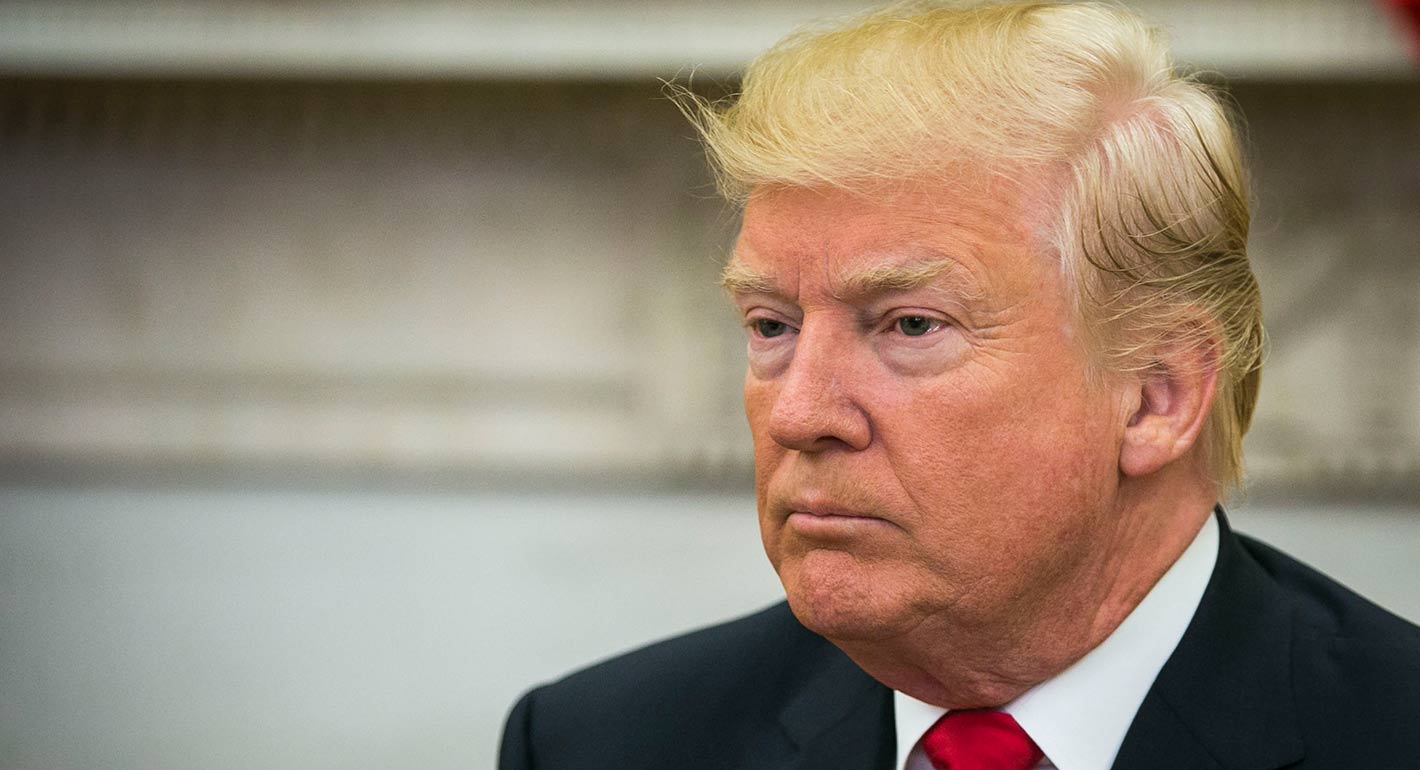
The list of Trump’s actions that require his supporters’ forgiveness is long and growing. But many Trump supporters feel that there is nothing to forgive.
Source: El País
On Tuesday, millions of Americans will cast their votes for Donald Trump. Technically, of course, they won’t be voting directly for the sitting president, but rather for the senators, representatives, governors and state legislators that he supports. Yet this election will undoubtedly be a referendum on Donald Trump.
Although the polls predict that the president will not do as well as in the last election, the polls also find that he has the support of close to 40% of voters.
Any number of theories has been put forward to explain why some people are so strongly attracted to charismatic politicians
It’s a shocking number. It means that 40% of Americans forgive Trump for behavior that should be considered unforgivable in any decent world: from the constant, unabashed lying to the inhuman cruelty of some of his decisions. To be sure, many Trump supporters feel that there is nothing to forgive. They accept, and even celebrate, the president’s behavior, even when he says that being a celebrity entitles men to grope any woman they want.
Any number of theories has been put forward to explain why some people are so strongly attracted to charismatic politicians and why they so often support them unconditionally. They run the gamut from the psychological (a search for identity or dignity), to the economic (a response to increasing inequality), to the international (a backlash to globalization), to the sociological (racism).
Whichever of these you prefer, it is also true that many support Trump because they like his policies and are willing to overlook actions they would criticize in other circumstances in order to see them enacted. Take the tax cut, for instance. The rich, who hate paying taxes, were delighted with the cuts and are showing their gratitude to Trump by keeping mum about behavior they should abhor.
The big surprise is that Donald Trump has kept the support of voters who stand to lose out from his policies
Another example is deregulation. For many business leaders, the huge benefits they have received because of Trump’s elimination of regulations that were curbing their autonomy or increasing their costs are seen as a fair trade for having him in the White House. They are willing to forgive any trespass, as long as their businesses get deregulated. Many are happy that the lobbyists who were previously paid to influence the government have now become the government. Trump has put a good many of them in charge of the agencies responsible for regulating the very companies for which they previously worked. And to which they will surely return at the end of their “public service.”
But support for Trump is not just motivated by financial interests. Evangelical groups whose pastors regularly denounce the same behaviors that Trump habitually exhibits (infidelity, mendacity, greed, materialism, cruelty, egomania etc.) are an enthusiastic part of his base. Seeing babies separated from their mothers on the border and then lost in the black hole of an insensitive US bureaucracy made no dent in the evangelical leaders’ support for Trump. Ignoring the president’s vices and sins is a price they are willing to pay as long as he promotes initiatives that make abortion and same-sex marriage difficult or minimize the presence of Charles Darwin’s ideas in America’s classrooms.
That citizens vote for candidates who represent their particular interests or reflect their values is nothing new. That’s democracy. The big surprise is that Donald Trump has kept the support of voters who stand to lose out from his policies. His popular tax cut, for instance, is deeply regressive. It disproportionately benefits a very wealthy minority and penalizes the middle and working classes, groups that make up the vast majority of Trump’s followers. Many of the regulations Trump has eliminated were designed to protect low-income consumers from the abusive practices of big companies. The same goes for the healthcare reform put forth by Barack Obama and now under withering attack from Trump, who has made every effort to dismantle and sabotage it. Again, the great paradox is that those who will lose the most from a gutted healthcare system are the Trump followers who need it the most.
The list of Trump’s actions that require his supporters’ forgiveness is long and growing. The list of his associates in business, politics, and government who are being tried or have already been convicted of crimes has revealed a vast criminal ecosystem revolving around the president. But all that, too, might be forgiven by his followers, thus affirming Donald Trump’s own appalling statement from January 2016: “I could stand in the middle of Fifth Avenue and shoot somebody and I wouldn’t lose voters.”
This Tuesday, we’ll see if that is really true.

Distinguished Fellow
Moisés Naím is a distinguished fellow at the Carnegie Endowment for International Peace, a best-selling author, and an internationally syndicated columnist.
Recent Work



Rosa Balfour, Frances Z. Brown, Yasmine Farouk, …
Moisés Naím
Carnegie does not take institutional positions on public policy issues; the views represented herein are those of the author(s) and do not necessarily reflect the views of Carnegie, its staff, or its trustees.

The Russian state has opted for complete ideological control of the internet and is prepared to bear the associated costs.

Maria Kolomychenko

In an interview, Jim Lamson discusses the ongoing regional conflict and sees an unclear picture when it comes to winners and losers.

Michael Young
Our new report offers a path forward for local officials and future policymakers.



Joe McCannon, Jenny Keroack, Lauren Jensen, …

Present and future policymakers seeking to address climate-related health challenges can draw lessons from the successes and failures of the Biden administration.
Joe McCannon, Jenny Keroack, Lauren Jensen, …

Unless Beirut lowers expectations, any setbacks will end up bolstering Hezbollah’s narrative.

Mohanad Hage Ali