

Paper
Present and future policymakers seeking to address climate-related health challenges can draw lessons from the successes and failures of the Biden administration.
{
  "authors": [
    "Joe McCannon",
    "Jenny Keroack",
    "Lauren Jensen",
    "John  Balbus",
    "Noah Gordon"
  ],
  "type": "commentary",
  "centerAffiliationAll": "dc",
  "centers": [
    "Carnegie Endowment for International Peace"
  ],
  "englishNewsletterAll": "ctw",
  "nonEnglishNewsletterAll": "",
  "primaryCenter": "Carnegie Endowment for International Peace",
  "programAffiliation": "SCP",
  "programs": [
    "Sustainability, Climate, and Geopolitics"
  ],
  "regions": [
    "United States"
  ],
  "topics": [
    "Climate Change",
    "Domestic Politics"
  ]
}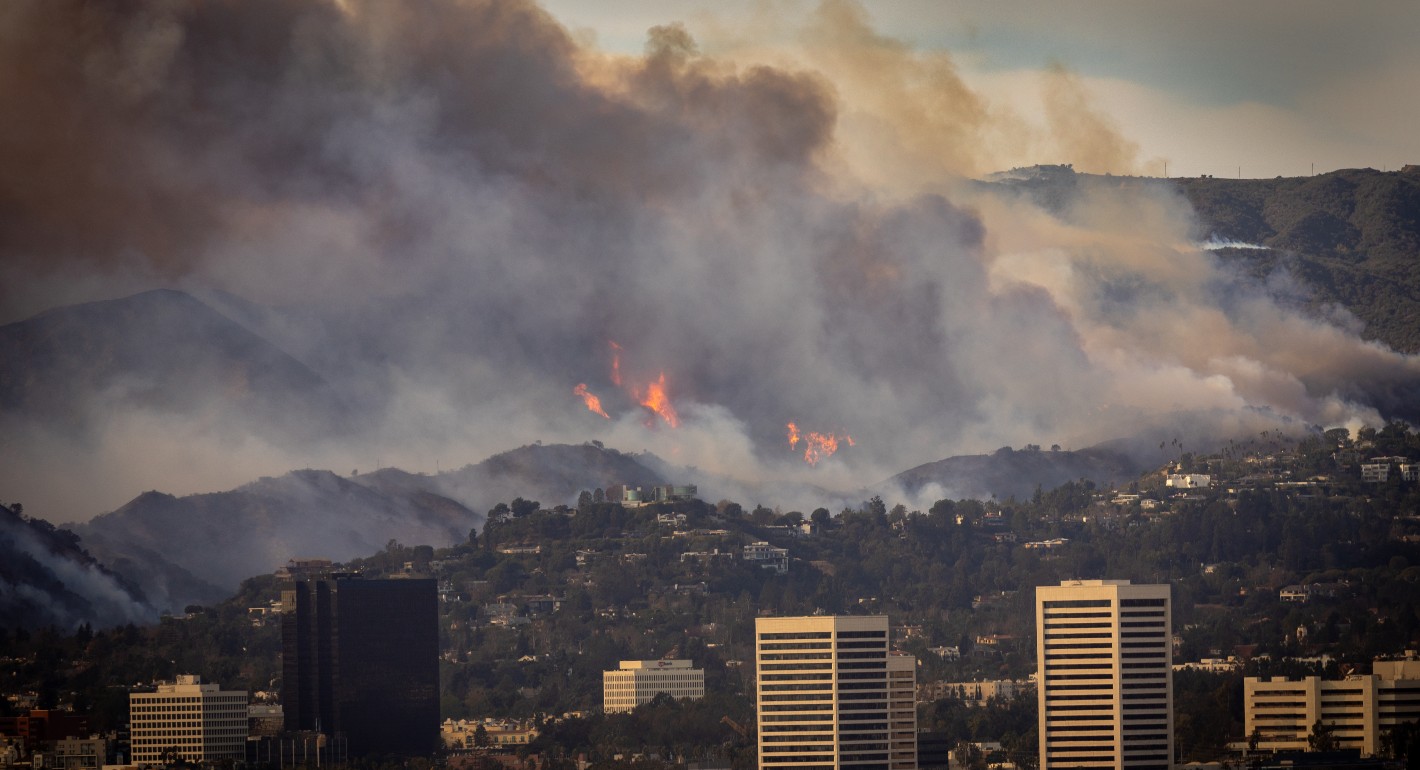
Wildfire smoke from the Palisades and Eaton fires blankets Los Angeles in January 2025. (Allen J. Schaben/Los Angeles Times via Getty Images)
Our new report offers a path forward for local officials and future policymakers.
On its second day in office, the second administration of President Donald Trump eliminated the U.S. Department of Health and Human Services’ Office of Climate Change and Health Equity (OCCHE) and all its staff. In so doing, it sent an unmistakable message about its view of the office’s mission to protect the country’s most vulnerable populations from the health impacts of climate change. It also derailed numerous programs intended to make the health sector itself more resilient and sustainable: Health care facilities’ readiness for climate catastrophes varies significantly, and some estimates suggest the health sector is responsible for about 8.5 percent of U.S. emissions as of 2018.
As former leaders of that work, we have released a report that reviews the office’s accomplishments and challenges and provides ideas on what present and future policymakers can do in the absence of federal leadership in this area.
Present and future policymakers seeking to address climate-related health challenges can draw lessons from the successes and failures of the Biden administration.
Despite Trump administration denials, climate change continues to intensify natural disasters, which in turn increases health risks.
In the same month that OCCHE was eliminated, Los Angeles was hit with the costliest wildfire ever, with more than $76 billion in property damage and millions of people exposed to toxic smoke. The years 2023–2025 were the three hottest on record, with major surges in heat-related deaths occurring in the South and Southwest. Texas experienced the deadliest inland flooding of the past half-century, and drought blanketed almost every region of the country. While we were writing this piece, a staggering heat wave broke records in the U.S. Southwest, with temperatures eclipsing 110 degrees. In almost all cases, certain groups faced disproportionate harm, among them communities of color, indigenous groups, older adults, and children.
Suffering isn’t limited to catastrophic events alone. Exacerbations of chronic illness—including cardiovascular illness, pulmonary illness, allergies, and mental health conditions—and infectious disease, such as vector-borne and water-borne disease, are also grave and widespread. The relentless rescission of critical climate-related regulations, headlined by the recent rollback of the EPA’s Endangerment Finding, threatens the health of vulnerable populations in multiple ways.
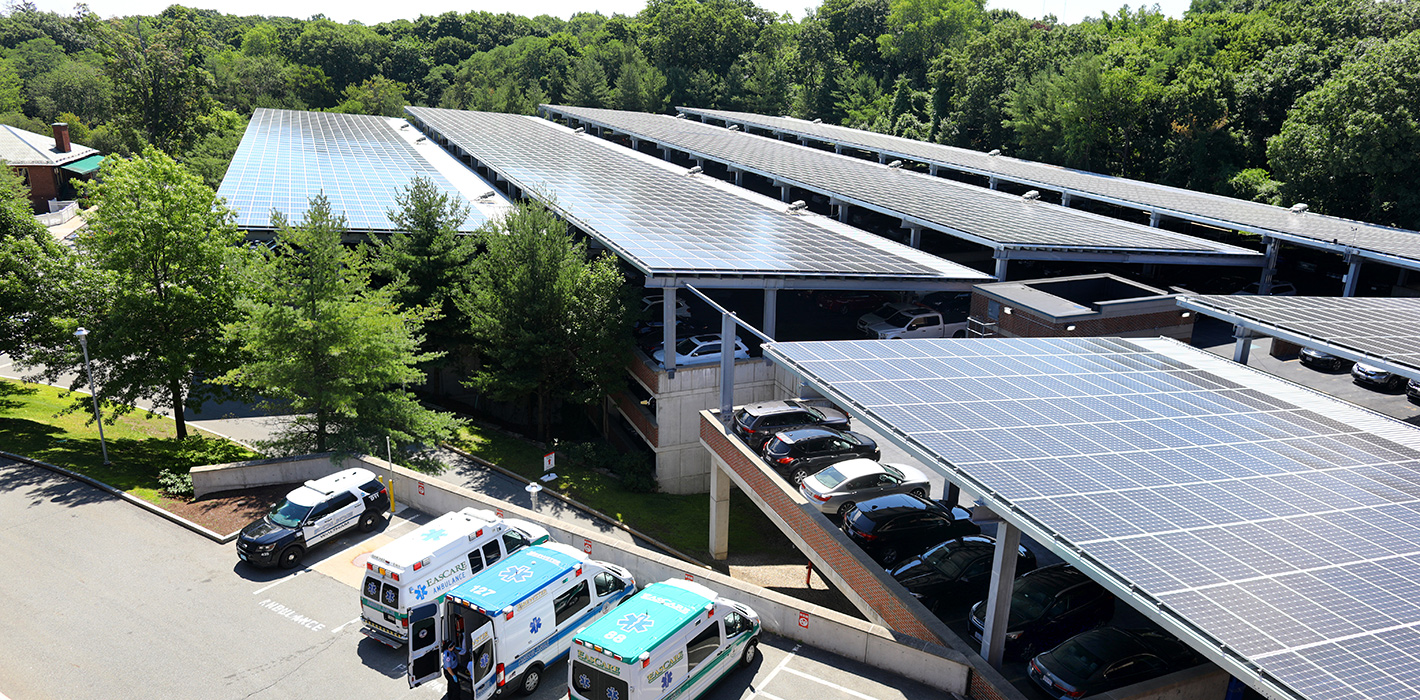
A subset of state and local health departments and private health systems are attempting to fill the gaps, seeking to ready themselves for climate-related disruptions to operations and reducing their own carbon emissions despite hostile policies and funding shortfalls. Healthcare facilities have also continued to leverage the Joe Biden administration’s Inflation Reduction Act (IRA) to invest in renewable energy solutions. A record-breaking 493 healthcare organizations—more than half of which had signed a voluntary, federally sponsored pledge to reduce greenhouse gas emissions—submitted data to Practice Greenhealth on their sustainability initiatives in 2025.
Nonetheless, those of us who took part in building OCCHE cannot escape the knowledge of what we lost. Beyond closing key offices, the United States has canceled programs such as the Center for Medicare and Medicaid Innovation’s Decarbonization and Resilience Initiative for hospitals and removed rich resources such as the Agency for Healthcare Research and Quality’s Decarbonization Primer, OCCHE’s webinars and the office’s Climate and Health Outlook. Through the partial repeal of the IRA, healthcare organizations will also lose access to funding for investments in onsite solar backup power and energy efficiency improvements. At a time when organizations—particularly rural providers—are threatened by cost pressures, this funding might have provided a vital lifeline and freed up additional capital through decreased expenditures on energy.

An event examining the cross-section between climate and global health policy.
In the absence of federal leadership, climate health leaders must use the current moment to build will among the public, connecting climate-related pain people feel—from disasters, disruptions in service, chronic disease, and unexpected costs—to policy and program solutions. In parallel, states and health systems must continue to spread knowledge and best practices, creating new standards and expectations for what is possible.
Federal leaders who sought to advance climate health can also use this time to reflect on failures and headwinds that slowed us. A lack of resources (resulting from congressional failure to appropriate funds for OCCHE) impeded the office, as did an administration-wide failure to connect the health co-impacts and health costs of climate change to broader environmental policy. Severe delays to key rules, such as one from the Securities and Exchange Commission that would have required broad corporate disclosure of climate-related action, also greatly hindered the office’s ability to engage healthcare providers, suppliers, and other stakeholders.
As emerging political leaders seek new and timely ideas for improving the nation’s health, they should acknowledge the threats climate presents to health and articulate clear, cross-cutting goals, including desired outcomes for vulnerable populations, aims for decarbonization by health systems and suppliers, expectations for broad facility resilience against climate disasters, and costs averted. Supporting goals—such as phasing out the harmful anesthetic gas desflurane across federal health systems (following the lead of the National Health Services of England and Scotland)—are also essential, as are compelling state and local research and demonstration efforts.
In addition, the federal government should in the future fully fund climate health offices and staff throughout the executive branch and move quickly on legislative and regulatory action. For example, while the Low Income Home Energy Assistance Program can be used for cooling assistance, its grant structure favors heating assistance, and it could also be redesigned to incentivize introduction of renewable technologies that enhance energy efficiency. Similarly, flexibilities in the Medicare and Medicaid programs create opportunities to address the risks of climate change through telehealth, better care coordination, and updated coverage policies for items like air conditioners. The reinstatement of IRA financing opportunities with improvements to help healthcare organizations better access energy efficiency funding would greatly accelerate the health sector’s efforts to become more resilient and sustainable.
The case for action on climate and health grows stronger by the day. The scale of the harm that climate change causes is unmatched, and the reductions in mortality and costs that we will realize by addressing it proactively are enormous. While Americans currently identify issues like cost of living and health care as priority concerns, numerous climate-friendly actions—such as installing new heat pumps and air filtration systems in public buildings, offering healthier plant-based meals in schools, or charging fees to vehicles that pollute the air of busy city streets—carry clear benefits to health outcomes and affordability. Our hope is that our report and the work of so many former climate-health policymakers around the country form the basis for deeper discussion of these opportunities and stimulate sector-wide action as rapidly as possible.

Joe McCannon
Executive Fellow, Higher Ambition Leadership Alliance
Joe McCannon is Executive Fellow at the Higher Ambition Leadership Alliance. His work focuses on large-scale systems improvement and collective action, mainly in the areas of healthcare and climate change. He served in the Obama Administration as Senior Advisor to the Administrator at CMS, and during the Biden Administration in the Council on Environmental Quality in the Executive Office of the President and in the Office of Climate Change and Health Equity at HHS. He was previously Vice President at the Institute for Healthcare Improvement and founding CEO of the Billions Institute.

Jenny Keroack
Director of Climate Solutions, Health Care Without Harm
Jenny Keroack, MPH is the Director of Climate Solutions at Health Care Without Harm, where she works to advance sustainability and climate resilience across the health sector. Jenny previously served as a policy advisor to the Secretary of the Department of Health and Human Services (HHS), senior policy advisor in the HHS Office of Climate Change and Health Equity, and Medicare policy analyst at the Centers for Medicare & Medicaid Services (CMS).

Lauren Jensen
Assistant Director, The Cooperative at Mass General Brigham
Lauren Jensen, MPH, MCRP is the Assistant Director of The Cooperative at Mass General Brigham, where she works on building new ways of delivering integrated healthcare to help patients stay healthy and resilient in the face of accelerating environmental threats. Lauren previously served as a Public Health Analyst at the HHS Office of Climate Change and Health Equity.

John Balbus
Principal, Climate Care Consulting, LLC
John Balbus is the Principal of Climate Care Consulting, LLC and former HHS Deputy Assistant Secretary for Climate Change and Health Equity. Trained as a physician, he has devoted his professional career to understanding and addressing the health implications of climate change. He established and directed the HHS Office of Climate Change and Health Equity after serving twelve years as Senior Advisor for Public Health at the National Institute for Environmental Health Sciences. He was elected to the National Academy of Medicine in 2021.

Fellow, Sustainability, Climate, and Geopolitics Program and Fellow, Europe Program
Noah J. Gordon is a fellow in the Sustainability, Climate, and Geopolitics Program at the Carnegie Endowment for International Peace in Washington, DC.
Carnegie does not take institutional positions on public policy issues; the views represented herein are those of the author(s) and do not necessarily reflect the views of Carnegie, its staff, or its trustees.
They face an uphill climb, but they could draw on a strategy that other diplomats have used in the past.


Shana Tabak, Alejandro Martin Rodriguez

Understanding the climatic pain points is necessary for policymakers hoping to minimize the war’s negative environmental consequences.


Alejandro Martin Rodriguez, Joy Arkeh, Sarah Yerkes

Congress needs to step up and make EXIM a low-carbon financing powerhouse.

Jesse Young

By focusing only on hard security, the Shield ignores the conditions that fuel cartel power.

Alejandro Martin Rodriguez, Kayly Ober
Investments in a climate-friendly cooling system known as geothermal district cooling will help rapidly urbanizing societies resist dangerous heat indexes.


Daevan Mangalmurti, Debbra Goh, Milo McBride