

Other
François Godement, Ashley J. Tellis
{
  "authors": [
    "François Godement"
  ],
  "type": "legacyinthemedia",
  "centerAffiliationAll": "dc",
  "centers": [
    "Carnegie Endowment for International Peace"
  ],
  "collections": [],
  "englishNewsletterAll": "asia",
  "nonEnglishNewsletterAll": "",
  "primaryCenter": "Carnegie Endowment for International Peace",
  "programAffiliation": "AP",
  "programs": [
    "Asia"
  ],
  "projects": [],
  "regions": [
    "North America",
    "United States"
  ],
  "topics": [
    "Economy",
    "Trade"
  ]
}
Source: Getty
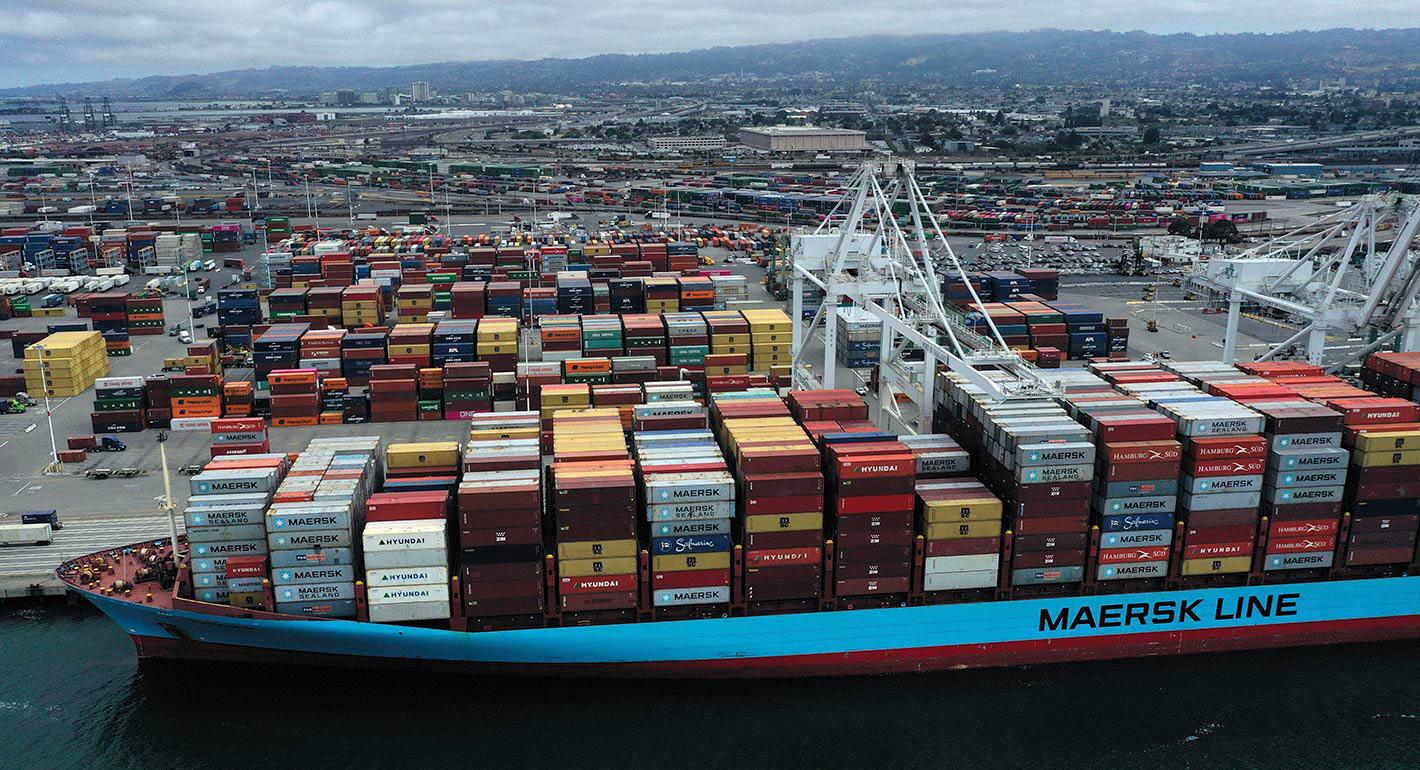
From 2018 to mid-2019, the consensus among economists on the consequences of the US-China trade conflict was deafening.
Source: Institut Montaigne
From 2018 to mid-2019, the consensus among economists on the consequences of the US-China trade conflict was deafening. One economic think-tank after another issued papers and/or op-eds explaining that the Trump administration’s tariff increases was akin to dropping a stone on one’s own foot. In a second volley, it was often said that "decoupling" technologies and their financing would hurt America’s high tech sector and its international partners as much as China, which would also be encouraged in its push for self-reliance. Assessments from Chinese sources, and especially the PRC’s controlled media1, have hovered between ambitious claims and more cautious perspectives. One of these affirmed that China would prevail "in the long term", thanks to the resilience of the Chinese economy and/or political system, with even a chance for China to develop self-reliant technologies. The less optimistic perspectives, according to another viewpoint, mentions "the extreme case, where the United States imposes tariffs on all imports good from China, and China on all imports from the US, China will suffer more than the US. Therefore, China should not be driven by the US and flight in the field that is disadvantageous to itself".2 Others have stuck to a middle course, emphasizing the lose-lose nature of a full-blown trade conflict.3 There have also been variations in time. Firstly with optimism, until the resumption of Trump’s trade offensive in the spring of 2018. Then succeeded by a more hesitant mood. A return to stridency in August 2019 when there was a new phase of tit for tat tariffs announcements. Several statements since that date have been ambivalent, legitimizing both "principles" and "flexibility/compromise" on the Chinese side. Clearly, Chinese analysts are having a hard time predicting the behavior of their own side in the conflict.
Some Western think tank interpretations or predictions went further, without fearing a degree of inner contradiction: the global economic slow-down in 2019 is often attributed to lower growth in China, with lower external demand and less financing going abroad. Thus the trade conflict would have no significant impact on China, yet enough impact at the same time to slow down global growth...
Decoupling itself has become a topic of discussion. Even if this is not something the Trump administration recognizes as its strategy, the fact that Steve Bannon is pushing it, and its frequent mention by Chinese sources even as the "strategic goal" of the Trump administration as opposed to its "trade goal"4 have given real saliency to the issue. The IMF has opportunely published a paper based on a two-country modeling of changes in value chains, deducing that value chains are mostly inflexible. The conclusion, left implicit, is that "decoupling" simply cannot happen. In response to a Nomura Research Institute study that pointed out the trade diversion effects of the US-China trade conflict, IMF’s Christine Lagarde acknowledged it yet pointed out that the net impact on the overall US trade balance would not be felt and that these trade diversion benefits for other economies were only "a short term fix". Yet a shift of US imports to other providers, unless it results from bogus Chinese sales through these third countries, implies shifts in the value chain5, and would seem to contradict the IMF’s theoretical model. As we shall see, some value chains are indeed very hard to replace, and both parties in the trade conflict have chosen to spare these for the time being. But that does not apply, by any means, to the entire mutual integration of what was once called Chimerica.
This article was originally published by Institut Montaigne.

Former Nonresident Senior Fellow, Asia Program
Godement, an expert on Chinese and East Asian strategic and international affairs, was a nonresident senior fellow in the Asia Program at the Carnegie Endowment for International Peace.
Recent Work
François Godement, Ashley J. Tellis

François Godement, Abigaël Vasselier
Carnegie does not take institutional positions on public policy issues; the views represented herein are those of the author(s) and do not necessarily reflect the views of Carnegie, its staff, or its trustees.

The Plaza Accord was not an externally imposed punishment of Japan but part of a broader restructuring that Japanese economists and policymakers themselves recognized was necessary. Its effects were undermined, however, when Tokyo responded to the resulting slowdown with policies that exacerbated investment, credit expansion, and the very imbalances the adjustment was intended to resolve.

Michael Pettis

Trump has promised Belarus a massive potash deal. But Minsk is seeking something greater: restored Western transit and greater room for maneuver from Russia.

Balázs Jarábik
The real test may come after the leaders leave the room.



Sheena Chestnut Greitens, Oriana Skylar Mastro, Yukon Huang, …

The new U.S.–Denmark–Greenland agreement will help Washington exert political, economic, and financial dominance under the guise of security. Yet, it acknowledged Copenhagen’s and Nuuk’s sovereignty on the island.

Marc Pierini

The nuclear relationship between China and the United States is increasingly shaped by widening perception gaps rather than deliberate strategic design.

Tong Zhao