

Commentary
Steve Feldstein
{
  "authors": [
    "Steve Feldstein"
  ],
  "type": "commentary",
  "centerAffiliationAll": "dc",
  "centers": [
    "Carnegie Endowment for International Peace"
  ],
  "collections": [
    "Democracy Policy"
  ],
  "englishNewsletterAll": "democracy",
  "nonEnglishNewsletterAll": "",
  "primaryCenter": "Carnegie Endowment for International Peace",
  "programAffiliation": "DCG",
  "programs": [
    "Democracy, Conflict, and Governance"
  ],
  "projects": [],
  "regions": [
    "North America",
    "United States"
  ],
  "topics": [
    "Political Reform",
    "Democracy"
  ]
}
Source: Getty
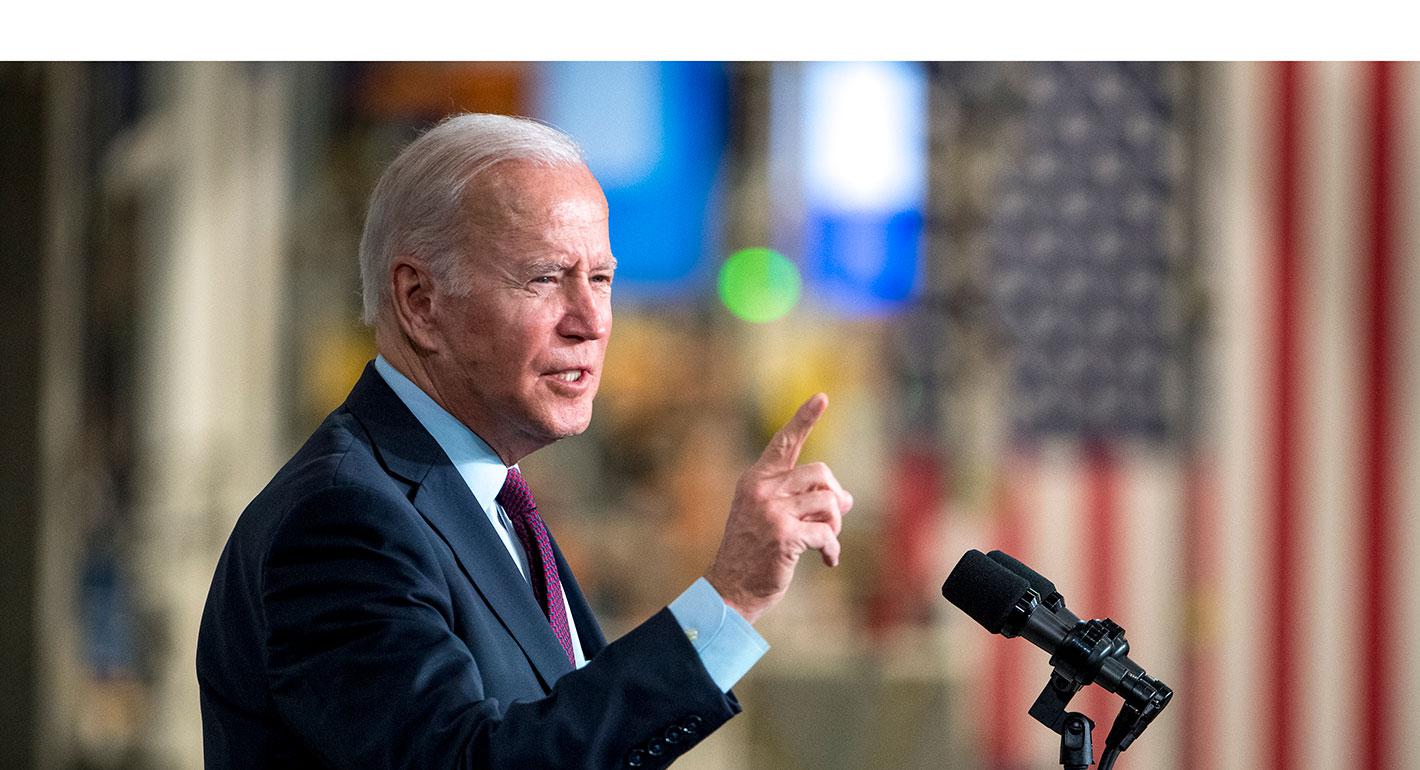
Biden’s team has announced the list of invitees to the U.S. president’s summit on democracy. Who is included—and what does this say about U.S. strategic priorities?
The invitations are out for U.S. President Joe Biden’s democracy summit on December 9–10. Which countries did Biden’s team settle on, and why were they selected?
The current mix of invitees includes liberal democracies, weaker democracies, and several states with authoritarian characteristics (such as the Democratic Republic of the Congo and Pakistan). Rather than limit participation to a core group of committed democracies, Biden’s team opted for a big tent approach (see table 1 below). The majority of invitees—seventy-seven countries—rank as “free” or fully democratic, according to Freedom House’s 2021 report. Another thirty-one invitees rank as “partly free.” Finally, three countries fall into the “not free” camp (see figure 1).

Combining Freedom House’s index scores with tallies from the Varieties of Democracy (V-Dem) project yields revealing results. Eight invitees fall exceptionally low on these democracy rankings, raising troubling questions about their invitations: Angola, the Democratic Republic of the Congo, Iraq, Kenya, Malaysia, Pakistan, Serbia, and Zambia. Four additional invitees prompt serious backsliding concerns due to heightened levels of autocratization or big declines in freedom of expression over the past ten years: Brazil, India, the Philippines, and Poland. (Granted, Freedom House and V-Dem measure country performance for 2020, making data lag an issue—especially for countries experiencing emergent political crises, such as Tunisia, or newly reforming countries, like Zambia)
When it comes to regional representation, Europe leads the world with thirty-nine invitees, followed closely by twenty-seven participating countries from the Western Hemisphere. The Asia Pacific and Sub-Saharan Africa also enjoy robust participation with twenty-one and seventeen invitees, respectively (see figure 2). In contrast, the Biden administration extended invites to fewer countries in the Middle East and North Africa and South and Central Asia. In the Middle East, only Iraq and Israel received invitations, while South and Central Asia obtained just four invites (for India, the Maldives, Nepal, and Pakistan).

Identifying the participants for such a major diplomatic gathering is a complicated process, and settling on the final summit list was more a product of bureaucratic and interagency sausage making than anything more sublime. What considerations were at play?
First, regional dynamics played a big role. Take the Middle East. Looking strictly at the democracy index numbers, the only two countries that could plausibly make a bid for participation are Israel and Tunisia. Unfortunately, Tunisia is experiencing a slow-motion coup, and the optics of having Israel attend as the sole representative from the Middle East was a nonstarter. In that context, enter Iraq—just democratic enough to score an invite, but nobody’s idea of enlightened leadership.
Second, broader U.S. strategic interests also mattered. Pakistan, the Philippines, and Ukraine are all flawed democracies with endemic corruption and rule of law abuses. Yet they are important partners of the United States—whether to counterbalance Chinese influence (Philippines), withstand Russian encroachment (Ukraine), or assist with counterterrorism (Pakistan). Undoubtedly, the State Department’s relevant regional bureaus made the case on those grounds.
Finally, something akin to a democratic do-no-harm test played a role in certain cases. For example, the administration’s exclusion of Hungary and Turkey may have been based on Biden’s reluctance to do anything to help the reelection chances of Hungarian Prime Minister Victor Orbán or Turkish President Recep Tayyip Erdoğan.
If bureaucratic wrangling largely was responsible for deciding which countries made it onto the summit list, what insights, if any, can be gleaned from the invite list?
First, reform-minded leadership helped nudge several borderline countries onto the list. Positive trajectories in Angola, the Democratic Republic of the Congo, and Zambia, for example, were enough to overcome their low performance scores (and the earlier-mentioned data lag may be responsible for understating the positive momentum underway in Zambia).
Also, upcoming elections with the potential for big leadership changes were a factor. The Philippines and Kenya face contentious national elections in 2022, and Biden’s team may be hoping that summit engagement can positively reinforce their political transitions. (In the case of Kenya, the country’s significance is also elevated due to ongoing crises in Ethiopia and Sudan.)
Big democracies generally received a pass, notwithstanding troubling reversals on individual rights and freedoms. Brazil, India, Indonesia, Nigeria, and Pakistan are experiencing serious democratic backsliding, populist politics, and regular political violence. But they also have large populations, are important regional economies, and exert considerable influence on the international stage.
Conversely, summit organizers also offered special treatment to very small states. Around thirty countries with populations under 1 million were invited to participate. Rather than offer one invitation to a cluster of smaller states (thereby allowing only one leader to speak for a group of small countries), the organizers followed a “one country, one invite” policy. Who was bumped off of the list because of the summit’s decision to include a slew of microstates?
Biden’s team intends for the December summit to be merely the first step in what administration officials are billing as a “year of action.” The real make-or-break moments will occur in the months ahead and revolve around a simple question: can the summit galvanize real reform commitments and reverse fifteen years of democratic decline?

Director and Senior Fellow, Democracy, Conflict, and Governance Program
Steve Feldstein is a senior fellow and director of the Democracy, Conflict, and Governance Program at the Carnegie Endowment for International Peace. His research focuses on technology, national security, the global context for democracy, and U.S. foreign policy. His new book, Bytes and Bullets: Global Rivalry, Private Tech, and the New Shape of Modern Warfare, is now available from St. Martin’s Press.
Recent Work
Steve Feldstein
Steve Feldstein, Shreya Joshi
Carnegie does not take institutional positions on public policy issues; the views represented herein are those of the author(s) and do not necessarily reflect the views of Carnegie, its staff, or its trustees.
Despite public disputes over trade and immigration, the strategic partnership’s foundations remain sturdy.
Sameer Lalwani
It signals a new era of tech diffusion and warfare.
Steve Feldstein
Putin’s conservative staffing policies and search for ever greater control have cemented parliament’s transformation into a bureaucratic appendage of the executive branch.

Andrey Pertsev
Ahead of a tough winter for Ukraine, Donald Trump’s swing back toward Russia bodes ill. But instead of panicking, Kyiv’s European allies are focusing on action.

Rym Momtaz
Despite its flop at the box office, the film raises important questions for the climate community to answer.
Leonardo Martinez-Diaz