Source: Hill
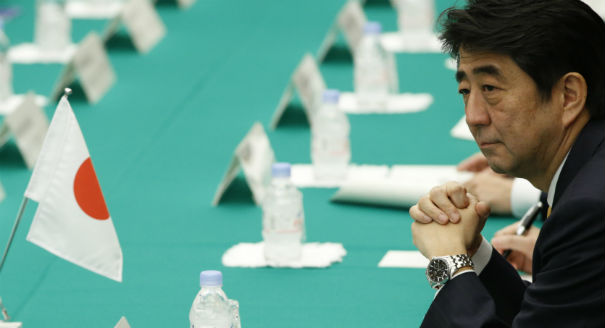
The advent of a new U.S. administration is always a high stakes moment for U.S.-Japan diplomacy, and Friday’s Washington visit by Japanese Prime Minister Shinzo Abe looks to be the most consequential for this bilateral alliance in nearly a quarter century, since Bill Clinton took office with an early plan for aggressive trade negotiations.
But the U.S.-Japan alliance is much different than it was at the start of the post-Cold War era, and security threats are more tangible and complex, so Abe must strike a delicate balance with new U.S. president Donald Trump to enhance strong bilateral defense ties, protect a mutually beneficial economic relationship, and maintain support for a rules-based global order. The two leaders need to articulate a shared strategic vision for alliance cooperation, which for decades has been the foundation for their success in Asia but faces new challenges from China. The onus is on Trump to recognize this.
The Trump administration has sent mixed signals regarding the alliance, on one hand reassuring Tokyo of U.S. security commitments and praising certain investments in the United States, yet on the other vowing pressure to reduce Japanese trade surpluses and calling on Tokyo to boost spending for U.S. troops stationed in Japan. Abe and Trump broke the ice cordially at an informal post-election meeting in New York, but Abe’s promotion of a regional plan to boost economic growth — the Trans-Pacific Partnership free trade agreement — fell on deaf ears, as Trump quickly withdrew from the deal.
Prime Minister Abe faces a dilemma, because while his national security strategy depends heavily on the alliance to help deflect potential military coercion by North Korea or China, Japan’s economic prosperity also relies on an open and stable system of global trade and finance, which Trump threatens to upend with protectionist measures.
Abe’s short-term priority at the summit is to project an image of continuity and strong bilateral defense ties, even if it risks looking weak in the face of Trump’s bullying on trade. Abe enjoys relatively strong political support at home, so he can afford to spend down a little popularity if it makes Trump look good with pledges of more Japanese investment and U.S. employment.
But if the short-term diplomatic game is manageable with a few gifts and kind words, protecting vital economic and security aspects of the relationship over the long term is far more challenging, requiring steadfastness by Japan’s leaders and a rallying of alliance advocates. Trump and his advisers have pledged to use tax, trade, and currency policy to restructure global supply chains so that more goods Americans consume are made in the United States, which could cause significant economic disruption around the world. The fact is trade with Japan is no longer the problem it was a few decades ago, and putting it high on the bilateral agenda is a mistake.
Japan has become a leading investor around the world, building an efficient network of suppliers and assembly facilities that benefit Japan and host countries alike. This has been incentivized in part by standardized rules protected by the World Trade Organization, manufacturing content requirements in deals such as the North American Free Trade Agreement, and ever lower communications and transportation costs. Sector-specific bilateral trade talks had little to do with this phenomenon.
Nearly a quarter of Japanese manufacturing now occurs overseas, and the ratio of foreign-to-total assets held by Japanese companies more than tripled since 1990. Japan has become the largest foreign employer in the U.S. manufacturing sector, and overall Japanese firms employ at least one million Americans. Three out of four Japanese cars sold in the United States are now made in North America, compared to only one in ten in 1990. This has created many more business opportunities for U.S. suppliers. Dismantling this supply chain network would be costly and wasteful for both countries.
Abe has good reason and convincing data to try to steer the Trump administration away from its protectionist proclivities, but he is up against stubborn ideological thinking. Fortunately, the U.S.-Japan alliance has many influential domestic stakeholders — in Congress, state governments, and throughout the business community — who recognize mutual interests in current trade arrangements and a strong security alliance in Asia, although they have been disconcertingly quiet so far. They should find their voice.
The most important discussion at this summit is how to leverage the allies’ full range of cooperation — defense, diplomacy, technology, and investment — in more direct service of their broader national strategies that include containing a nuclear North Korea and balancing against China’s hegemonic desires. The allies can confront the China challenge by investing along China’s periphery, supporting regional common interests with Southeast Asian nations, and strengthening security and technology cooperation.
The alliance possesses more diverse and capable tools than ever before, and a new high-level bilateral dialogue under discussion chaired by the two leaders’ deputies can help take advantage of them, but only if Trump and Abe find common ground on their strategic priorities. That is what really counts.
This article was originally published in the Hill.