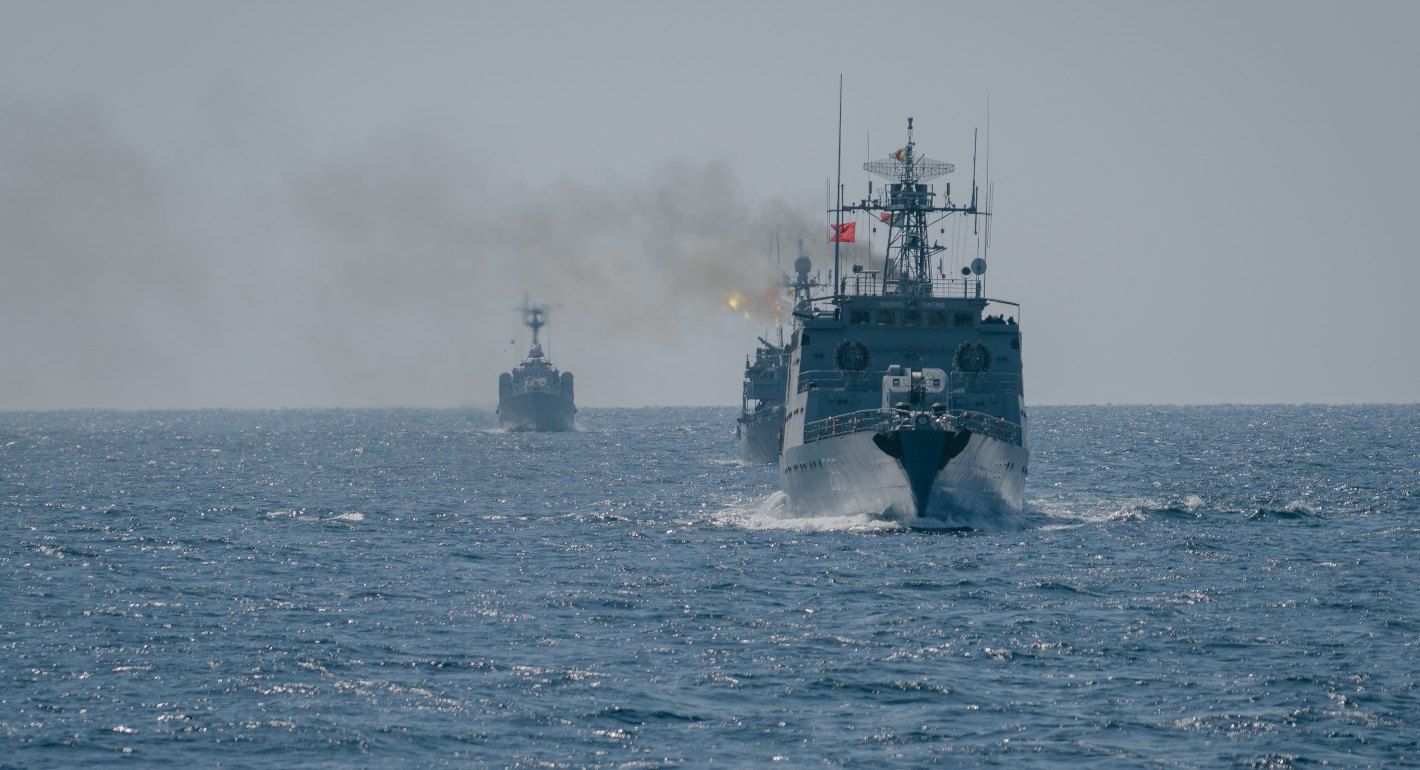
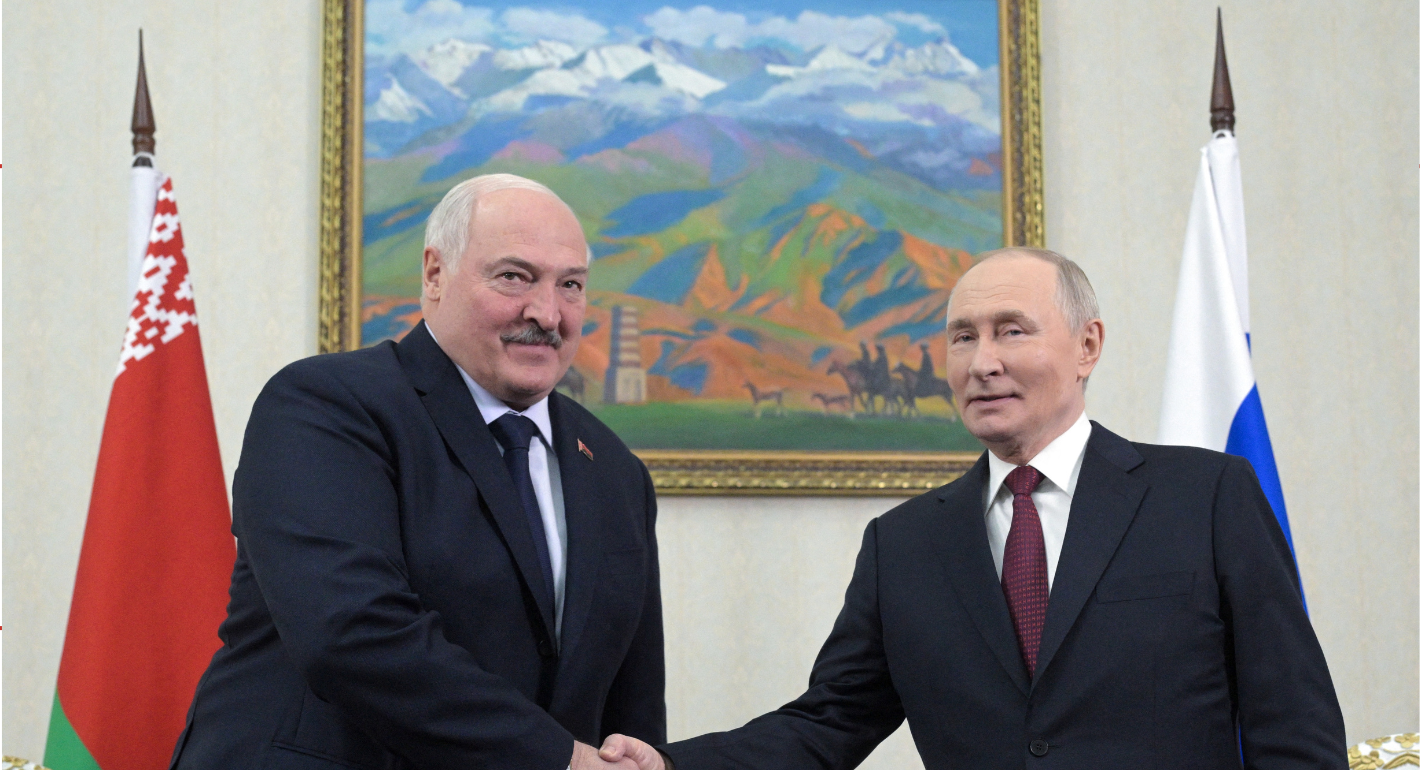
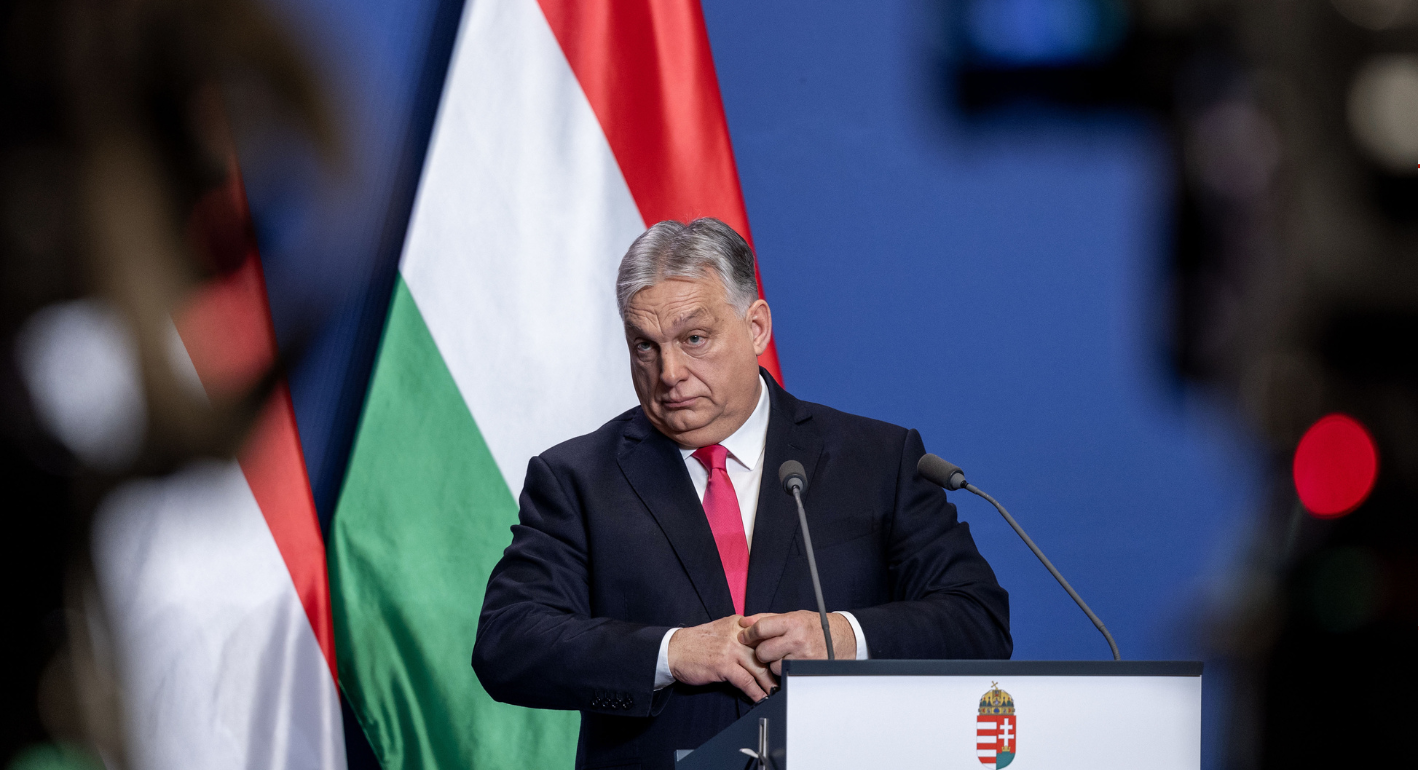
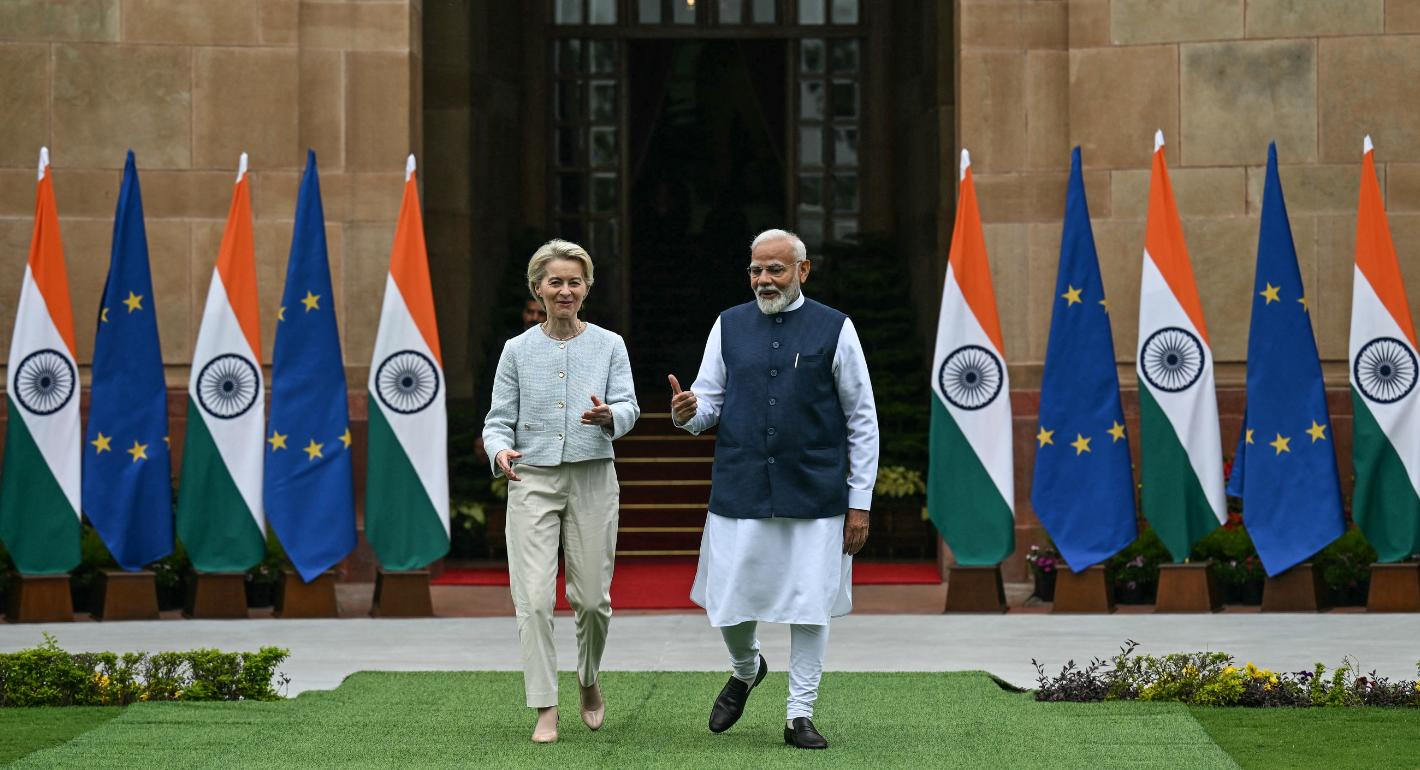
As the world watches the Israel-Iran showdown, Russia’s onslaught against Ukraine is gathering momentum. Both Kyiv and Odesa were battered by ballistic missiles and drones on June 9–10. But Russia’s strikes on Odesa, Ukraine’s principal port, can hardly change the fact that the balance of power in the Black Sea has shifted to Moscow’s disadvantage. Russia no longer enjoys the dominance it had after it seized Crimea in 2014. However, in the longer term, the power shift raises questions about the West’s containment strategy in the now-contested sea.
Holding on to a piece of the Black Sea littoral is one of Ukraine’s strategic achievements thus far. Early in the 2022 invasion of Ukraine, after taking over the city of Kherson and Snake Island, Russia hoped to capture the cities of Mykolayiv and Odesa. Given the conquest of the Sea of Azov’s northern coast, completed with the fall of Mariupol, the loss of Odesa would have made Ukraine a landlocked country, undermining its economic and political viability.
Fast-forward to today: Russia has been evicted from Kherson and Snake Island. Russia’s Black Sea Fleet is anchored in Novorossiysk, as its Crimean bases are vulnerable to deep strikes. The Moskva, its flagship, was destroyed by Ukrainian missiles in April 2022. Kyiv has developed new unmanned sea-based weapons systems that have damaged critical infrastructure, notably the bridge across the Kerch Strait separating Crimea from the Russian mainland. In short, Russia is on the back foot, not about to cut off Ukraine’s access to the sea.
This state of affairs carries direct commercial benefits for Kyiv. According to the regional administration, Odesa now ships out more grain than before the full-scale invasion. The port handles about 60 percent of the country’s exports, which surged by 15 percent in terms of value and 30 percent in terms of volume in 2024. Odesa’s significance as a gateway was highlighted by a recent summit the city hosted between Ukraine and Southeast European countries, including EU members Bulgaria, Croatia, Greece, and Romania.
But it is not just about Ukraine. The Black Sea has become the fulcrum of Europe’s security order in three ways. First, it is one of the key geographic arenas where the West is pulling its collective weight to check Russia. That will remain the case, possibly for decades to come. Second, the standoff in turn highlights Turkey’s role as a swing actor. Ankara remains a stakeholder in Euro-Atlantic institutions, not only NATO but also the so-called coalition of the willing that France and the United Kingdom are working on. Yet, Turkey continues to cooperate with Moscow, too. Third, the Black Sea illustrates the uncertainty about U.S. involvement in European security affairs.
The Black Sea marks the front line with Russia. Any effort to reach a ceasefire in Ukraine and set rules of conduct, whether formal or informal, has a maritime dimension. That is already clear in the discussion of a putative truce: While it is ostensibly about the land domain, the Black Sea is indirectly part of the conversation as well. For one, a tacit ceasefire is arguably already in place at sea. Ukraine refrains from striking Russian commercial traffic, notably the shadow fleet that carries crude oil to international markets. Russians keep clear of vessels carrying Ukrainian commodities.
If there is a ceasefire, Russia will be eager to tip the balance of power in its favor. This is where Turkey comes in. The Kremlin will lobby Turkish President Recep Tayyip Erdoğan to reopen the Bosporus and Dardanelles straits for naval ships to reinforce the Black Sea Fleet. However, by the looks of it, Ankara will not be rushing to lift the ban on the passage of Russian warships it imposed in February 2022, in line with the 1936 Montreux Convention, which is venerated by the Turkish security establishment as a cornerstone of the state’s foreign policy. Rather, Turkey—which now hosts the Russia-Ukraine talks—will insist on a final and conclusive agreement, as opposed to a tentative ceasefire, before it makes any move.
There is a pragmatic reason for that. Despite Russian President Vladimir Putin’s camaraderie with Erdoğan, Turkey has gained from Ukraine’s success in curbing Russia’s military might. The Turkish navy, which has been undergoing an ambitious modernization, has an edge over the Black Sea Fleet. Like Ukraine and probably in cooperation with it, Turkey will be developing naval drones and other capabilities to maintain a favorable balance of power. The fall of the regime of former Syrian president Bashar al-Assad has restored the Black Sea’s role as a focal point in the complex Russia-Turkey dynamic, too. Turkey will be hedging between the West, Russia, and Ukraine, which has earned its place as a regional power the hard way.
NATO remains the guarantor of last resort for its members that border the Black Sea: Bulgaria, Romania, and Turkey. No matter how the war against Ukraine ends, Russia will still be a challenge. The Kalibr cruise missiles on Moscow’s ships and submarines can wreak havoc beyond Ukrainian cities. NATO is already ensconced on land, with France and Italy leading multinational contingents in Romania and Bulgaria, respectively. As in the Baltic, there is a NATO air-policing mission over the Black Sea. Whether European allies can deter Russia effectively in case of a U.S. drawdown remains to be seen.
As for the EU, in May it adopted a new Black Sea strategy, which stakes out a path to a greater security role there. No doubt, regional members like Bulgaria and Romania will be keen to tap into the union’s resources. Brussels could help them combat hybrid threats or beef up their defense industries. However, few would welcome the prospect of a watered-down NATO.
Despite all these ways in which Europeans and Turks are boosting their Black Sea policies and leverage, what happens next will continue to be decided on the banks of the Potomac, rather than on the sandy coasts of the Black Sea. The United States remains the lynchpin that is likeliest to decide the terms of a settlement.