

Commentary
Implementing Phase 2 of Trump’s plan for the territory only makes sense if all in Phase 1 is implemented.
Yezid Sayigh
{
  "authors": [
    "Deborah Gordon"
  ],
  "type": "other",
  "centerAffiliationAll": "",
  "centers": [
    "Carnegie Endowment for International Peace"
  ],
  "collections": [],
  "englishNewsletterAll": "",
  "nonEnglishNewsletterAll": "",
  "primaryCenter": "Carnegie Endowment for International Peace",
  "programAffiliation": "",
  "programs": [
    "Sustainability, Climate, and Geopolitics"
  ],
  "projects": [
    "Carnegie Oil Initiative"
  ],
  "regions": [
    "North America",
    "United States"
  ],
  "topics": [
    "Climate Change"
  ]
}
Taxing climate pollution instead of productivity will be a societal breakthrough.
Source: International Economy
First it was the 2008 global financial crisis. Then the Arab Spring. Then Brexit. International conventional wisdom always seems unaware of the big changes about to unfold. There are in the present few facts about the future. Ten years ago, for example, who would have predicted surprise developments such as negative interest rates, the potential breakup of the European Union, the Donald Trump/Bernie Sanders effect, drones, the use of driverless cars, the rise of ISIS, the myriad uses of artificial intelligence and big data, U.S. energy independence, the emergence of the Zika virus, or the rate at which robots are taking away jobs. TIE asked more than fifty top thinkers to look ahead ten years at what outside-the-box developments could shock the world.
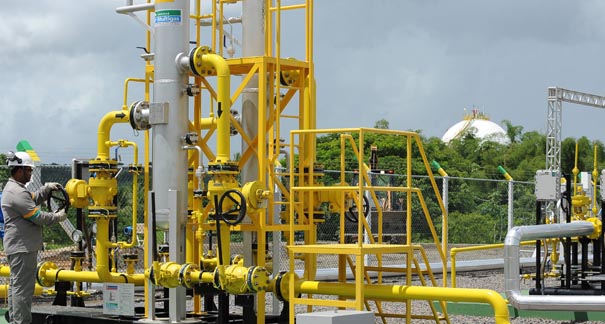
Carbon will be taxed on a global scale. This policy transformation will start in the United States, despite current hurdles from both political parties. Canada and Mexico will follow the United States. This makes sense since 80 percent of oil consumed in the United States is now sourced from within North America and the vast majority of petroleum products refined in the United States are consumed on this continent.
But it won’t stop here. The United States and Canada will lead the way for other nations to establish carbon markets. Taxing climate pollution instead of productivity will be a societal breakthrough.
The burning question remains: Will the United States design a smart tax that prices fossil fuels individually based on carbon emissions, or issue a blunt tax on fossil fuels? Pricing fossil fuels—especially oil—for a safe climate is most effective if the tax differentiates among the very different chemical entities that today all go by the name “a barrel of oil.” It must also account for greenhouse gas emissions along the entire oil supply chain: production, refining, transport, and end product use. And it must apply to ancillary byproducts, like petroleum coke and residual oils, that do not fuel the transport sector.
A grand bargain that ultimately makes a U.S. carbon tax politically attractive will include: (1) eliminating the need for the increasingly unpopular and perennially thwarted gas tax before it hits its 2032 centennial mark; (2) spreading climate responsibility fairly to the myriad of oil supply chain stakeholders—from producers to refiners and truckers to airlines and motorists to manufacturers; (3) spending a portion of its proceeds to fund rebates to lower- and middle-class Americans; and (4) cutting the corporate income tax. While this policy will start with oil, it will eventually spread to other fossil fuels, leading to sought-after regulatory relief for gas and coal.
This article was originally published in the International Economy.
Carnegie does not take institutional positions on public policy issues; the views represented herein are those of the author(s) and do not necessarily reflect the views of Carnegie, its staff, or its trustees.
Implementing Phase 2 of Trump’s plan for the territory only makes sense if all in Phase 1 is implemented.

Yezid Sayigh

Western negotiators often believe territory is just a bargaining chip when it comes to peace in Ukraine, but Putin is obsessed with empire-building.

Andrey Pertsev
When democracies and autocracies are seen as interchangeable targets, the language of democracy becomes hollow, and the incentives for democratic governance erode.


Sarah Yerkes, Amr Hamzawy
Unexpectedly, Trump’s America appears to have replaced Putin’s Russia’s as the world’s biggest disruptor.

Alexander Baunov

From Sudan to Ukraine, UAVs have upended warfighting tactics and become one of the most destructive weapons of conflict.


Jon Bateman, Steve Feldstein