

Commentary
As European leadership prepares for the sixteenth EU-India Summit, both sides must reckon with trade-offs in order to secure a mutually beneficial Free Trade Agreement.
Dinakar Peri
{
  "authors": [
    "Anirudh Burman"
  ],
  "type": "legacyinthemedia",
  "centerAffiliationAll": "",
  "centers": [
    "Carnegie Endowment for International Peace",
    "Carnegie India"
  ],
  "collections": [],
  "englishNewsletterAll": "",
  "nonEnglishNewsletterAll": "",
  "primaryCenter": "Carnegie India",
  "programAffiliation": "",
  "programs": [],
  "projects": [
    "Technology and Society"
  ],
  "regions": [
    "South Asia",
    "India"
  ],
  "topics": [
    "Technology"
  ]
}
The Narendra Modi government wants to reportedly water down the provisions related to data localization proposed in the draft Personal Data Protection Bill 2018 formulated by the Justice Srikrishna Committee.
Source: Print
The Narendra Modi government wants to reportedly water down the provisions related to data localisation proposed in the draft Personal Data Protection Bill 2018 formulated by the Justice Srikrishna Committee.
The debate on the free-flow and storage of data has assumed significance in the wake of technological developments – such as Artificial Intelligence (AI) – that can harness data to provide better and cheaper services to consumers. The debate on data localisation is now not only a political one, but also a geopolitical one, and a key aspect of trade talks between India and other countries like the US. However, it is important to examine and analyse whether localisation, as defined in the data protection bill, would actually meet its underlying objectives.
Carnegie does not take institutional positions on public policy issues; the views represented herein are those of the author(s) and do not necessarily reflect the views of Carnegie, its staff, or its trustees.
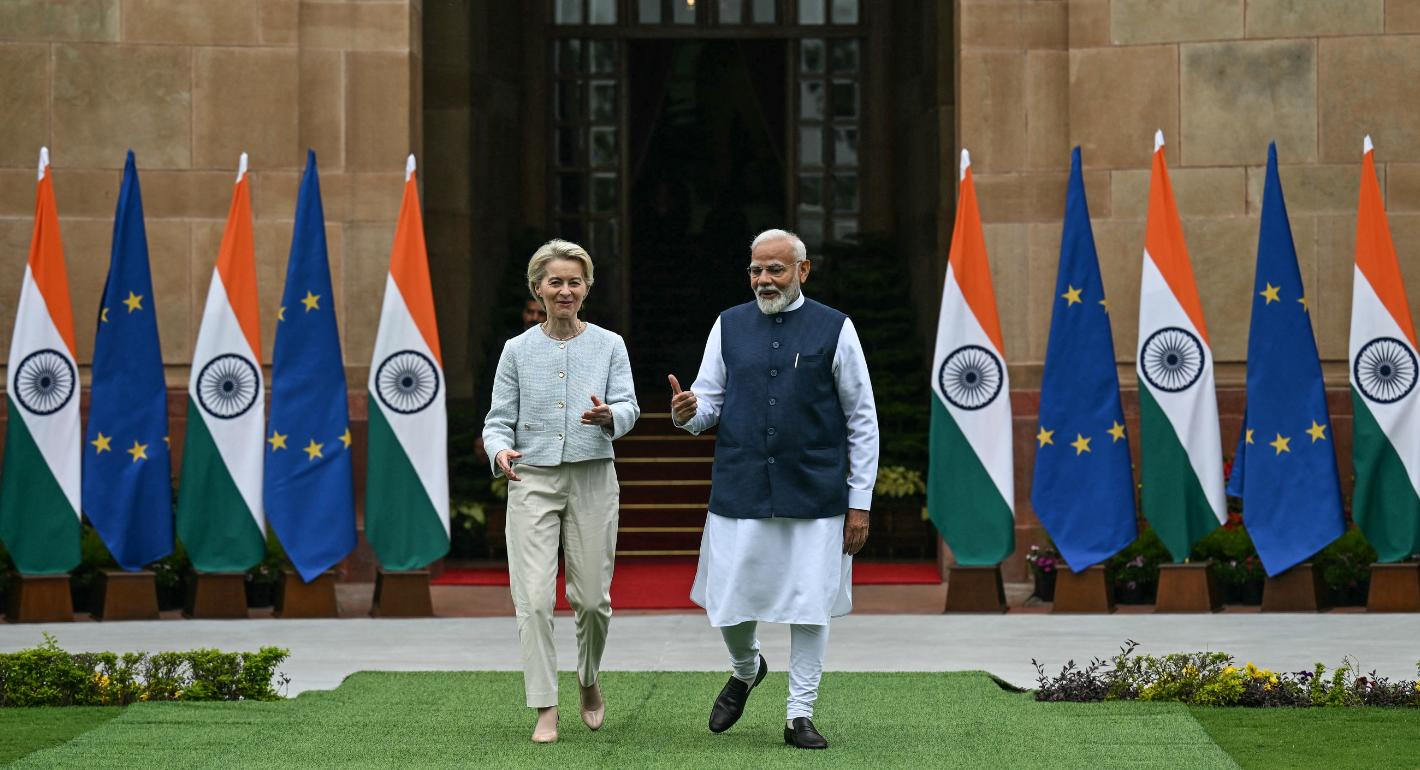
As European leadership prepares for the sixteenth EU-India Summit, both sides must reckon with trade-offs in order to secure a mutually beneficial Free Trade Agreement.

Dinakar Peri
For years, the Russian government has promoted “sovereign” digital services as an alternative to Western ones and introduced more and more online restrictions “for security purposes.” In practice, these homegrown solutions leave people vulnerable to data leaks and fraud.

Maria Kolomychenko

Soft power represents a critical dimension of international influence that complements traditional hard power capabilities; both are essential to national competitiveness.

Kayla Blomquist, Scott Singer, Sam Hogg

Connecting real-world AI use cases across sectors such as health, education, agriculture, and livelihoods can help policymakers, innovators, and institutions align around a shared goal. This article looks at a framework ensuring that AI works for everyone.


Shalini Kapoor, Tanvi Lall

How existing conceptualizations of the term “information integrity” fall short and how information integrity can achieve conceptual goodness.


Kamya Yadav, Alicia Wanless, Samantha Lai