

Commentary
As European leadership prepares for the sixteenth EU-India Summit, both sides must reckon with trade-offs in order to secure a mutually beneficial Free Trade Agreement.
Dinakar Peri
{
  "authors": [
    "Christian Perrone"
  ],
  "type": "commentary",
  "centerAffiliationAll": "",
  "centers": [
    "Carnegie Endowment for International Peace",
    "Carnegie India"
  ],
  "collections": [],
  "englishNewsletterAll": "",
  "nonEnglishNewsletterAll": "",
  "primaryCenter": "Carnegie India",
  "programAffiliation": "",
  "programs": [],
  "projects": [
    "Technology and Society"
  ],
  "regions": [
    "South Asia",
    "India"
  ],
  "topics": [
    "Technology"
  ]
}
Digital infrastructure projects in Brazil are helping bridge the access gap, connecting people, businesses, and the government in unprecedented ways.
This article is part of a series examining the geopolitics of technology, the theme of Carnegie India’s eighth Global Technology Summit (December 4–6, 2023), co-hosted with the Ministry of External Affairs, Government of India. The summit focused on artificial intelligence, digital public infrastructure, critical and emerging technology, national security, and more. Click here to watch all the discussions.
The 13.29-kilometer-long bridge over Guanabara Bay may not be among the world's longest anymore, but in the eyes of most Brazilians, it is still a colossal infrastructure project. At the same time, in terms of social transformation, other projects are surpassing it in grandeur. Rather than concrete, these new bridges are built of bytes.
Brazil is shifting its focus toward a new class of infrastructure projects—the digital kind. There are several initiatives that illustrate this trend, the most significant of which are:
These digital projects help bridge the access gap, connecting people, businesses, and/or the government in unprecedented ways. They reduce the economic, urban-rural, and gender divides in access to goods and services, leading to development opportunities and better distribution of resources and welfare. In other words, they help raise not only the country’s GDP but also the levels of fairness and equality.
In Brazil, the implementation of Pix increased access to banking services from around 70 percent to more than 84 percent. The platform gov.br enabled more than 680 million user transactions and estimated savings of almost 3 billion Brazilian reais (almost $600 million) for the public coffers. DREX stands to democratize the availability of intelligent financial services through “smart contract technology” based on an official digital currency.
These initiatives may as well foster a more open approach toward building infrastructure for the common good. Even though they could be considered public in nature, the state ought not to shoulder all the burden of developing and maintaining these projects, and arrangements beyond the classic public-private partnerships may be forged. These may involve a variety of actors, including the private sector, civil society, academia, and international organizations, leaving the government with a coordination role.
Pix showcases some elements of the aforementioned approach. The platform was created in consultation with a wide range of stakeholders who participated in working groups and offered their views and opinions throughout the decisionmaking process. More than 200 institutions participate in the Pix Forum, making it an open space for conceptualizing the organization’s evolution. However, the Brazilian Central Bank (the government entity) plays the role of both the regulator and supervisor of the ecosystem. Thus, it not only incentivizes new use cases and further developments but also prevents harm and abuse.
Another potential trait of these new digital infrastructure projects is interoperability. The projects connect a variety of systems and organizations and thus benefit from an approach that allows them to operate in conjunction in an interoperable fashion without necessarily having to be merged or unified into a single system. The platform gov.br achieves this for public services, converging different services and systems from a broad spectrum of public administration institutions. While they maintain some of their specific characteristics in the background, for the citizen (who is the end user), they are seamlessly integrated.
Overall, the greatest payoff of the shift from physical infrastructure projects to digital ones is that the latter have the capacity to scale not only nationally but also globally. If countries like Brazil can agree on the main tenets of these projects, there would be little that can limit their potential, especially for reducing inequality. In light of this, the bridge to the future indeed appears to be digital.
Carnegie does not take institutional positions on public policy issues; the views represented herein are those of the author(s) and do not necessarily reflect the views of Carnegie, its staff, or its trustees.
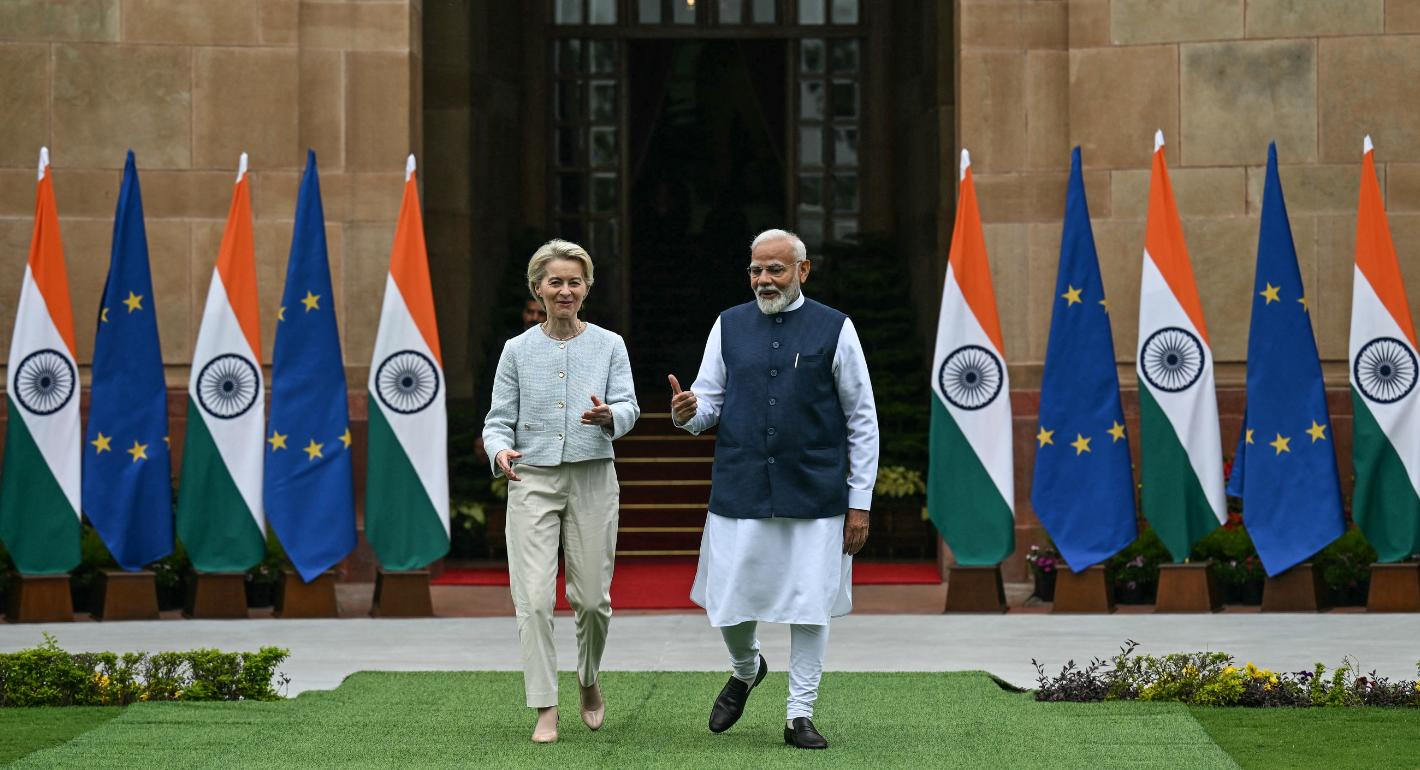
As European leadership prepares for the sixteenth EU-India Summit, both sides must reckon with trade-offs in order to secure a mutually beneficial Free Trade Agreement.

Dinakar Peri
For years, the Russian government has promoted “sovereign” digital services as an alternative to Western ones and introduced more and more online restrictions “for security purposes.” In practice, these homegrown solutions leave people vulnerable to data leaks and fraud.

Maria Kolomychenko

Soft power represents a critical dimension of international influence that complements traditional hard power capabilities; both are essential to national competitiveness.

Kayla Blomquist, Scott Singer, Sam Hogg
Connecting real-world AI use cases across sectors such as health, education, agriculture, and livelihoods can help policymakers, innovators, and institutions align around a shared goal. This article looks at a framework ensuring that AI works for everyone.

Shalini Kapoor, Tanvi Lall
How existing conceptualizations of the term “information integrity” fall short and how information integrity can achieve conceptual goodness.


Kamya Yadav, Alicia Wanless, Samantha Lai