The Egyptian prosecution released three members from the Egyptian Initiative of Human Rights (EIPR) on December 4, 2020. The trio of human rights workers were arrested on November 15 on fabricated charges of joining a terrorist group. The release, a rare occurrence by Sisi’s regime, took place after an international uproar. Part of the international campaign that followed included a non-binding resolution from the European Parliament, calling on member states to impose “restrictive measures” on high ranking members of the Egyptian regime. Likewise, on December 23, the United States Congress suspended $300 million, of the $1.3 billion annual aid given to the regime. The funds’ release was contingent upon improvements in human rights.
This novel international pressure campaign, the recent release of EIPR staff, and the expectation that the new U.S. administration will be more outspoken about human rights violations around the globe, have generated hope that Sisi’s regime might lessen the mass repression campaign. However, this ignores the structural conditions that make the regime ill-suited to deal with social unrest, making repression—almost—inevitable. Indeed, the regime’s ferocious repression of the opposition, and its refusal to share power with civilians in the form of a ruling party or a credible political actor, has left it exposed to popular anger—to which it can only respond with repression.
Since the 2013 coup the military has embarked on a single-minded quest of consolidating power, in effect militarizing the Egyptian political system. This strategy involves a constant attrition of the opposition whether in the form of political parties, civil society actors, or individuals, through repression and co-option. This had the unintended effect of leaving the regime ill-equipped and exposed to social unrest, in effect, much less stable than it appears. Examples abound over the past few years. On February 15, 2018, Abdel-Moneim Abul Fotouh, the head of the Strong Egypt party— an opposition party with Islamist leanings—was arrested on made up terrorism charges. The deputy head of the party, Mohamed Qassas, was also arrested, on February 8, 2018 on similar charges. Other instances include the June 25, 2018, arrest of number of well-known public figures, such as Ziad Al-Alaimi, Hossam Moanis, Hisham Fouad, and Omar al-Shenety. They were part of the “coalition of hope,” a political coalition that planned to run in the parliamentary elections of 2020.
A critical moment in this campaign of repression came in the two-week arrest spree in September 2019. Culminating on September 25, the regime arrested an estimated 2,300 people, including Khaled Dawoud—the former head of the liberal Constitution Party and its spokesperson at the time of his arrest. Today, all these political figures remain in pre-trial detention. Significant blocks of the opposition were then co-opted by the regime, prior to the parliamentary elections of 2020, when a “For Egypt” electoral list was devised. The lion’s share of the seats on the list were assigned to “Mostaqbal Watan” party, which is reported to have a close connection to the security services. The rest of the seats were divided between eleven parties, including a number of opposition parties. However, the curated electoral list dominates the new parliament.
The deliberate weakening of the opposition through repression and co-option may tighten the regime’s grip on power. However, it weakens its ability to broaden its base of support and, ultimately, to absorb popular discontent. If reformist parties are unable to build a popular base of support and are constantly fragmented, they will be unable to articulate popular demands that the regime can then negotiate. In other words, in the case of widespread social unrest, there will be no organized political force to negotiate with or scapegoat—making repression the only feasible response. The severe repression of the Muslim Brotherhood, and its designation as a terrorist organization, reinforces this trend. Reformist opposition has played an important role in managing social unrest in recent years. First, the critical role that the Brotherhood played in stabilizing the regime after the mass protests of 2011, through its participation in the electoral process, and its conservative stance during the first transitional period. Another example is the important role that religious groups, like the Salafi Nour party, and more notably—secular groups— played in legitimizing the coup of 2013 and managing the subsequent unrest. This included the participation in the first post-coup government of prominent leftist and popular figures like labour activists Kamal Abu Eita, and the liberal figure Ziad Bahaa El-Din.
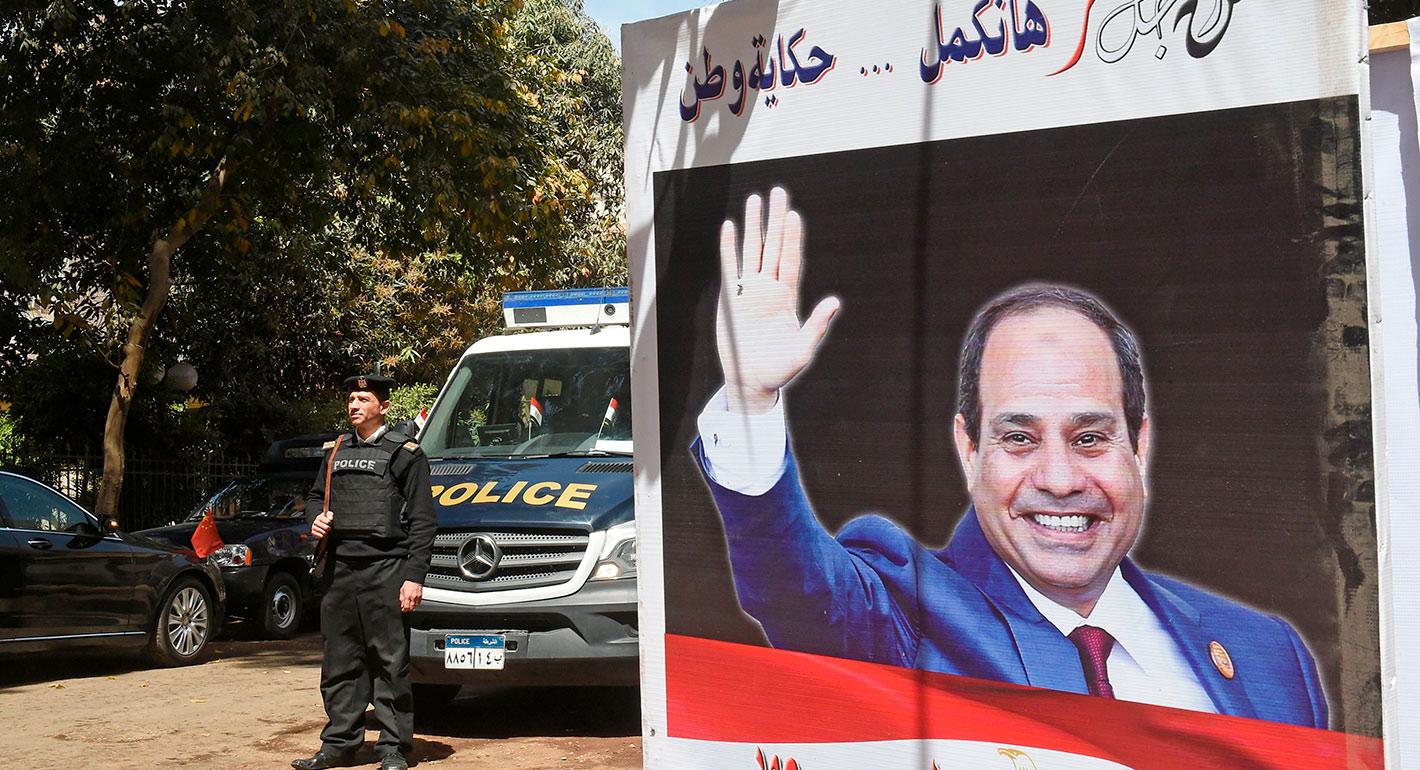
Neutralizing these leaders and centralizing power in the hands of the security establishment has eliminated any strong civilian political actors, religious or otherwise. Though the parliament is populated by civilian allies of the regime, especially through the “Mostaqbal Watan” party/list, few have an active role in governing. This deprives the security establishment of a civilian tool to both broaden its support and to co-opt possible hostile allies, by offering the possibility of sharing power with civilians. In addition, the lack of a civilian ruling party means that possible popular discontent will be directed squarely toward Sisi and the security apparatus, rather than against a civilian ruling party, leaving the regime limited room for manoeuvre. For example, following the revelations of exiled contractor Mohamed Ali in 2019, which exposed wide scale corruption in military-led construction projects, mass protests broke out on September 23, 2019—calling for the removal of Sisi and the downfall of the regime. These protests, which were met with sweeping repression, demonstrated the extent to which regime’s base of support has effectively shrunk to the security services and the military.
Repression is also made more pertinent by the expanding economic footprint of the military—which has cracked down on social unrest and local resistance to this expansion. This crackdown has led to an unprecedent repression of the labor activism, and the increased use of military tribunals against workers. On December 27, 2020, heavy prison sentences ranging from five to twenty-five years were handed out to thirty-five residents of the Island of Warraq. The island was the site of clashes, in 2017, between the locals and the security forces, following security forces attempts to evict residents, as part of plan to develop the island. This government project is executed in cooperation with the military. Another example is the Justice Minister’s, Omar Marwan, decision in late 2020 to grant military officers the power to arrest workers in case of unrest or protest. These officers are working in the national company for road development, the Egyptian company for mining, and the national company for fisheries.
This heavy reliance on repression is also subject to an ideological narrative, essential for maintaining the esprit de corps of the security establishment and to some extent support among its civilian base. However, this narrative has proven increasingly difficult to control. This narrative, propagated by different state officials including Sisi, claims that Egypt is subject to an international effort—in cooperation with the opposition and the Muslim Brotherhood—to destroy the state. Hence, the main justification for military rule is the protection of the state from collapse, which can only be achieved through repression. If repression would cease, it would mean that the enemies of the state have been defeated—or worse—that the narrative was wrong, and there would be no need for military rule.
Repression is therefore not only a practical approach, but it is an ideological necessity, restricting the regime’s course of action. Even though this narrative has been successful in justifying the use of mass repression, it has proven difficult to control. A key example of this is Giulio Regeni’s murder, the Italian PhD student who was apprehended by the Egyptian security force on January 25, 2016 and allegedly tortured to death in custody. One of the pieces of evidence the Italian prosecution used to indict four Egyptian security officials is a conversation overheard by a witness. During the conversation an Egyptian security official confessed to the abduction and torture, claiming that Regeni might have been a spy for the CIA or Mossad. This case illustrates the narrative’s permeation of the security establishment. Hence, a reduction in level of repression could be resisted by the different echelons of the security apparatus—the regime’s main base.
Mass repression is endemic in current incarnation of the Egyptian regime. Lessening repression would only be possible with a radical restructuring of the political system, which would entail increased civilian participation in power, both as in government and in the opposition. Even though the regime’s hold on power and the levers of the state is incontestable, its room for manoeuvre is limited in the face of social upheaval. Indeed, the regime’s only feasible option is the use of mass repression in case of civilian unrest, which will not only destabilise Egypt, but the entire region.
Maged Mandour is a political analyst and writes the “Chronicles of the Arab Revolt” column for Open Democracy. Follow him on Twitter @MagedMandour.