

Paper
Paul Salem
{
  "authors": [
    "Paul Salem"
  ],
  "type": "legacyinthemedia",
  "centerAffiliationAll": "dc",
  "centers": [
    "Carnegie Endowment for International Peace",
    "Malcolm H. Kerr Carnegie Middle East Center"
  ],
  "collections": [],
  "englishNewsletterAll": "menaTransitions",
  "nonEnglishNewsletterAll": "",
  "primaryCenter": "Malcolm H. Kerr Carnegie Middle East Center",
  "programAffiliation": "MEP",
  "programs": [
    "Middle East"
  ],
  "projects": [],
  "regions": [
    "Middle East",
    "Iran"
  ],
  "topics": [
    "Political Reform",
    "Security",
    "Military",
    "Foreign Policy",
    "Nuclear Policy"
  ]
}
Source: Getty
America's decision to target Iranian agents in Iraq is but another sign of the Iran's massive influence. Iran's increasing power has created tensions across the region, which must be managed carefully to avoid a period of protracted warfare. Fortunately, leaders may be able to work together to ease tensions, recognizing that they share a common interest in regional stability.
Source: The Japan Times

Iran is also reaping the returns of long-term investments. It has supported Iraqi Shiite groups since the early 1980s and has an equally long-standing alliance with Syria. In Lebanon, Iran helped create Hezbollah, which recently survived a head-on war with Israel and is the leading opponent of the anti-Syrian, Western-backed government. Iran's investment in Palestine is more recent, but its backing for the Hamas-led government, which has been frustrated elsewhere, is no less significant. A country of 70 million, Iran also has potential influence with Shiite communities in Kuwait, Saudi Arabia, Bahrain and the United Arab Emirates.
Iran's rise is causing alarm in the Arab Middle East, particularly in Saudi Arabia and Jordan, but also in Egypt. Though a Shiite country in an overwhelmingly Sunni region, Iran's radical Islamism resonates with the politicized Islamism that is energizing most Arab opposition movements, and its militant opposition to the U.S. and support for groups that engage Israel in battle is very popular on the Arab street and in the Arab media. At another level, Iran's rise, reinforced by its suspected bid for nuclear weapons threatens to awaken historical hostilities, between Sunnis and Shiites and between Persians and Arabs.
Both Iran and the Arab countries are struggling to come to terms with the consequences of Iran's newfound assertiveness. To be sure, Iran's long-standing support for regional Shiite groups is paying off. But its successes in Iraq, Lebanon and Palestine are creating great anxiety and even hostility, in some quarters. The rapid Shiite rise has already turned into a sectarian civil war in Iraq and recently has threatened to generate the same outcome in Lebanon.
If Iran does not properly manage its growing power, it could unwittingly trigger a drawn out sectarian war throughout the region, a nuclear arms race with Saudi Arabia and Egypt and war with Israel, the U.S., or both. It could also draw in major Sunni powers, such as Egypt and Turkey, which have at times been dominant in the region, but lately have been disengaged. Too many Iranian successes, and too many Sunni debacles, could also lead to immense pressure in Syria, where a minority Alawi regime dominates a Sunni majority. The loss of Damascus would cost Iran its influence in Syria, Lebanon and Palestine in one fell swoop.
Iranian President Mahmoud Ahmadinejad's administration is maintaining its radical rhetoric, perhaps looking ahead to a post-Bush era, when the U.S. has withdrawn from Iraq and Iran has developed nuclear weapons. Nevertheless, Iran also feels the need for accommodation with its adversaries. For example, while Iran may not be happy with the American presence in Iraq, it realizes how close the country is to full-scale civil war. As a result, it has expressed a willingness to cooperate with the U.S. on finding a soft landing for Iraq.
Likewise, while Iran supports Hezbollah, it has also held Hezbollah back from outright rebellion, which might trigger a further Sunni backlash in the region. In the Persian Gulf, Iran has tried to reassure its Arab neighbors that Iranian power is not aimed at them and can in fact be a pillar of gulf security.
But the Arab world is divided about how to deal with the sudden rise in Iranian power. The tension is particularly acute in Saudi Arabia, which has warned the U.S. about the dangers of Iraq's possible collapse and now finds itself in an unequal face-off with Iran. Some in the kingdom argue that Saudi Arabia must confront Iran, stand up for Sunni Arab interests and become a hands-on regional power. Other Saudis believe that confrontation will only lead to wider wars and are urging dialogue and accommodation. In this view, the U.S., not Iran, produced the region's current problems.
Iran's regional foreign policy has not yet caught up with its new pre-eminence; it is making as many enemies as it is gaining friends and it might squander the windfall gains that it made in the past three years. If Iran and the Arab countries -- and alongside them the U.S. and the international community -- do not manage today's tensions wisely, the region could enter a period of protracted warfare.
But there is a way forward, because all players in the region share an interest in security and stability. Leaders in Tehran, Riyadh, Washington and other key capitals must realize the costs of further mismanagement, step back from the brink and work toward cooperative solutions before it is too late.
Paul Salem is the director of the Carnegie Middle East Center in Beirut.
This article was orginally published in The Japan Times.
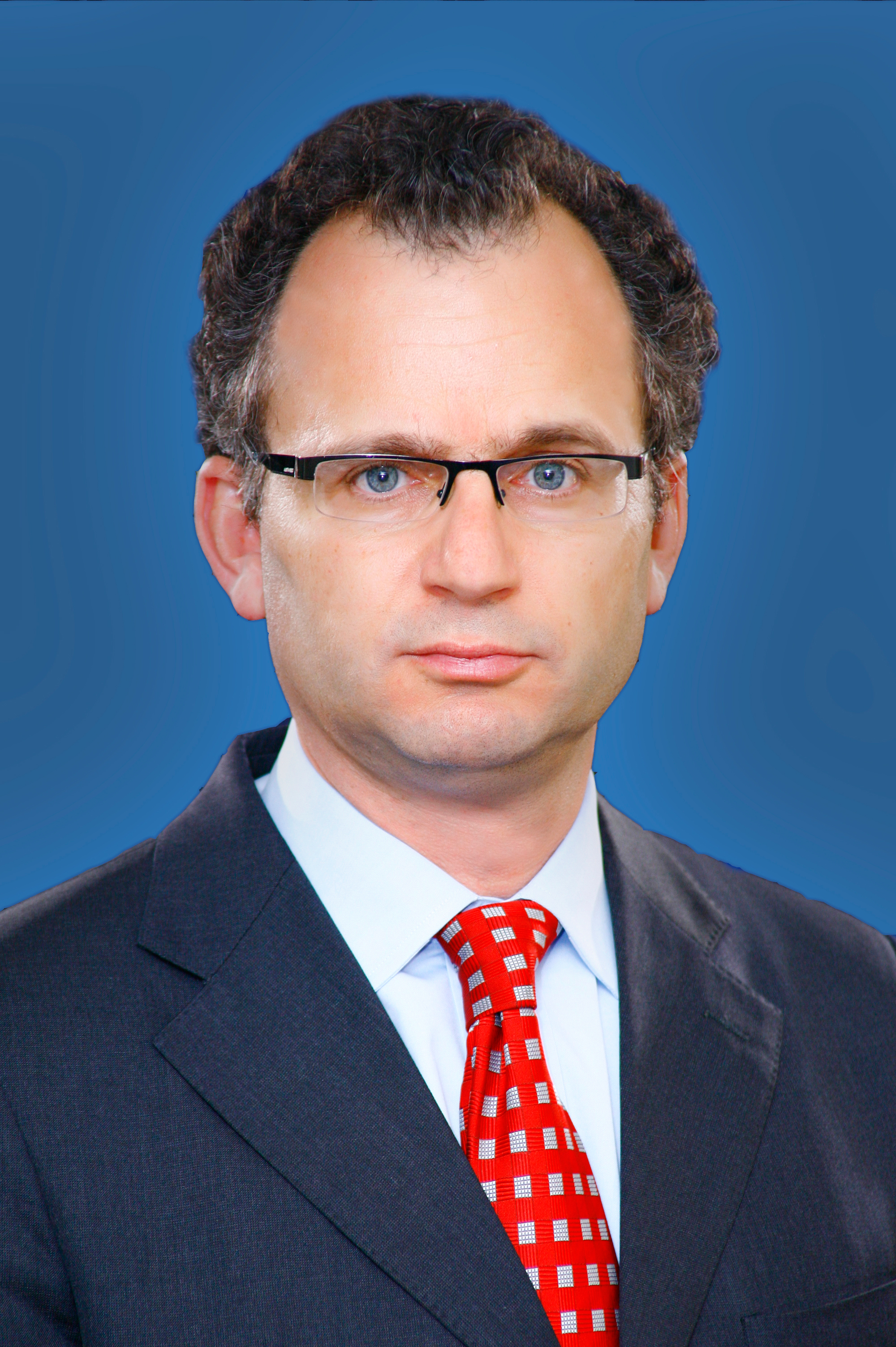
Senior Fellow at the Middle East Institute
Paul Salem is a senior fellow at the Middle East Institute.
Recent Work
Paul Salem
Paul Salem
Carnegie does not take institutional positions on public policy issues; the views represented herein are those of the author(s) and do not necessarily reflect the views of Carnegie, its staff, or its trustees.

Funding Ukraine remains a priority for European leaders. As Russia’s war of aggression heads into another winter, two feasible options to mobilize support for Kyiv should be fast-tracked.


Vladyslav Rashkovan, Gregory P. Wilson

While the EU and European governments are embracing the much-lauded middle-power moment, this entails three difficult conundrums.

Richard Youngs

Europe is facing rising populism internally as well as external pressures from Russia, China, Turkey, and the United States.

Dimitar Bechev

A notable degree of participative democracy has firmly arrived in Europe. But to have more far-reaching impact, democratic deliberation needs to move into a radically new phase.
Richard Youngs

Much has been said of the changes Brussels is trying to make to the EU enlargement process. Here’s why gradual integration might—or might not—be the answer.
Dimitar Bechev