

In The Media
Lilia Shevtsova
{
  "authors": [
    "Lilia Shevtsova"
  ],
  "type": "commentary",
  "centerAffiliationAll": "",
  "centers": [
    "Carnegie Endowment for International Peace",
    "Carnegie Russia Eurasia Center"
  ],
  "collections": [],
  "englishNewsletterAll": "",
  "nonEnglishNewsletterAll": "",
  "primaryCenter": "Carnegie Russia Eurasia Center",
  "programAffiliation": "",
  "programs": [],
  "projects": [],
  "regions": [
    "Russia",
    "Eastern Europe",
    "Ukraine",
    "Western Europe"
  ],
  "topics": [
    "Political Reform",
    "Foreign Policy",
    "Civil Society"
  ]
}
Source: Getty
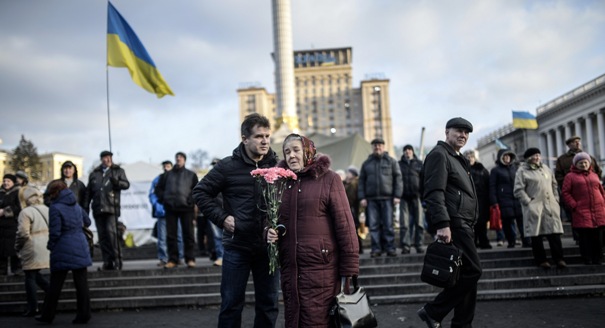
The Ukrainian drama is far from over, and the international actors bear responsibility for its length and excruciatingly painful results.
I suggest that everyone writing about Ukraine take an honest look at what has been written and analyze the accuracy of our predictions. I think we will be forced to admit that we often failed to keep up with the events in Ukraine and thus drew erroneous conclusions. I will mention just the most glaring misjudgments. Most analysts and Western politicians believed that President Viktor Yanukovych would sign the Association Agreement with the EU; they did not believe that he would dare to use force; they underestimated Moscow’s potential to be an active player on the Ukrainian political field; they overrated the influence of the Ukrainian opposition and underrated the Maidan’s role; they were unprepared for the rise of the new protest forces represented by the Right Sector and the Maidan self-defense formations; they exaggerate the passivity of Ukraine’s southern and eastern regions; they underestimated the Ukrainian people’s readiness for self-sacrifice. None of us could promptly identify the crisis of a post-Soviet state and the collapse of the model of governance that exists in all of the post-Soviet states (with an exception of the Baltic countries).
Finally, the analysts misjudged the agreement between Yanukovych and the opposition leaders brokered by the German and Polish foreign ministers (with the input from the French foreign minister and a Russian presidential envoy). The agreement lasted less than a day, and the absence of enforcement mechanisms is not the reason for its failure. Rather, the agreement did not address the interests of the protest segment of Ukrainian society, which would not tolerate Yanukovych’s presence on the political scene. This deal was about a gradual regime change, thus preserving the old-system interactions and elite clans and enabling them to regroup in the course of the year. It is not coincidental that the Kremlin is defending this agreement with such passion. Perhaps, Frank-Walter Steinmeier and Radosław Sikorski, who forced the deal, tried to take Moscow’s interests into account and avoid irritating President Vladimir Putin. Perhaps, they feared the growing strength of the Maidan and the Right Sector, trying to resolve the conflict without the inclusion of the new players. In any event, the February 21 agreement bit the dust the day after being signed. Its only positive outcome was involving Yanukovych in the protracted negotiation process, which precluded him from aggravating the situation even further. But the agreement that ignored the sentiments of the Ukrainian people and the rising wave of protests in the south and the east definitely affected both the opposition leaders’ and the western mediators’ reputation.
I am not going to predict how the Ukrainian events are to unfold in the future—it is impossible. Nevertheless, I believe it is possible to discern a number of emerging trends, which will remain relevant in the nearest future.
And perhaps, most importantly, the Ukrainians will have to deal with a whole host of new tactics employed by the Kremlin, which remains the most influential international player in Ukraine. The Kremlin scenarios do not limit themselves to the support for Ukraine’s federalization and the Georgian scenario. They also include Moscow’s willingness to support any opposition government (Putin dropped this hint some time ago). Besides, Moscow hopes to have a dialogue with Yulia Tymoshenko. It is not hard to understand what the terms of such a dialogue will be.
Thus, the Ukrainian drama is far from over, and the international actors bear responsibility for its length and excruciatingly painful results. As the conflicts drags on, some of them just sit on the fence and talk, while others lend their support to the old regime.
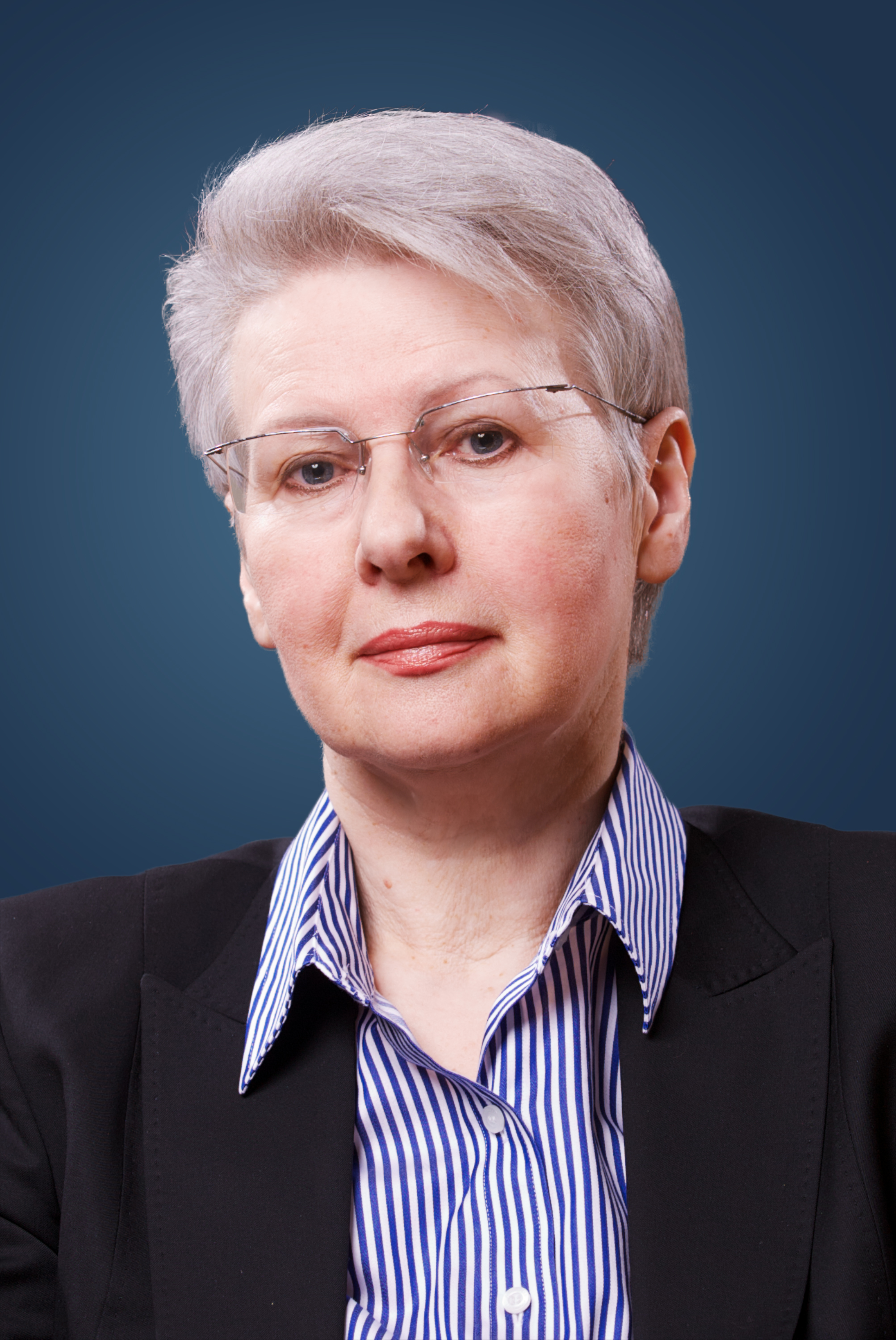
Former Senior Associate, Russian Domestic Politics and Political Institutions Program, Moscow Center
Shevtsova chaired the Russian Domestic Politics and Political Institutions Program at the Carnegie Moscow Center, dividing her time between Carnegie’s offices in Washington, DC, and Moscow. She had been with Carnegie since 1995.
Recent Work
Lilia Shevtsova
Lilia Shevtsova
Carnegie does not take institutional positions on public policy issues; the views represented herein are those of the author(s) and do not necessarily reflect the views of Carnegie, its staff, or its trustees.

As we close out another season of Strategic Europe, it is worth taking stock of the deep shifts underway.

Rym Momtaz

The hybrid warfare landscape is evolving rapidly, leaving policymakers without clear strategies. To better inform their work in addressing emerging challenges, governments must dig deeper into the underlying dynamics at play.


Raluca Csernatoni, Alicia Wanless
The EU had to compromise to adopt a twenty-first sanctions package against Russia, exposing growing cracks in the union’s resolve. Is this latest, weaker round worth it to keep pressure on Moscow?
Rym Momtaz, ed.

Trump is distracted and Ukraine wants Europe to step up. The continent’s leaders must find their voice and assert it in talks with Russia.

Alissa de Carbonnel

Mounting economic strain and battlefield losses will not necessarily make the Kremlin less dangerous. They could instead push Moscow toward a more aggressive hybrid campaign designed to test NATO’s Eastern flank, exploit allied hesitation, and fracture European resolve.

Maksym Beznosiuk