Source: POLITICO Magazine
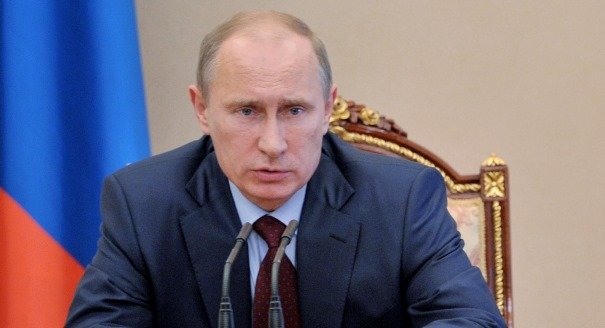
POLITICO Magazine asked America’s leading Putinologists to get inside the head of the Kremlin strongman.
A Man Alone
Andrew S. Weiss, vice president for studies at the Carnegie Endowment for International Peace, was director for Russian, Ukrainian and Eurasian affairs on the National Security Council staff from 1998 to 2001.
All roads in the Ukraine crisis lead back to one man: Vladimir Putin. Unfortunately, our ability to understand just what is driving him or what he actually wants to achieve is far weaker than it should be. A big part of the problem is that Putin has retreated into a war cabinet that, by design, lacks connectivity to the outside world.
Putin is also far more isolated from major foreign counterparts than at any point in his tenure. After nearly 15 years at the helm and lately at the center of the world’s attention, Putin sees himself as a giant among weaklings who don’t measure up to him and can’t compete with him. While attention has focused on Angela Merkel’s dogged attempts to broker a solution on Crimea, her relationship with Putin has none of the coziness that other German chancellors enjoyed in the recent past. And it’s practically impossible to imagine U.S. President Barack Obama showing Putin the kind of hospitality that George W. Bush did at his Texas ranch and the Bush family compound in Kennebunkport.
Where does that leave us? Western leaders from Obama on down have relied on calling Putin at regular intervals in the hope of deescalating the crisis. But at practically every turn, Putin has responded to these entreaties by escalating the situation and demonstrating his knack for throwing Western leaders off-balance.
In the absence of meaningful diplomatic channels, Western governments have resorted to a far less effective tool—megaphone diplomacy. Anyone who reads the endless series of press releases issued after presidential-level phone calls, let alone the line in the sand drawn by G-7 heads of state on March 12 about Moscow’s possible annexation of Crimea, is struck by two things. First, there is the repetitive tone and the endless articulation of “core principles” (e.g., respect for Ukraine’s sovereignty and territorial integrity) that clearly have gone out the window. Then, there is Moscow’s public line, which is equally strident in response and suggests that there is practically zero ground for compromise.
The immediate challenge for Western officials is not to spend more time pleading on the phone with Putin or banging out yet another press statement. Better to craft a long-term strategy that reckons with the immense challenge of deterring further overreach or provocative moves by Moscow in eastern Ukraine and beyond; patiently narrows the differences between the United States and Europe on sanctions and other punitive measures; and shores up the rickety interim government in Kyiv.
***
A Reactionary
Dmitri Trenin, director of the Moscow Center of the Carnegie Endowment for International Peace, served in the Soviet and Russian armed forces from 1972 to 1993.
Vladimir Putin used to be many things to many people. An economic liberal and a moderate nationalist; an advocate of a Greater Europe from Lisbon to Vladivostok and a promoter of a Eurasian Union; a practicing Christian and a ruthless, if enlightened, autocrat. For many years, even as Russia’s president, he was still a work in progress. Pragmatism was the hallmark of Putin’s first decade in power. He is still pragmatic in many ways, but he has markedly changed. Today, Putin reveals a sense of an historic mission bestowed on him. That mission is to restore Russia to what he sees as its rightful place as one of the world’s great powers. This means adopting a set of traditional values rooted in established religions, above all, Orthodox Christianity; reviving Russian patriotism with its emphasis on a strong state; pursuing an active policy of nation-building; integrating eastern Slavs (Russians, Belarusians, Ukrainians) in a “civilizational union” of central Eurasia, in an alliance with Muslim Turkic peoples also living there; and protecting Russia’s strategic independence from its geopolitical rivals—above all, the United States and the European Union.
Putin’s endgame in Ukraine is securing Crimea as part of the Russian Federation, following the results of the March 16 referendum; making sure that the rest of Ukraine is federalized to give Russian speakers in the eastern and southern regions a high degree of linguistic, cultural and economic autonomy; and preventing the central government in Kyiv from seeking NATO membership. Over time, he would like to see central Ukraine, with Kyiv, join with the eastern and southern regions of the country in a compact aligned with Russia. If this means that western Ukraine breaks away and declares independence, so be it. To Putin, its inclusion into the Soviet Union was probably Stalin’s mistake; it does not belong with the rest of Ukraine. He has no illusion, of course, as to how difficult the next few years will be for Russia and for him, and he is no doubt bracing for intense competition, even confrontation—which to him are normal, if unpleasant, elements of international relations.
***
A Lonely Pessimist
Thomas de Waal, senior associate at the Carnegie Endowment for International Peace, has reported from across Russia and the Caucasus.
I believe Vladimir Putin’s motto is extreme self-reliance—that you can trust no one but yourself and a few people close to you.
He served a state, the Soviet Union, that came crashing down round his ears, but managed to pick himself up. He served a president, Boris Yeltsin, whose wayward behavior, he believes, almost destroyed Russia a second time.
He believed that the economic successes and stabilization of his early years in power had a lot to do with himself personally. He gets angry when the power vertical in Russia does not deliver the results he wants—and it rarely does.
He believes that the whole world lives by varying degrees of “double standards” and that talk of “values” is just a smokescreen for asserting realpolitik interests by other means. He despises almost every other foreign head of state, though perhaps he has a grudging respect for Kazakh President Nursultan Nazarbayev and Turkish Prime Minister Reccep Tayip Erdogan.
Like too many Russian leaders, he finds himself surrounded by courtiers who want to give him only good news. That makes him lonely. He was not formerly an ideas man, but now, after 14 years at the top, he is looking for ideas that will crown his legacy.
Finally, like many other leaders in Russia, and not only in Russia, he spends too much of his time tending and repairing an inherently unstable political system. He does not know how it is going to end, but he knows he needs some base of public support to keep it going.
Putin’s triumphalism in Ukraine hides a deep pessimism. He believes he has found a smart move in Crimea in the middle of a losing game. He will look for other moves, but may not find them.
***
A Ruthless Realist
Eugene Rumer, director of the Russia and Eurasia program at the Carnegie Endowment for International Peace, was national intelligence officer for Russia and Eurasia at the U.S. National Intelligence Council from 2010 to 2014.
The Ukraine crisis is only the latest episode that sheds light on the hard, unsentimental view of the world underlying Vladimir Putin’s foreign policy: might is right, the weak get crushed. That was Russia’s fate in the 1990s, when the West pushed deep into Russia’s former empire, waged wars in the Balkans and interfered in Russian domestic affairs. Then Russia recovered, pushed back and restored balance to its relations with the West. The Georgia war was a signal to the West to keep out of Russia’s sphere of influence, and to its neighbors to remember that Russia again had the means and the will to patrol its neighborhood.
Putin’s view of Ukraine is apparently similar to Zbigniew Brzezinski’s argument that, without Ukraine, Russia cannot be an empire. What Brzezinski wants to prevent, Putin seems determined to achieve. He is prepared to pay the price of keeping Ukraine in Russia’s orbit. Putin the realist almost certainly is aware of the toll his actions have taken on Ukrainian attitudes toward him and Russia. But tethering Ukraine to Russia is more important than Ukrainian public opinion. Putin has probably calculated that the West’s military option is off the table, that its sanctions will be more bark than bite, and that after a cooling-off period there will be a new “reset.” He is poised to annex Crimea, and, with that new reality in hand, he will look for an opening in Kyiv. After all, much of the new team there looks like the old team, and Putin probably thinks he can find a common language with them just fine. How successful will he be?
***
This article was originally published in POLITICO Magazine.