

Research
- +10
Rosa Balfour, Frances Z. Brown, Yasmine Farouk, …
{
  "authors": [
    "Moisés Naím"
  ],
  "type": "legacyinthemedia",
  "centerAffiliationAll": "dc",
  "centers": [
    "Carnegie Endowment for International Peace"
  ],
  "collections": [],
  "englishNewsletterAll": "americanStatecraft",
  "nonEnglishNewsletterAll": "",
  "primaryCenter": "Carnegie Endowment for International Peace",
  "programAffiliation": "ASP",
  "programs": [
    "American Statecraft"
  ],
  "projects": [],
  "regions": [
    "North America",
    "United States",
    "South America",
    "Western Europe",
    "France"
  ],
  "topics": [
    "Economy",
    "Trade"
  ]
}
Source: Getty
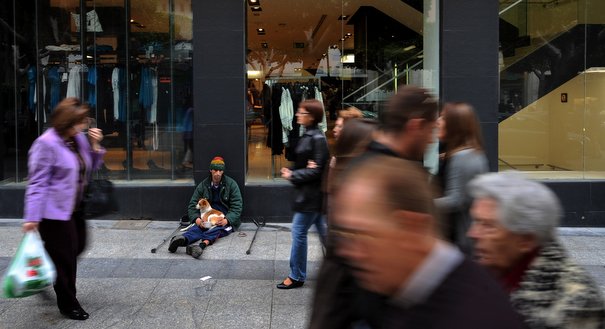
In many countries, wealth grows more as a result of thievery and malfeasance than as a consequence of the returns on capital invested by elites.
Source: Atlantic
Who is to blame for the dramatic rise in inequality in recent years? The bankers, many people say. According to this view, the financial sector is guilty of triggering the global economic crisis that began in 2008 and still affects millions of middle-class families in Europe and the United States, who've seen their purchasing power diminish and job prospects wither. The outrage is amplified by the fact that not only have the bankers and financial speculators escaped punishment for their blunders, but many are now even richer than they were before the crash. Others blame growing inequality on wages in countries like China and India, where low salaries depress incomes of workers in the rest of the world. Asia’s cheap labor compounds the problem because it creates unemployment in countries where companies close factories and “export” jobs to cheaper markets overseas. Still others see technology as the culprit. Robots, computers, the Internet, and greater use of machines in factories, they say, are replacing workers and thus boosting inequality.
The true explanation is a lot more complicated, says Thomas Piketty, the French economist whose influential Capital in the Twenty-First Century has turned into a global sensation. In many countries, Piketty argues, capital (which he equates with wealth in the form of real estate, financial assets, etc.) is growing at a faster rate than the economy. The income produced by capital tends to be concentrated in the hands of a small group of people, whereas income from labor is dispersed throughout the entire population. Therefore, when capital earnings increase faster than wages, inequality grows because those who own capital accumulate a higher proportion of income. And given that growth in wages is directly dependent on the growth of the economy as a whole, economic inequality is bound to get worse if the economy expands at a slower clip than capital earnings.Piketty summarizes this complicated theory with the formula “r > g” where “r” is the rate of return on capital and “g” is the rate of growth in the economy. The future is dire, he concludes, because he expects the economies of the countries he surveyed to grow at a rate of 1 to 1.5 percent per year, while the average return on capital increases at a rate of 4 to 5 percent per year. Inequality, in other words, is bound to rise. To avoid this, Piketty calls for a progressive tax on wealth in large countries—an idea that even he concludes is utopian. He acknowledges the enormous political hurdles that his proposal would face and the huge practical difficulties that would accompany its implementation. Last week, the Financial Times claimed that it had found grave defects in Piketty’s work, provoking an ongoing debate about his analysis. Nonetheless, most impartial observers believe that the issues with Piketty’s data are not serious enough to completely discredit his overall conclusions.
As I wrote last week, the profound impact of Piketty’s book is largely a result of the fact that it was published at a time when growing economic inequality has become an American preoccupation. Since the United States has proven so adept at globalizing its anxieties and exporting its policy debates, the Piketty phenomenon is extending to places where inequality has been pervasive for so long that the public seemed inured to it and resigned to passively accept it. Now, members of many of these societies are actively debating how to bring inequality down.
In order for this discussion to be valuable, however, the problem requires a more complete diagnosis. It is not accurate to assert that in countries like Russia, Nigeria, Brazil, and China, the main driver of economic inequality is a rate of return on capital that is larger than the rate of economic growth. A more holistic explanation would need to include the massive fortunes regularly created by corruption and all kinds of illicit activities. In many countries, wealth grows more as a result of thievery and malfeasance than as a consequence of the returns on capital invested by elites (a factor that is surely at work too).
To channel Piketty, inequality will continue to rise in societies where “c > h.” Here, “c” stands for the degree to which corrupt politicians and public employees, along with their private-sector cronies, break laws for personal gain, and “h” represents the degree to which honest politicians and public employees uphold fair governing practices. Corruption-fueled inequality flourishes in societies where there are no incentives, rules, or institutions to hinder corruption. And having honest people in government is good, but not enough. The practices of pilfering public funds or selling government contracts to the highest bidder must be seen as risky, routinely detected, and systematically punished.
Most of the roughly 20 nations from which Piketty forms his analysis classify as high-income countries and rank among the least-corrupt in the world, according to Transparency International. Unfortunately, most of humanity lives in countries where “c > h” and dishonesty is the primary driver of inequality. This point has not attracted as much attention as Piketty’s thesis. But it should.

Distinguished Fellow
Moisés Naím is a distinguished fellow at the Carnegie Endowment for International Peace, a best-selling author, and an internationally syndicated columnist.
Recent Work



Rosa Balfour, Frances Z. Brown, Yasmine Farouk, …
Moisés Naím
Carnegie does not take institutional positions on public policy issues; the views represented herein are those of the author(s) and do not necessarily reflect the views of Carnegie, its staff, or its trustees.

Trump is distracted and Ukraine wants Europe to step up. The continent’s leaders must find their voice and assert it in talks with Russia.

Alissa de Carbonnel

Over the past ten years, NATO has held almost as many summits as it did during the entirety of the Cold War. Are they still useful, or is it time to stop holding annual meetings?

Rym Momtaz, ed.

As the EU confronts profound challenges, several leaders have called for fundamental reform to the union’s model—but only modest, superficial changes have resulted. What if Europe really could be reimagined from zero today: What should such a redesigned European order look like?

Richard Youngs, ed.
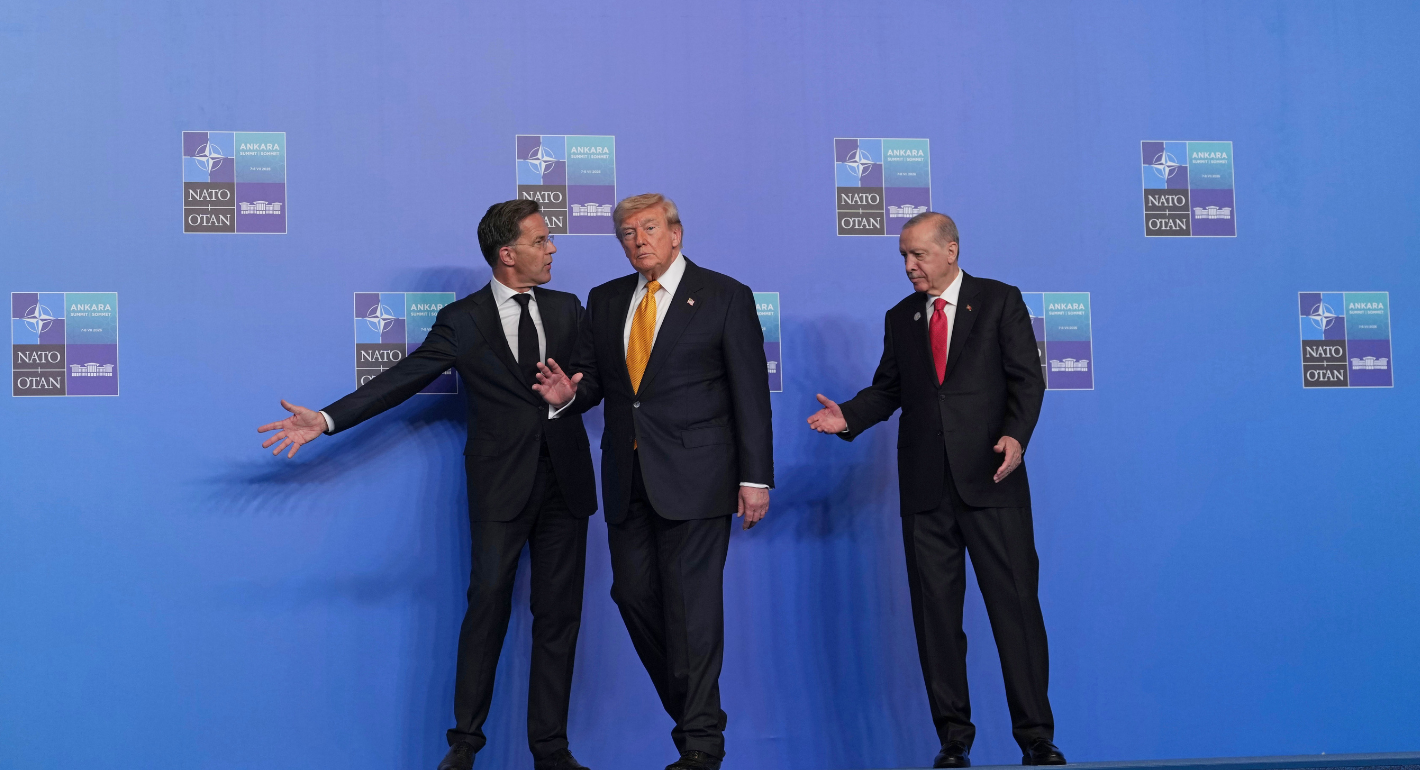
Nearly a year and a half after Europeans leaned into sucking up to Trump, the strategy has produced some benefits when it comes to Ukraine.
Rym Momtaz
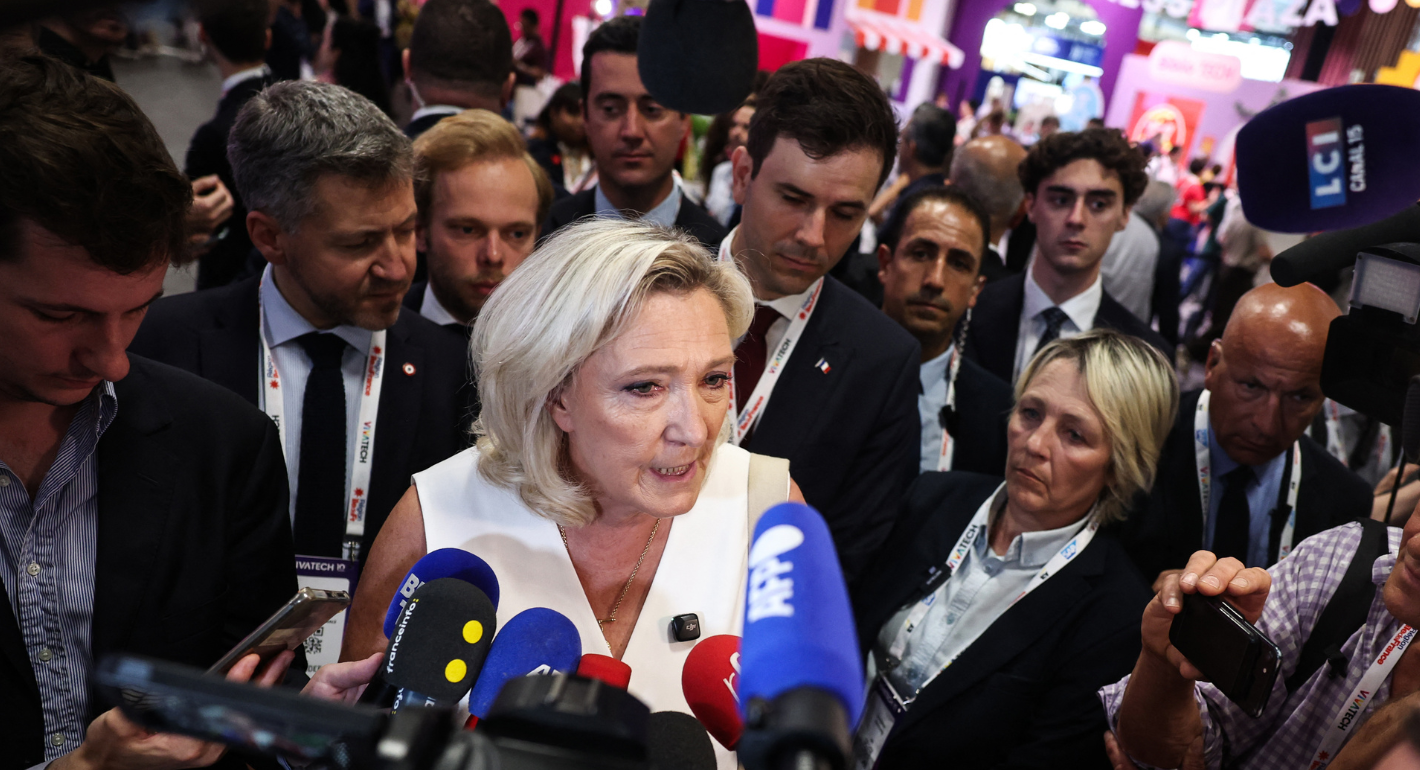
Far-right leader Marine Le Pen can—and will—run in France’s next presidential election. What does the outcome of her appeal against a 2025 embezzlement conviction mean for the country’s political future?
Catherine Fieschi