

Commentary
Dmitri Trenin
{
  "authors": [
    "Dmitri Trenin"
  ],
  "type": "commentary",
  "centerAffiliationAll": "",
  "centers": [
    "Carnegie Endowment for International Peace",
    "Carnegie Russia Eurasia Center"
  ],
  "collections": [],
  "englishNewsletterAll": "",
  "nonEnglishNewsletterAll": "",
  "primaryCenter": "Carnegie Russia Eurasia Center",
  "programAffiliation": "",
  "programs": [],
  "projects": [],
  "regions": [
    "North America",
    "United States",
    "Russia",
    "Eastern Europe",
    "Ukraine",
    "Western Europe"
  ],
  "topics": [
    "Political Reform",
    "Economy",
    "Security",
    "Foreign Policy"
  ]
}
Source: Getty
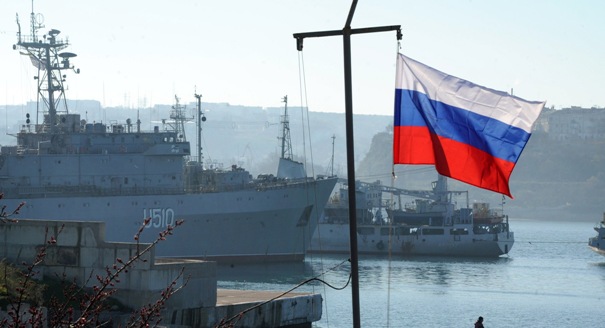
The Kremlin now sees the U.S. goal as the toppling of the Putin regime. That said, expecting Putin to back off betrays a lack of understanding of the gravity of the situation. It is no longer just a struggle for Ukraine, but a battle for Russia.
Last week, the Russian security chiefs were put on the European Union's sanctions list. The foreign ministry in Moscow reacted angrily. Anti-terrorist cooperation between Russia and the West is now a thing of the past. The sanctions will not stop there, however. This week, the EU is likely to finally begin imposing Tier Three sanctions, capable of doing considerable damage to the Russian economy. The United States, which had long been leaning on the EU to adopt a tougher approach toward Russia, should feel relieved that it has avoided transatlantic divisions on an issue of principle.
The chances for accommodation between Russia and the United States now seem more remote than ever since February 22. Secretary John Kerry and Minister Sergey Lavrov may talk the talk, but they will not walk the walk. Europe will not be able, or willing, to play a mediating role. The Kremlin sees the U.S. goal as being not so much stopping the Russian support for the Donbass rebels, or even getting Moscow to withdraw from Crimea, but as the toppling of the Putin regime by means of economic pain and popular discontent wrought by the sanctions. Even if no pro-Western leader replaces a Putin in the Kremlin as a result, the narrative goes, Russia will succumb to another period of turmoil, making it to focus on itself, rather than creating problems for Washington.
That said, expecting Putin to back off, or for his close friends to persuade him to change tack, or else for the "oligarchs" to pressure the Kremlin into beating a retreat betrays a lack of understanding of the gravity of the situation. It is no longer the struggle for Ukraine, but a battle for Russia. If Vladimir Putin manages to keep the Russian people on his side, he will win it. If not, another geopolitical catastrophe might follow.
Former Director, Carnegie Moscow Center
Trenin was director of the Carnegie Moscow Center from 2008 to early 2022.
Recent Work
Dmitri Trenin
Dmitri Trenin
Carnegie does not take institutional positions on public policy issues; the views represented herein are those of the author(s) and do not necessarily reflect the views of Carnegie, its staff, or its trustees.

The EU is putting together a new security strategy to meet today’s myriad challenges. But for any proposal to be effective, the union needs to grapple with its identity and ambitions.

Pierre Vimont
Three years after the Ohrid Agreement, Kosovo and Serbia remain far from normalization. To revive implementation, the EU should abandon its ambiguity and act as an even-handed arbitrator.

Miloš Pavković, Fitim Gashi, Iliriana Gjoni, …

The EU’s new migration policy is not suited to today’s realities. With climate change increasingly becoming a driver of displacement, Europe needs to rethink its deterrence-focused approach.

Shana Tabak
The battle over free speech has taken center stage since U.S. Vice President JD Vance accused Europe of censorship. From travel bans to social media regulation, especially around the Israel-Palestine conflict, are liberal democratic governments weaponizing free speech?

Rym Momtaz, ed.
Europe seems to have accepted its sidelining in the Middle East. The EU must reassert its support for the international rules-based order and step up engagement.
Rym Momtaz