

Report
- +3
James M. Acton, Alexey Arbatov, Vladimir Dvorkin, …
{
  "authors": [
    "Petr Topychkanov"
  ],
  "type": "commentary",
  "centerAffiliationAll": "",
  "centers": [
    "Carnegie Endowment for International Peace",
    "Carnegie Russia Eurasia Center"
  ],
  "collections": [],
  "englishNewsletterAll": "",
  "nonEnglishNewsletterAll": "",
  "primaryCenter": "Carnegie Russia Eurasia Center",
  "programAffiliation": "",
  "programs": [],
  "projects": [
    "Eurasia in Transition"
  ],
  "regions": [
    "North America",
    "United States",
    "South Asia",
    "Afghanistan",
    "Russia",
    "Eastern Europe",
    "Ukraine",
    "Western Europe"
  ],
  "topics": [
    "Security",
    "Foreign Policy"
  ]
}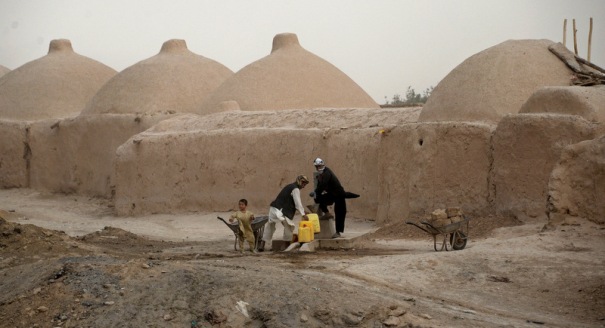
Source: Getty
If common sense prevails and the West resumes its cooperation with Russia, the consolidated response to security threats in Afghanistan will be far more effective than the current disjointed efforts by various countries.
Ashraf Ghani Ahmadzai officially became the president of Afghanistan on September 29. The Security and Defense Cooperation Agreement, which will go into effect on January 1, 2015, was signed the next day. The agreement permits a limited U.S. troop presence on Afghan territory over a period of ten years. Kabul has promised to provide the troops with access to military facilities in Kabul, Bagram, Mazar-i-Sharif, Herat, Kandahar, Helmand, Gardez, Jalalabad, and Shindand. A similar agreement between NATO and Afghanistan was signed the same day.
The transfer of power in Kabul and the signing of the agreements with the United States and NATO again raise the question of security cooperation between Russia, Afghanistan, and its Western partners. Alexander Grushko, Russia’s permanent representative to NATO, said in an August interview that Russia remains interested in bilateral assistance to Afghanistan. However, Russia’s cooperation with the U.S. and NATO on Afghanistan was effectively frozen by the West in April. Expressing the official position of the Russian Federation, Ambassador Grushko called this decision counterproductive.
Russia’s cooperation with the West is crucial in securing Afghanistan’s peaceful future. Russia supplies the Afghan air force with helicopters, provides for their maintenance, and trains the country’s technical specialists. It also participates in counteracting drug production and trafficking and ensures the transit of U.S. and NATO military and civilian cargo through Russian territory. In September 2013, Russia and Afghanistan launched a joint initiative on border security.
The Ukrainian crisis will not be resolved in the foreseeable future, and Moscow is certainly not planning to reconsider its decision to annex Crimea. Therefore, the United States and NATO must revisit their decision to curtail cooperation with Russia, including on Afghanistan. Afghanistan should not be made into a hostage of the situation in Eastern Europe.
At this time, Washington and Brussels are confident that they can manage without Russia’s participation in solving Afghanistan’s security problems. Ahmadzai’s coming to power and the signing of the cooperation agreements only boosted their confidence; the West has ostensibly created favorable conditions for itself in Afghanistan, obviating the need to consider other external powers.
Many in Russia, Afghanistan, and other countries in the region do not share this view. First, despite the resolution of the political standoff between the two presidential candidates, the political situation in Afghanistan remains volatile. To ensure the regime’s survival, Ashraf Ghani Ahmadzai will have to balance between the interests of various forces inside the country, including the anti-Western factions, and external forces—Russia, China, Pakistan, Iran, India, and the Central Asian republics.
Second, whether the West likes it or not, Russia has long participated in multilateral and bilateral assistance projects in Afghanistan. The most promising recent example is the negotiations between Russia, Afghanistan, and India, and the resulting agreement on the India-sponsored export of Russian weapons to Afghanistan.
If the United States and NATO continue to refrain from cooperating with Russia on Afghanistan, Russia will maintain its assistance through bilateral agreements with Kabul, multilateral agreements with regional powers, and international organizations such as the Shanghai Cooperation Organization. The assistance Russia and other regional powers render to Afghanistan will continue to increase irrespective of Kabul’s cooperation with Washington and Brussels.
If common sense prevails and the West resumes its cooperation with Russia, the consolidated response to security threats in Afghanistan will be far more effective than the current disjointed efforts by various countries. A coordinated policy formulated by external powers would also contribute to Afghanistan’s political stability. The lack of such a policy will only lead to the escalation of internal political strife and Kabul’s weakness in face of security threats.
Former Fellow, Nonproliferation Program, Moscow Center
Topychkanov was a fellow in the Carnegie Moscow Center’s Nonproliferation Program.
Recent Work


James M. Acton, Alexey Arbatov, Vladimir Dvorkin, …
Petr Topychkanov
Carnegie does not take institutional positions on public policy issues; the views represented herein are those of the author(s) and do not necessarily reflect the views of Carnegie, its staff, or its trustees.

Ahead of a tough winter for Ukraine, Donald Trump’s swing back toward Russia bodes ill. But instead of panicking, Kyiv’s European allies are focusing on action.

Rym Momtaz

Funding Ukraine remains a priority for European leaders. As Russia’s war of aggression heads into another winter, two feasible options to mobilize support for Kyiv should be fast-tracked.


Vladyslav Rashkovan, Gregory P. Wilson

While the EU and European governments are embracing the much-lauded middle-power moment, this entails three difficult conundrums.

Richard Youngs

Europe is facing rising populism internally as well as external pressures from Russia, China, Turkey, and the United States.

Dimitar Bechev

A notable degree of participative democracy has firmly arrived in Europe. But to have more far-reaching impact, democratic deliberation needs to move into a radically new phase.
Richard Youngs