

Commentary
Richard Youngs
{
  "authors": [
    "Richard Youngs"
  ],
  "type": "legacyinthemedia",
  "centerAffiliationAll": "dc",
  "centers": [
    "Carnegie Endowment for International Peace",
    "Carnegie Europe"
  ],
  "collections": [
    "EU Integration and Enlargement"
  ],
  "englishNewsletterAll": "",
  "nonEnglishNewsletterAll": "",
  "primaryCenter": "Carnegie Europe",
  "programAffiliation": "EP",
  "programs": [
    "Europe"
  ],
  "projects": [],
  "regions": [
    "Europe",
    "Western Europe",
    "Iran"
  ],
  "topics": [
    "Foreign Policy",
    "EU",
    "Security",
    "Democracy",
    "Political Reform"
  ]
}
Source: Getty
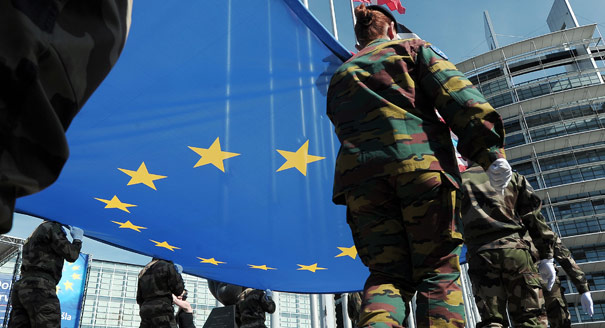
The European Union should be investing in foreign policy and humanitarian aid, not weapons.
Source: Politico Europe
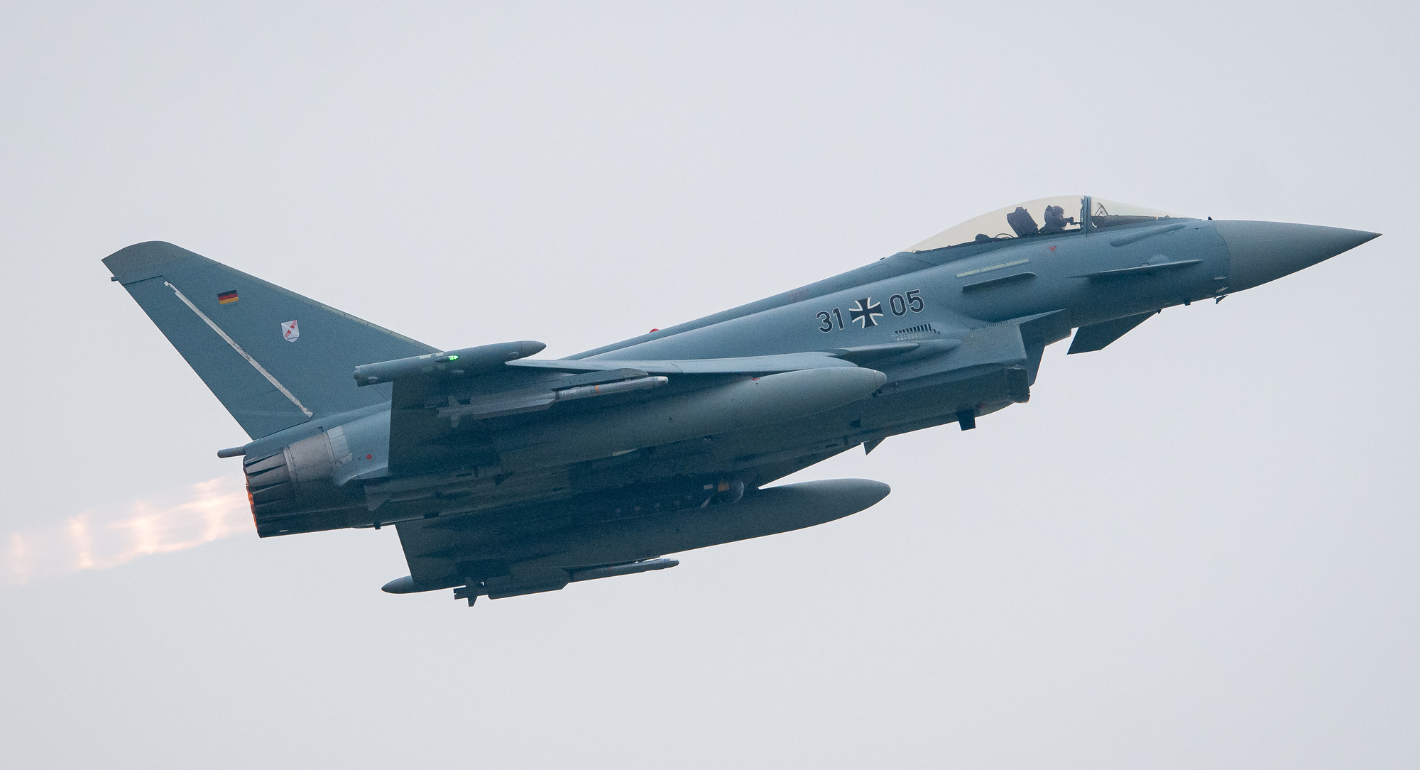
The European Union’s recently launched defense fund has been widely praised as a long-overdue step toward defense autonomy, a real game-changer at a time when the United States has become an increasingly unreliable ally on security issues.
These steps toward a so-called security union and common defense policies were even hailed by some EU leaders as the key to injecting fresh momentum into the European project after a decade of crises.There’s no question the EU should boost its defense capabilities and excise wasteful duplication in its members’ military arsenals. But the plans being discussed could seriously backfire.
The EU has always struggled to close the distance between its institutions and its citizens. The problem has worsened over the past few years, as fringe anti-EU political parties moved into the mainstream, riding public concerns about the bloc’s insufficient transparency and accountability.
Given that defense and security are particularly opaque policy areas, pumping large amounts of money into those industries may simply feed popular mistrust of the EU — especially if there is no parallel progress in making the bloc’s legislative process more accountable.
Europe’s aid program is increasingly imbalanced.
In countries where the EU has spent recent years imposing harsh spending cuts on pensions, education and health care, the fact that the European Commission has suddenly found €1.5 billion a year for defense expenditure is unlikely to boost the bloc’s popularity. If the EU is serious about shoring up its image and reaching voters in more meaningful ways, it should direct resources into reversing the harm done by a decade of austerity.
Indeed, the EU’s defense plans appear entirely disconnected from any political strategy for addressing populism or the underlying pathologies plaguing the European project, both of which pose real threats to the bloc’s survival and long-term security.
The defense fund is part of a broader “securitization” of EU foreign policy that bodes ill for future stability. It could also draw resources away from areas of EU foreign policy that are crucial to dealing with the geopolitical drivers behind the threats Europe faces.
The amount of money the EU and its member countries commit to promoting human rights, encouraging democratic reforms and strengthening civil society is extremely limited compared to the budget touted for the defense fund. And, in recent years, most member nations have slashed their aid budgets.
The EU’s inability to resolve conflict in places like Syria, Libya and Ukraine has nothing to do with a lack of joint weapons programs.
Europe’s aid program is increasingly imbalanced. Across North Africa and the Middle East, the Sahel and some parts of sub-Saharan Africa, the EU has made funds available to authoritarian regimes to help limit migrant outflows. By doing so, it is doing little to foster the kind of democratic change that would help address the underlying causes of the migration. Funds that boost unaccountable security forces are more likely to intensify rather than temper insecurity, instability and radicalization.
The EU’s inability to resolve conflict in places like Syria, Libya and Ukraine has nothing to do with a lack of joint weapons programs. It is the result of weak strategic commitment and an unwillingness to support the kind of political solutions that would stabilize these regions.
Citizens across the Continent undoubtedly want the EU to keep them safe, but the emerging security and defense plans do not reflect the kind of Union capable of winning back popular affection and stemming the populist tide.

Senior Fellow, Democracy, Conflict, and Governance Program
Richard Youngs is a senior fellow in the Democracy, Conflict, and Governance Program, based at Carnegie Europe. He works on EU foreign policy and on issues of international democracy.
Recent Work
Richard Youngs


Richard Youngs, ed., Elena Viudes Egea, Zselyke Csaky, …
Carnegie does not take institutional positions on public policy issues; the views represented herein are those of the author(s) and do not necessarily reflect the views of Carnegie, its staff, or its trustees.
European reactions to the war in Iran have lost sight of wider political dynamics. The EU must position itself for the next phase of the crisis without giving up on its principles.
Richard Youngs
For years, the United States anchored global cyber diplomacy. As Washington rethinks its leadership role, the launch of the UN’s Cyber Global Mechanism may test how allies adjust their engagement.


Patryk Pawlak, Chris Painter
Europe isn’t as weak in the new geopolitics of power as many would believe. But to leverage its assets and claim a sphere of influence, Brussels must stop undercutting itself.

Dimitar Bechev

Europe’s reaction to the war in Iran has been disunited and meek, a far cry from its previously leading role in diplomacy with Tehran. To avoid being condemned to the sidelines while escalation continues, Brussels needs to stand up for international law.

Pierre Vimont
France and Germany’s failure to agree on the Future Combat Air System (FCAS) raises questions about European defense. Amid industrial rivalries and competing strategic cultures, what does the future of European military industrial projects look like?

Rym Momtaz, ed.