

In The Media
Jessica Tuchman Mathews
{
  "authors": [
    "Jessica Tuchman Mathews"
  ],
  "type": "other",
  "centerAffiliationAll": "",
  "centers": [
    "Carnegie Endowment for International Peace",
    "Carnegie China"
  ],
  "collections": [
    "Iranian Proliferation"
  ],
  "englishNewsletterAll": "",
  "nonEnglishNewsletterAll": "",
  "primaryCenter": "Carnegie Endowment for International Peace",
  "programAffiliation": "",
  "programs": [],
  "projects": [],
  "regions": [
    "North America",
    "United States",
    "Middle East",
    "Iran",
    "East Asia",
    "North Korea"
  ],
  "topics": [
    "Security",
    "Foreign Policy",
    "Nuclear Policy",
    "Arms Control"
  ]
}
Source: Getty
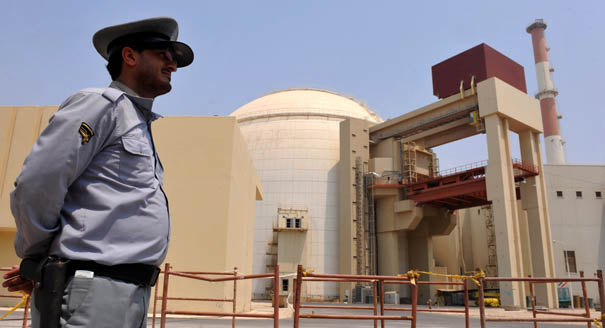
If anything were needed to underline how much safer the Iran deal has made the United States, the menace of North Korea’s nuclear development surely qualifies.
Source: New York Review of Books
Over five days in May, Donald Trump’s Iran policy—of monumental importance to the future of the Middle East and to US security—began to come into focus. On May 17, the president quietly agreed to continue to waive sanctions against Iran, a step that was required to keep the Iran nuclear deal in force. Two days later Iran held presidential elections with a landslide result in favor of the moderate incumbent, Hassan Rouhani; and two days after that the United States’ new Middle East policy, built around a Saudi-US-Israel axis, was unveiled in the president’s speech in Riyadh.
It had long seemed clear that Trump was not going to “rip up” what he had called in the campaign “the dumbest deal…in the history of deal-making.” The State Department had confirmed repeated findings by the International Atomic Energy Agency (IAEA) that Iran was meeting its nuclear commitments. But the May 17 waiver was the first time that an affirmative action on the deal had to be taken in the president’s name.
Iran’s election pitted President Rouhani, the architect of the deal and a proponent of reengaging Iran with the world, against a conservative, nationalist cleric, Ebrahim Raisi, who ran with the backing of the Revolutionary Guard and other hard-line forces. Had Raisi won, the deal’s future in Iran would have been very much in doubt. Instead, Rouhani had a resounding victory with high voter turnout. Though few Iranians have yet to feel any economic benefit from the deal and the end to international isolation it promises, there is little doubt that, for now, they overwhelmingly favor sticking with it....
This book review was originally published in the New York Review of Books.

Distinguished Fellow
Mathews is a distinguished fellow at the Carnegie Endowment for International Peace. She served as Carnegie’s president for 18 years.
Recent Work
Jessica Tuchman Mathews
Jessica Tuchman Mathews
Carnegie does not take institutional positions on public policy issues; the views represented herein are those of the author(s) and do not necessarily reflect the views of Carnegie, its staff, or its trustees.

While the EU and European governments are embracing the much-lauded middle-power moment, this entails three difficult conundrums.

Richard Youngs

Europe is facing rising populism internally as well as external pressures from Russia, China, Turkey, and the United States.

Dimitar Bechev

Much has been said of the changes Brussels is trying to make to the EU enlargement process. Here’s why gradual integration might—or might not—be the answer.
Dimitar Bechev

The European Commissioner for Trade is headed to China. But after President Xi’s bridge-building visit to Washington, can a more isolated EU overcome Beijing’s stranglehold on critical raw materials? Who will blink first?

Rym Momtaz, ed.
European NATO countries are wrestling with the possibility of U.S. disengagement from the alliance. With the continent’s security increasingly uncertain, governments must restore the credibility of their collective defense.


Hans-Dieter Lucas, Adam Thomson, Pierre Vimont