

Q&A
Eugene Rumer
{
  "authors": [
    "Eugene Rumer"
  ],
  "type": "legacyinthemedia",
  "centerAffiliationAll": "dc",
  "centers": [
    "Carnegie Endowment for International Peace"
  ],
  "collections": [],
  "englishNewsletterAll": "ctw",
  "nonEnglishNewsletterAll": "",
  "primaryCenter": "Carnegie Endowment for International Peace",
  "programAffiliation": "russia",
  "programs": [
    "Russia and Eurasia"
  ],
  "projects": [],
  "regions": [
    "North America",
    "United States",
    "Russia",
    "Eastern Europe",
    "Western Europe"
  ],
  "topics": [
    "Foreign Policy"
  ]
}
Source: Getty
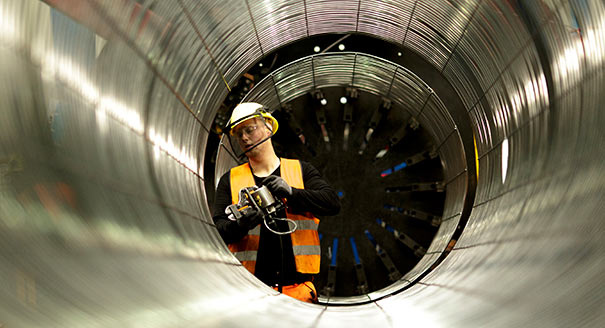
President Donald Trump, his opponents in the United States, and his critics in Europe have found common cause: opposing the planned Nord Stream 2 pipeline that would transport Russian natural gas to Germany. All sides are in rare agreement, but they are all misguided in their own ways.
Source: Financial Times
Geopolitics creates strange bedfellows. President Donald Trump, his opponents in the US and his critics in Europe have found common cause: opposing the planned Nord Stream 2 pipeline that would transport Russian natural gas to Germany. All sides are in rare agreement, but they are all misguided in their own ways.
Mr Trump’s opposition to Nord Stream 2 is about trade in the wider sense. He sees US liquefied natural gas (LNG) sales to Europe — Germany in particular — as a way to rebalance trade relations he thinks work against US interests. He has repeatedly criticised Angela Merkel, the German chancellor, seemingly in the belief that this is the best way to win concessions.
Meanwhile, Mr Trump’s critics on both sides of the Atlantic argue Nord Stream 2 raises Europe’s dependence on Russian gas, making it more vulnerable to pressure from Moscow. They tout US LNG imports as the alternative.
In reality, Europe is not overly dependent on Russian gas. Russia accounts for 37 per cent of EU gas imports, a share that has declined steadily from 75 per cent in 1990. New sources of gas, including LNG supplies, have effectively undercut Russian leverage. Nord Stream 2 will not change that.
Trade creates two-way dependencies. With nearly $40bn in revenue from its gas sales to Europe in 2017, Russia needs Europe’s cash as much as Europe needs Russia’s fuel. And Moscow’s ability to dictate terms to its customers has been further eroded by the EU’s own successful efforts to liberalise its energy market. This trend is likely to continue as more LNG terminals, reverse flow pipelines and inter-connectors are built.
EU imports are projected to grow over the next two decades from just over 70 per cent of its consumption to almost 90 per cent, as the bloc weans itself off less climate-friendly fuels and nuclear energy. With declining production, the EU will need to import gas from multiple sources.
Unlike pipeline-delivered gas, LNG exports are not locked to a location; its destinations are determined by market demand. For example, in 2016-2017, the biggest importer of US LNG was Mexico, followed by South Korea and China. As LNG trade grows, buyers and sellers compete for better deals. Mr Trump has criticised Ms Merkel for “being captive to Russia”, but (for now at least) a major reason for choosing pipeline-delivered Russian gas is that it is as much as 25 per cent cheaper.
Nord Stream 2’s fiercest opponents, however, are in Europe. Ukraine stands to lose as much as $3bn annually in pipeline transit fees it earns for allowing Russian gas to move uninterrupted across its territory. It is a rare example of Ukraine’s economic leverage. Officials have decried Nord Stream 2 as a geopolitical project that will make the country more vulnerable to its eastern neighbour. Since 2014, Ukraine has tried to reduce its own purchases of Russian gas, but by protecting its transit income at the same time, Kiev is trapping itself in the relationship with Russia it says it wants to escape.
Poland too has long opposed Nord Stream pipelines. In 2006, then-Polish defence minister Radoslaw Sikorski likened the first Nord Stream pipeline to the 1939 Nazi-Soviet Pact. The current head of Poland’s ruling Law and Justice party, Jaroslaw Kaczynski, known for his anti-German and anti-Russian views, is reluctant to trust either country with Poland’s energy security. Warsaw worries Nord Stream 2 will undermine its own plans for an LNG terminal and gas pipeline from Norway.
Yet fears of Russian domination through gas sales ignore the experience of earlier pipeline projects. Nord Stream 1 did not diminish Germany’s response to Russia’s 2014 annexation of Crimea. And the pipeline from Siberia to Europe did not save the Soviet Union, despite the Reagan administration’s warnings it would increase Soviet military might.
The most bizarre aspect of the Nord Stream 2 opposition, however, is its anti-German quality. The notion that the interests of Ukraine or Poland, with its increasingly nationalist politics, should take precedence over Germany’s is hard to accept. Without German leadership, the EU will find it hard to remain committed to its founding values, including protecting Ukraine and Poland from Russian pressure. Undercutting Germany, whether over a pipeline whose significance is vastly exaggerated, or over ephemeral trade deals, makes little strategic sense for either the EU or US.
This article was originally published in the Financial Times.
Director and Senior Fellow, Russia and Eurasia Program
Rumer, a former national intelligence officer for Russia and Eurasia at the U.S. National Intelligence Council, is a senior fellow and the director of Carnegie’s Russia and Eurasia Program.
Recent Work
Eugene Rumer
Eugene Rumer
Carnegie does not take institutional positions on public policy issues; the views represented herein are those of the author(s) and do not necessarily reflect the views of Carnegie, its staff, or its trustees.

While the EU and European governments are embracing the much-lauded middle-power moment, this entails three difficult conundrums.

Richard Youngs

Europe is facing rising populism internally as well as external pressures from Russia, China, Turkey, and the United States.

Dimitar Bechev

A notable degree of participative democracy has firmly arrived in Europe. But to have more far-reaching impact, democratic deliberation needs to move into a radically new phase.
Richard Youngs

Much has been said of the changes Brussels is trying to make to the EU enlargement process. Here’s why gradual integration might—or might not—be the answer.
Dimitar Bechev

The European Commissioner for Trade is headed to China. But after President Xi’s bridge-building visit to Washington, can a more isolated EU overcome Beijing’s stranglehold on critical raw materials? Who will blink first?

Rym Momtaz, ed.