

Article
C. Raja Mohan, Darshana M. Baruah
{
  "authors": [
    "C. Raja Mohan"
  ],
  "type": "legacyinthemedia",
  "centerAffiliationAll": "",
  "centers": [
    "Carnegie Endowment for International Peace",
    "Carnegie India"
  ],
  "collections": [],
  "englishNewsletterAll": "",
  "nonEnglishNewsletterAll": "",
  "primaryCenter": "Carnegie India",
  "programAffiliation": "",
  "programs": [],
  "projects": [],
  "regions": [
    "India",
    "Middle East"
  ],
  "topics": [
    "Foreign Policy"
  ]
}
Source: Getty
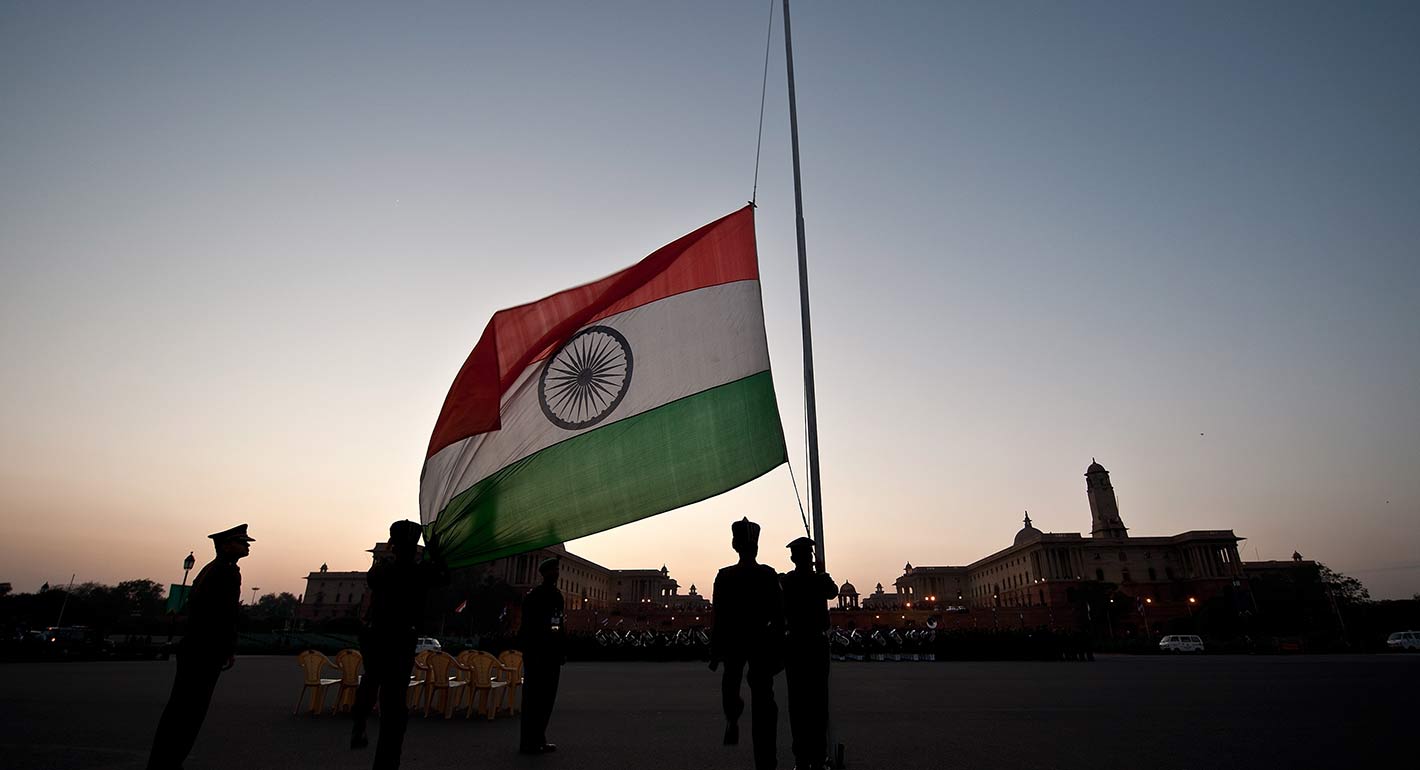
As storm clouds gather in the Gulf, New Delhi can’t afford to ignore the deepening Arab fears about Iran and their expectations for a measure of political understanding from India.
Source: Indian Express
Barring the annual ritual of verbal confrontation with Pakistan, External Affairs Minister Sushma Swaraj has had a productive diplomatic sojourn in New York. She met a larger number of foreign leaders on the margins of the UN General Assembly. They ranged from Chet Greene, the foreign minister of Antigua and Barbuda to Wang Yi, China’s top diplomat.
There was one big missing link though. It was the annual engagement at the UN with the leaders of the Gulf Cooperation Council, whose members are Bahrain, Kuwait, Oman, Qatar, Saudi Arabia and the United Arab Emirates. It’s a pity, since the confrontation between the Gulf Arabs and Iran is one of the top international security issues on the table at the UN this year. It is also, arguably, the most important emerging regional security challenge for India. The absence of a meeting with the GCC stands out as a major omission, especially since Swaraj spent much time discussing the Gulf situation with Iran’s foreign minister Javad Zarif.
That the issue of Gulf security is barely debated in Delhi does not in any way lessen its significance. After all, the 2015 nuclear agreement between US and Iran, which has been discarded by President Donald Trump, had been hotly debated at the first week of the annual UNGA session this year. It was also part of the main theme of this year’s UN Security Council summit. The differences between US and its most important allies in Europe on Iran were sharp and out in the open. However, disagreements between Washington on the one hand and Moscow and Beijing on the other on this issue are not new.
Delhi is also acutely aware of the deep opposition in the Arab countries of the Gulf to President Barack Obama’s nuclear agreement with Iran and key sections of the region have welcomed Trump’s decision to discard the deal. The Indian delegation to New York could not have but noticed a critical development at the UN last week. It was a meeting between the US Secretary of State Mike Pompeo and ministers from eight Arab nations. The Arab side included the six countries of the GCC as well as those of Egypt and Jordan. After the meeting, the US State Department said, “All participants agreed on the need to confront threats from Iran directed at the region and the United States”. It added that the ministers had “productive discussions” on setting up what is to be known as the Middle East Strategic Alliance to promote security and stability in the region.
Critics have billed the putative alliance as the “Arab NATO”. Some call it the “Sunni challenge” to confront the fears about the emergence of a “Shiite Crescent” in the Middle East, backed by Iran. This new organisation, likely to be launched in January, is expected to reinforce the expansive new regime of US sanctions against Iran that are to go into effect next month.
Sceptics think the Middle East Strategic Alliance will be hard to build and harder to sustain, given the divisions within the Arab Gulf. But Washington hopes that the regional Arab alliance coupled with the financial squeeze, will compel the Islamic Republic of Iran to alter its behaviour. Critics argue this is really about “regime change” in Tehran.
It is not a question of Delhi acknowledging, let alone accepting, the new dynamic in the Gulf. The foreign policy question is about how Delhi must deal with the rapidly changing situation in the Gulf region, whose economic and political salience for India is not matched by any other sub-region in the world. But here is the problem. India deals with one part of it (the American question), but ducks the other (Arab question).
Over the last two decades, India has had to manage the Iran factor in its quest to build a closer partnership with the US. India’s approach to Iran’s nuclear proliferation had become a major issue between Delhi and Washington. Traditionalists in Delhi argued that India must stand up for Iran against the US. The small group of realists prevailed by insisting that India must take care of its own nuclear interests rather than those of Iran. The realists were vindicated by the turn of events, in which Iran offered major political concessions to get the nuclear agreement and some sanctions relief from the Obama Administration. Trump now says its not good enough. While the rest of the world denounces Trump, the US president is confident that Iran will come back to renegotiate the nuclear deal with Washington. In the interim, Delhi is practical enough to find ways to avoid the effect of America’s Iran sanctions on the Indian economy.
But India’s approach appears bereft of realism when it comes to dealing with the conflict between Gulf Arabs and Iran. Many in the Middle East ask why Delhi tilts towards Tehran, when so many of India’s interests — including trade, energy, expatriate remittances, and counter-terror cooperation — are so heavily to tied to the Gulf Arabs.
They are also frustrated that Delhi, which denounces Pakistan’s destabilisation of the Subcontinent at every opportunity, never utters a word about Iran’s effort to undermine the regional political order in the Arab world. As storm clouds gather in the Gulf, Delhi can’t afford to ignore the deepening Arab fears about Iran and their expectations for a measure of political understanding from India.
This article was originally published in the Indian Express.
Former Nonresident Senior Fellow, Carnegie India
A leading analyst of India’s foreign policy, Mohan is also an expert on South Asian security, great-power relations in Asia, and arms control.
Recent Work

C. Raja Mohan, Darshana M. Baruah


Alexander Gabuev, Paul Haenle, C. Raja Mohan, …
Carnegie does not take institutional positions on public policy issues; the views represented herein are those of the author(s) and do not necessarily reflect the views of Carnegie, its staff, or its trustees.

As we close out another season of Strategic Europe, it is worth taking stock of the deep shifts underway.

Rym Momtaz
The EU had to compromise to adopt a twenty-first sanctions package against Russia, exposing growing cracks in the union’s resolve. Is this latest, weaker round worth it to keep pressure on Moscow?
Rym Momtaz, ed.

Trump is distracted and Ukraine wants Europe to step up. The continent’s leaders must find their voice and assert it in talks with Russia.

Alissa de Carbonnel

Mounting economic strain and battlefield losses will not necessarily make the Kremlin less dangerous. They could instead push Moscow toward a more aggressive hybrid campaign designed to test NATO’s Eastern flank, exploit allied hesitation, and fracture European resolve.

Maksym Beznosiuk

Over the past ten years, NATO has held almost as many summits as it did during the entirety of the Cold War. Are they still useful, or is it time to stop holding annual meetings?
Rym Momtaz, ed.