

Commentary
Marc Pierini
{
  "authors": [
    "Marc Pierini"
  ],
  "type": "other",
  "centerAffiliationAll": "dc",
  "centers": [
    "Carnegie Endowment for International Peace",
    "Carnegie Europe"
  ],
  "collections": [
    "Europe’s Eastern Neighborhood"
  ],
  "englishNewsletterAll": "ctw",
  "nonEnglishNewsletterAll": "",
  "primaryCenter": "Carnegie Europe",
  "programAffiliation": "EP",
  "programs": [
    "Europe"
  ],
  "projects": [],
  "regions": [
    "Russia",
    "Europe",
    "Iran"
  ],
  "topics": [
    "EU",
    "Economy",
    "Climate Change",
    "Foreign Policy"
  ]
}
Source: Getty
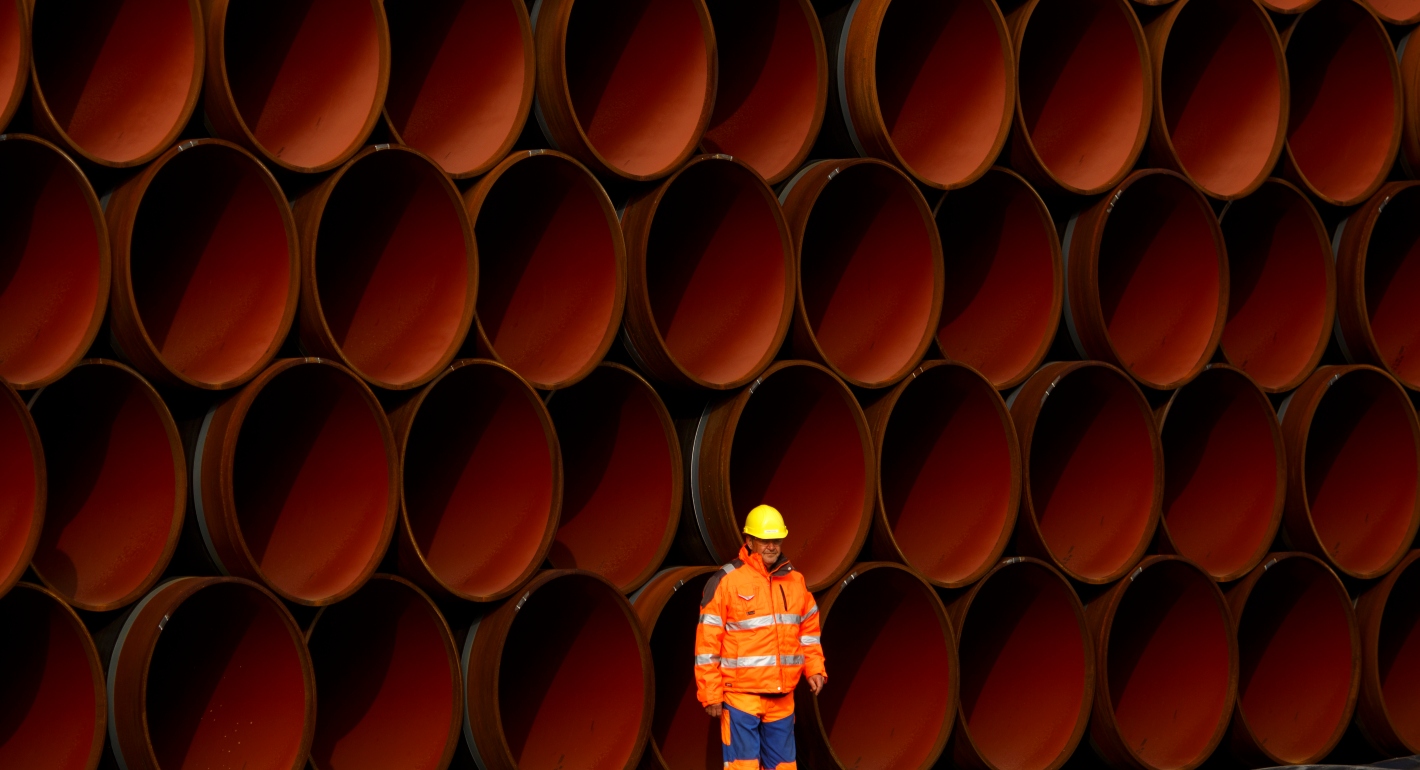
Russia continuously uses energy politics as a foreign policy instrument, thwarting EU diversification efforts, setting foot in the MENA region, and establishing itself as a major supplier of energy to China.
Source: IEMed Mediterranean Yearbook 2019
Since Russian President Vladimir Putin has been in power in Moscow, oil and gas have been an integral part of Russia’s strategy to regain influence on the world stage. Mastering gas supplies to the European Union and thwarting EU diversification efforts have long been key components of this strategy.
Other policy elements have gained importance over the years, such as setting foot in the Middle East and North African (MENA) region and catering for new customers such as China. In addition, in the medium term, the surge of the United States as a major liquefied natural gas (LNG) supplier to the EU will create a new challenge for Moscow.This article was originally published in the IEMed Mediterranean Yearbook 2019.

Senior Fellow, Carnegie Europe
Marc Pierini is a senior fellow at Carnegie Europe, where his research focuses on developments in the Middle East and Turkey from a European perspective.
Recent Work
Marc Pierini
Marc Pierini
Carnegie does not take institutional positions on public policy issues; the views represented herein are those of the author(s) and do not necessarily reflect the views of Carnegie, its staff, or its trustees.

The EU can impose sanctions but struggles to enforce them without the United States. With Washington increasingly disinterested in backing European interests, the bloc must now fend for itself.


Nicu Popescu, Tiago Antunes

Russia is testing the waters of NATO’s mutual defense clause. What do strikes in Romanian territorial waters mean for the alliance’s posture toward Moscow?

Dimitar Bechev

With its public finances in shambles, the far right polling at 35 percent ahead of the 2027 presidential election, and a growing protest movement, is France’s crisis a threat to the EU’s geopolitical awakening?

Rym Momtaz, ed.

Ahead of a tough winter for Ukraine, Donald Trump’s swing back toward Russia bodes ill. But instead of panicking, Kyiv’s European allies are focusing on action.
Rym Momtaz

Funding Ukraine remains a priority for European leaders. As Russia’s war of aggression heads into another winter, two feasible options to mobilize support for Kyiv should be fast-tracked.


Vladyslav Rashkovan, Gregory P. Wilson