

Paper
Sarah Yerkes, Natalie Triche, Amr Hamzawy
{
  "authors": [
    "Sarah Yerkes"
  ],
  "type": "legacyinthemedia",
  "centerAffiliationAll": "dc",
  "centers": [
    "Carnegie Endowment for International Peace"
  ],
  "collections": [],
  "englishNewsletterAll": "menaTransitions",
  "nonEnglishNewsletterAll": "",
  "primaryCenter": "Carnegie Endowment for International Peace",
  "programAffiliation": "MEP",
  "programs": [
    "Middle East"
  ],
  "projects": [
    "Tunisia Monitor"
  ],
  "regions": [
    "North Africa",
    "Tunisia"
  ],
  "topics": [
    "Political Reform",
    "Democracy",
    "Security",
    "Foreign Policy"
  ]
}
Source: Getty
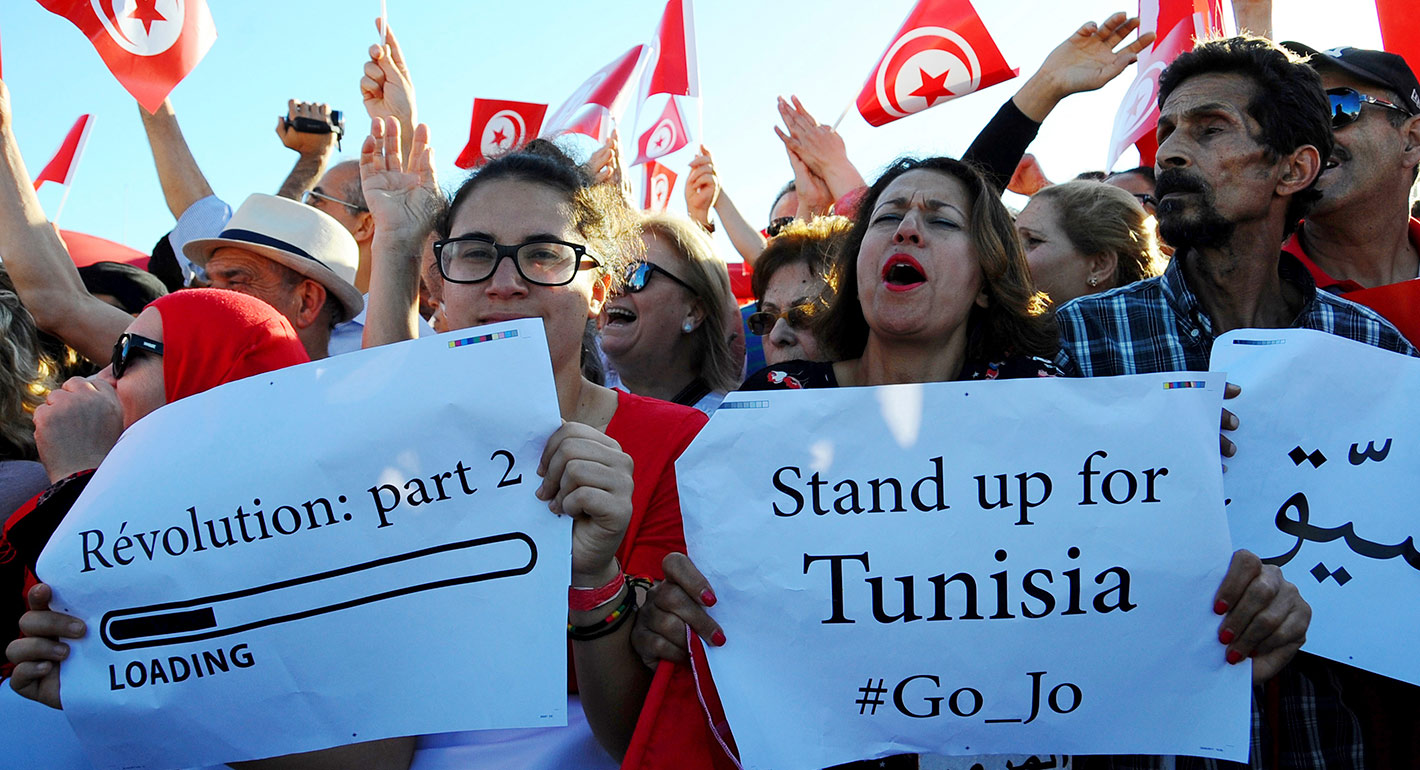
Tunisia has long been a leader in women’s rights in the region. Despite the legal and formal progress made towards addressing inequality, discussing issues such as sexual harassment and assault remains largely socially taboo.
Source: New Arab
Tunisia, which has long led the Arab world in promotion of women's rights and gender equality, hit another milestone this month by becoming the first Arab country to include sex education within the public school curriculum.
Starting at age five, Tunisian students will be exposed to sex education throughout their regular curriculum at various age-appropriate points. This new initiative, which was developed by the Tunisian Ministry of Education in cooperation with the United Nations Population Fund and the Arab Institute for Human Rights, is designed, in part, to prevent sexual harassment.
Tunisia has long been a leader in women's rights in the region, thanks in part to the country's first president, Habib Bourguiba, who enacted a personal status code in 1956 that, among other things, outlawed polygamy and granted women the right to seek a divorce and the right to vote.
Tunisia also gave women access to birth control in 1962 and access to abortion in 1965 - eight years before women in the United States were granted access to abortion by the US Supreme Court; a right they now, incidentally, find themselves fighting to preserve.
Following a painful fight with the Ennahdha party, who pushed for women to be declared "complementary" to men in family life, equality for women was codified in the 2014 Tunisian Constitution, which declares that men and women "have equal rights and duties and are equal before the law without any discrimination".
Tunisia is also home to one of the most progressive electoral gender parity laws in the world, requiring political parties to alternate the members of their candidate lists between men and women, and to have at least half of their lists headed by a woman. As a result, nearly half of the country's municipal councilors and 24 percent of the newly elected parliamentarians are women.
The next generation of Tunisian adults, who have grown up discussing sexuality as a matter of regular course, will likely see less shame in the topic
The introduction of an education programme to combat harassment comes as the country is facing its own "Me Too" movement known as #EnaZeda. The movement, which started after a video emerged showing a newly elected parliamentarian allegedly masturbating outside a high school, has generated tens of thousands of personal testimonies of harassment and abuse.
The group's Facebook page, which was created on October 15, 2019 by Tunisian women's rights NGO Aswat Nisaa, already has more than 25,000 members, and provides a platform for Tunisian men and women of all ages to share their stories of harassment and assault.
Despite the legal and formal progress made towards addressing inequality, discussing issues such as sexual harassment and assault remains largely socially taboo, although that may change with the #EnaZeda movement.
A 2018 study found that staggering numbers of Tunisian women have experienced sexual violence and harassment. Three-quarters of Tunisian women report having experienced sexual harassment in the workplace, and 90 percent of women reported sexual harassment on public transport. But despite its prevalence, such issues are not a part of the public discourse, and are even challenging to discuss at home.
While a law passed in July 2017 punishes sexual harassment in public places with a one-year prison term and a fine of 3,000 dinars ($1000), few victims have come forward, fearing a backlash within their families and social circles.
The sex education initiative aims, in part, to bring awareness to these issues so that all Tunisians, from a young age, understand how to prevent sexual harassment and violence and how to address it, should it occur.
Legal and policy changes are clearly insufficient to change the culture around harassment and equality.
For example, despite Tunisia's lengthy history of promoting women's equality, when the late President Beji Caid Essebsi proposed changes to the inheritance law that would allow women to receive equal inheritance as men, only 28 percent of Tunisians said they supported changes to the law, including only 24 percent of women.
And, despite an historic law criminalising economic, political, psychological, and sexual violence against women passed in 2017, in a January-February 2019 survey by the International Republican Institute, 75 percent of Tunisians, including 86 percent of women, said they are "very concerned" about violence against women.
Furthermore, the recent election results saw a dramatic drop in the number of women in parliament – from 36 percent to 24 percent. The elections reflect a society that is simultaneously committed to consolidating the country's democratic gains at the political level while also reticent to adopt progressive social change.
The elections brought the return of Islamist party Ennahdha to the helm of parliament, with a plurality of seats (52 out of 217) and brought to power a president who campaigned on a highly conservative platform and has stated his opposition to the inheritance law, despite promising to promote women's rights.
Legal and policy changes are clearly insufficient to change the culture around harassment and equality
In this context, getting kids talking about sexuality and sexual harassment at a young age, and throughout their schooling years, is a very positive step towards changing the public discourse around this issue.
The next generation of Tunisian adults, who have grown up discussing sexuality as a matter of regular course, will likely see less shame in the topic, and be more willing to raise the issue with family and friends should they witness or experience harassment or assault themselves.
Nevertheless, these societal shifts take generations and despite Tunisia's positive progress, the country is still largely patriarchal, requiring a combination of top-down legal and policy mechanisms as well as grassroots education and activism to bring about real and lasting change.

Acting Co-Director and Senior Fellow, Middle East Program
Sarah Yerkes is acting co-director and a senior fellow in the Middle East Program at the Carnegie Endowment for International Peace. Her research focuses on democracy and governance, U.S. foreign policy towards the Middle East and North Africa, and political and economic reform in Tunisia.
Recent Work

Sarah Yerkes, Natalie Triche, Amr Hamzawy
Carnegie does not take institutional positions on public policy issues; the views represented herein are those of the author(s) and do not necessarily reflect the views of Carnegie, its staff, or its trustees.

The EU can impose sanctions but struggles to enforce them without the United States. With Washington increasingly disinterested in backing European interests, the bloc must now fend for itself.


Nicu Popescu, Tiago Antunes

Russia is testing the waters of NATO’s mutual defense clause. What do strikes in Romanian territorial waters mean for the alliance’s posture toward Moscow?

Dimitar Bechev

With its public finances in shambles, the far right polling at 35 percent ahead of the 2027 presidential election, and a growing protest movement, is France’s crisis a threat to the EU’s geopolitical awakening?

Rym Momtaz, ed.

Ahead of a tough winter for Ukraine, Donald Trump’s swing back toward Russia bodes ill. But instead of panicking, Kyiv’s European allies are focusing on action.
Rym Momtaz

Funding Ukraine remains a priority for European leaders. As Russia’s war of aggression heads into another winter, two feasible options to mobilize support for Kyiv should be fast-tracked.


Vladyslav Rashkovan, Gregory P. Wilson