

Article
Zaha Hassan
{
  "authors": [
    "Zaha Hassan"
  ],
  "type": "legacyinthemedia",
  "centerAffiliationAll": "",
  "centers": [
    "Carnegie Endowment for International Peace",
    "Malcolm H. Kerr Carnegie Middle East Center"
  ],
  "collections": [],
  "englishNewsletterAll": "",
  "nonEnglishNewsletterAll": "",
  "primaryCenter": "Carnegie Endowment for International Peace",
  "programAffiliation": "",
  "programs": [],
  "projects": [],
  "regions": [
    "North America",
    "United States",
    "Middle East",
    "Israel",
    "Palestine",
    "Levant"
  ],
  "topics": [
    "Political Reform",
    "Democracy",
    "Security",
    "Foreign Policy"
  ]
}
Source: Getty
Washington’s apparent aim is to facilitate Israel’s desire to take the maximum amount of Palestinian land with the least number of Palestinians.
Source: +972 Magazine
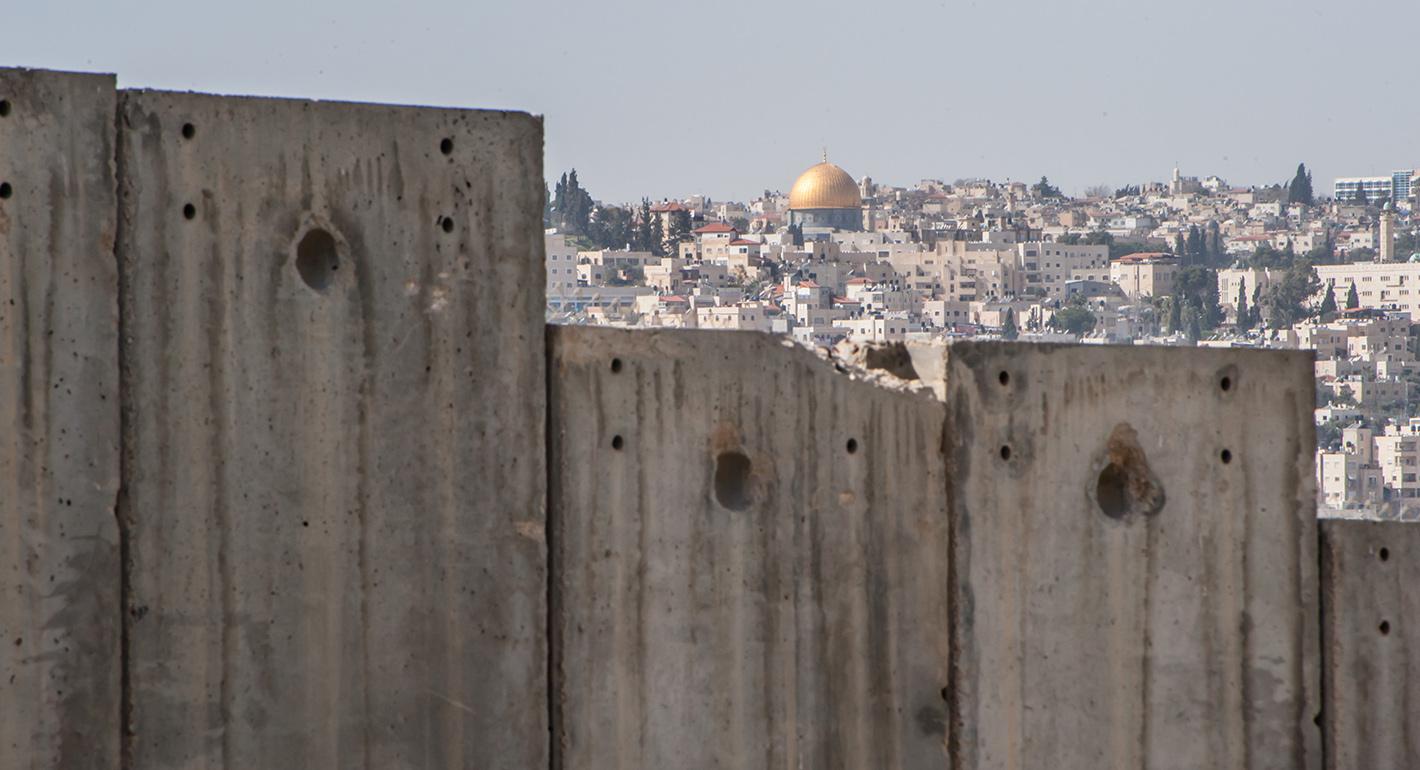
Anyone paying attention to President Donald Trump’s policy on Israel over the last three years is not surprised by the contents of his administration’s so-called peace plan, which was rolled out on Tuesday. Yet many are still shocked by how brazenly the United States has legitimized the ethno-religious domination of Palestinians.
The Swiss cheese cut-out map of the area between the Mediterranean Sea and the Jordan River, showing enclaves reserved for Palestinians, strikingly resembles the Bantustans of apartheid-era South Africa. In fact, the map simply mirrors the reality on the ground as it exists today in the occupied West Bank. The proposed ceding of Israeli territory for additional Palestinian enclaves near Gaza might seem magnanimous, until one realizes that these areas sit atop a nuclear waste dump.
The U.S.’s apparent aim is to facilitate Israel’s desire to take the maximum amount of Palestinian land with the least number of Palestinians. To this end, two relevant stakeholders were at the White House this week: Israeli Prime Minister Benjamin Netanyahu, and the leader of the Israeli opposition Benny Gantz. No Palestinians were needed, since the “Deal of the Century” is, in effect, a memorandum of understanding between the U.S. and Israel over how much Palestinian territory to annex.
The plan doesn’t foreclose Israel’s taking of even more Palestinian land in the future. This is because, before Palestinians can even hope to have a state of their own, they must declare that the Greater Israel envisioned under Trump’s plan is the “nation state of the Jewish people.” Once Palestinians recognize those expanded borders, make the above declaration, and meet other unattainable benchmarks — including ending all resistance to their ongoing oppression — negotiations can begin. Only then will the U.S. support “designating territory for a future [Palestinian] state.”
Regardless of whether Palestinians accept the plan, Israel now has America’s blessing to annex most of the West Bank, with the promise that the U.S. will extend political recognition to those territories. As such, there is no way to understand this plan or look at the attached conceptualized map without calling it by its name: apartheid, designed and sanctioned by the U.S. government.
The reaction of the international community thus far has largely been milquetoast. The EU reiterated its support for a two-state solution, as did several Arab states. Democrats have been more critical, calling the plan an attempt to influence foreign elections, but the remedy is the same: a return to bilateral negotiations and a “viable two-state solution.”
This position ignores the elephant in the room. What has made a peace agreement illusive between Israelis and Palestinians is not the lack of active U.S. engagement with both parties, or insufficient rounds of bilateral negotiations. There has been no peace agreement because Israel, backed by the U.S., is unwilling to address the root cause of the conflict: the forced mass displacement of Palestinians and the expropriation of their land that began before 1948 and continues until today. America’s failure to compel Israel to accept its responsibility for Palestinian exile, to engage in meaningful negotiations, and to end Palestinian statelessness is what has emboldened Israel’s ongoing colonization.
The subjugation of Palestinians and the disregard for their rights and humanity did not begin with the Trump administration. President Bill Clinton’s peace parameters showed similar indifference when he called on Palestinians to cede parts of Arab East Jerusalem for the benefit of Jewish settlers, and to temper their expectations regarding the return of Palestinian refugees to their original homes.
Likewise, President George W. Bush was not concerned for Palestinian rights when he assured Israeli Prime Minister Ariel Sharon — in writing — that the U.S. did not expect Israel to completely withdraw from the occupied territories. Bush also accepted the demographic changes resulting from Israeli settlement as immutable, and declared that all Palestinian refugees should be resettled in a future Palestinian state — not their historical homes.
President Obama went further by stating that “everyone knows . . . a lasting peace will involve two states for two peoples: Israel as a Jewish state and the homeland for the Jewish people, and the state of Palestine as the homeland for the Palestinian people.” The Obama administration believed that by supporting such a parameter, Israel might be encouraged to end settlement expansion and accept Palestinian statehood. It in fact had the opposite effect: settlement building accelerated during Obama’s eight years in office.
Despite this, only days before President Trump was to take office, the Obama administration officially made Palestinian recognition of Israel a parameter for negotiations. This, along with the permissive environment created under Trump’s administration, gave the Israeli Knesset a green light to pass the quasi-constitutional Jewish Nation-State Law in July 2018, which ensures that Jewish people have the exclusive right to self-determination anywhere Israel decides to extend its sovereignty.
That the Trump plan requires Palestinians to first recognize Israel as the nation-state of the Jewish people before the U.S. even contemplates designating territory for a future Palestinian state should be understood not only as a way to end refugee claims and legitimize land expropriation, but as an opening for the displacement of Palestinian citizens of Israel in the future. The plan hints as much by referring to the possibility of ceding communities within Israel that have a high density of Palestinian citizens to a future Palestinian state. Those Palestinian citizens, like the rest of their brethren, need not be consulted.
What is needed now is not chest-pounding or handwringing about returning to bilateral negotiations and a viable two-state solution. What is needed is for policy-makers in the U.S. and abroad to reassess their support for political solutions that would sanction the supremacy of one people over another. If that conversation does not take place now, in a world where ethno-nationalism is on the rise, Trump’s “Deal of the Century” will become the shame of the century.
Senior Fellow, Middle East Program
Zaha Hassan is a human rights lawyer and a senior fellow at the Carnegie Endowment for International Peace.
Recent Work
Zaha Hassan
Zaha Hassan, Charles H. Johnson
Carnegie does not take institutional positions on public policy issues; the views represented herein are those of the author(s) and do not necessarily reflect the views of Carnegie, its staff, or its trustees.

Canadian Prime Minister Mark Carney has twice inspired praise for standing up to U.S. President Donald Trump: at the 2026 World Economic Forum in Davos and on Canada-U.S. trade negotiations. Is Carney showing a third way better than the EU has in dealing with the Trump administration?

Rym Momtaz, ed.

The EU’s responses to two recent incidents expose the gulf between European perceptions and capabilities. Unless the union can bridge that gap, it will never become a real geostrategic power.
Rym Momtaz

European states control several Overseas Countries and Territories around the world that carry strategic, economic, and environmental weight. As great powers challenge the rules-based order, defending them is a geopolitical imperative for Europe.

Marc Pierini

In supporting Europe’s far-right, MAGA and Russia both want the same thing: a weaker EU. Europe must defend itself without abandoning the openness these forces exploit.

Armida van Rij

As we close out another season of Strategic Europe, it is worth taking stock of the deep shifts underway.
Rym Momtaz