

Paper
- +4
George Perkovich, Ariel (Eli) Levite, Lyu Jinghua, …
{
  "authors": [
    "Lyu Jinghua"
  ],
  "type": "legacyinthemedia",
  "centerAffiliationAll": "dc",
  "centers": [
    "Carnegie Endowment for International Peace",
    "Carnegie China"
  ],
  "collections": [
    "Major Power Tech Relations"
  ],
  "englishNewsletterAll": "ctw",
  "nonEnglishNewsletterAll": "",
  "primaryCenter": "Carnegie Endowment for International Peace",
  "programAffiliation": "TIA",
  "programs": [
    "Technology and International Affairs"
  ],
  "projects": [],
  "regions": [
    "North America",
    "United States",
    "East Asia",
    "China",
    "Iran"
  ],
  "topics": [
    "Political Reform",
    "Economy",
    "Trade",
    "Foreign Policy",
    "Arms Control",
    "Security"
  ]
}
Source: Getty
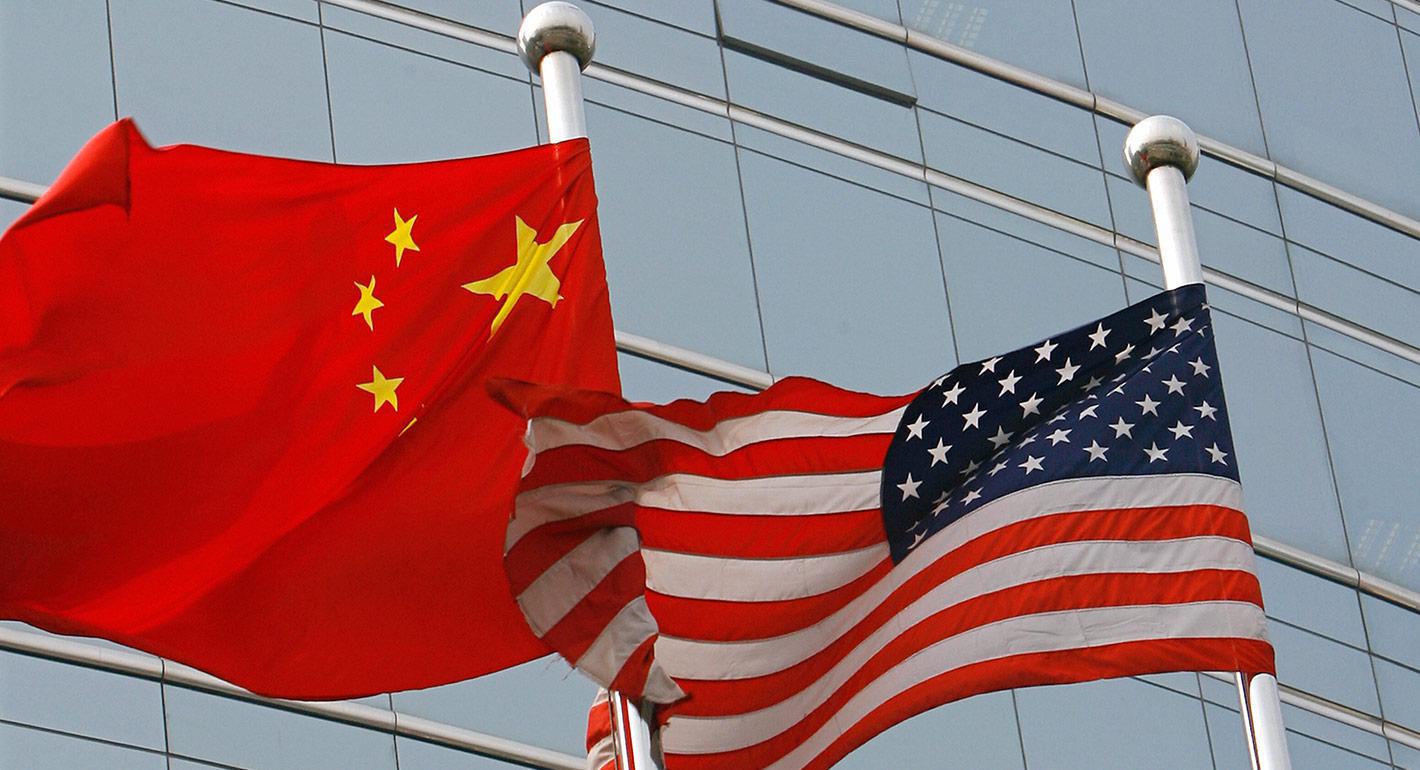
While the world hoped this pandemic might lead to more cooperation between these two great powers, American and Chinese leaders instead fell into a blame game and allowed their increasing suspicions to guide their decision-making.
Source: Defense One
The coronavirus pandemic is reshaping the U.S.-China relationship — but in the opposite of the way that many expected. While the world hoped this pandemic might lead to more cooperation between these two great powers, American and Chinese leaders instead fell into a blame game and allowed their increasing suspicions, or even enmity, to guide their decision-making. And while hostile leaders finger-point at each other, a less-noticed series of military and policy actions by both sides has put all of us in greater danger of U.S.-China military tensions sliding into armed conflict. Tensions are increasing over intensified military activities taken by both sides, how the virus is impacting each side’s readiness to use military force, and the rising mistrust among both peoples. But there is a peaceful way out of this spiral.
The COVID-19 pandemic broke out within the context of what the American side already was calling great power competition. That framing partly explains why Washington and Beijing believe each is seeking to position themselves advantageously for the post-pandemic landscape. Each side describes the other as being aggressive while justifying themselves as merely responding to provocations, especially when it comes to military affairs: the U.S. stresses that China is expanding its sphere of influence in the Asia-Pacific region, and China believes that the U.S. is determined to keep the PLA within the first island chain.
We have seen several stories declaring that the pandemic is China’s opportunity to expand its claims in the South China Sea and intimidate Taiwan. Their conclusion is that China, now recovering from the outbreak, is using the opportunity to improve its position against neighboring countries and the United States, which are still enmeshed in it. There are also reports in Chinese media of how the U.S. military increased its activity in the South China Sea and has sailed through the Taiwan Strait with higher frequency, and how Congress passed a bill to support Taiwan’s international relations, all of which occurred in March when China was struggling with the coronavirus and the United States was as yet not widely infected. Officials from both sides expressed their concerns in similar tones after the sinking of a Vietnamese fishing boat. While the U.S. accused China of “exploiting the distraction or vulnerability of other states ” to expand unlawful claims and called for refraining from actions that could “distract from the global response to the pandemic”, Beijing urged Washington to “stop associating South China Sea issues with the pandemic outbreak”.
Under the circumstances, neither side wants to appear weak nor take the risk of slipping, even an inch. The back-to-back actions taken by the two are an example. The People’s Liberation Army claimed to have forcibly expelled one U.S. Navy vessel, the Arleigh Burke-class guided-missile destroyer Barry, as the response to its “freedom-of-navigation operations” sail through the South China Sea’s Paracel Islands, which was followed by the U.S. sending a second ship.
At the same time, to prevent or limit the transmission of the virus, both sides have implemented policies such as the cancellation of military exercises and drills, the shutdown of most recruiting centers, and the quarantine of troops deployed overseas, which could reduce available human resources, field training, and proper equipment maintenance. The inevitable degradation of readiness on both sides heightens military leaders’ anxiety and increases the likelihood of accidents like collisions of warships and airplanes which could quickly result in a crossfire.
Instead of a calm and collaborative coronavirus response, Beijing and Washington have increased suspicions and hostilities. A Pew poll conducted three weeks ago shows that Americans’ negative view of China is now at 66 percent, up from 47 percent in 2018. Both sides’ leaders are airing conspiracy stories of the virus’s origin. In China, leaders have claimed COVID-19 was brought to Wuhan by the U.S. Army. In the U.S., leaders have claimed it was invented by China as a biological weapon. It is not surprising if front-line commanders and pilots are influenced by these negative perceptions. Though no one should question their professionalism during operations, the chances of misinterpretation or overreaction caused by negative feelings cannot be overlooked.
Faced with the possibility of two nuclear powers stumbling into a war, both sides must take precautions. First on the agenda should be a serious effort to maintain and strengthen channels of communication and negotiation between the U.S. military and the PLA. Issues to be discussed include improving the existing hotline for rapid communications during emergencies, achieving consensus on crisis management principles, and clarifying different red lines in different areas and domains. If both sides were more proactive in their outreach efforts, it could change the trajectory of their global relationship. The pandemic provides a chance for them to coordinate their responses to this global crisis. As both militaries have helped hard-hit domestic communities, they can find ways to jointly assist South Asian and Southeast Asian countries in combating the coronavirus. Once the pandemic has ended, they could also exchange lessons and hold military exercises on combating a serious global public health crisis bilaterally or with neighboring countries.
Some readers may think these suggestions are far-fetched. But we can’t turn a blind eye to the disastrous prospects should we take no action. Rather, we can seize the opportunity to build much-needed cooperation between the two militaries. This chance is clearly there, if both sides are willing to take it.
Former Visiting Scholar, Cyber Policy Initiative
Lyu Jinghua was a visiting scholar with Carnegie’s Cyber Policy Initiative. Her research focuses primarily on cybersecurity and China-U.S. defense relations.
Recent Work


George Perkovich, Ariel (Eli) Levite, Lyu Jinghua, …

Jon Bateman, Lyu Jinghua
Carnegie does not take institutional positions on public policy issues; the views represented herein are those of the author(s) and do not necessarily reflect the views of Carnegie, its staff, or its trustees.

Funding Ukraine remains a priority for European leaders. As Russia’s war of aggression heads into another winter, two feasible options to mobilize support for Kyiv should be fast-tracked.


Vladyslav Rashkovan, Gregory P. Wilson

While the EU and European governments are embracing the much-lauded middle-power moment, this entails three difficult conundrums.

Richard Youngs

Europe is facing rising populism internally as well as external pressures from Russia, China, Turkey, and the United States.

Dimitar Bechev

A notable degree of participative democracy has firmly arrived in Europe. But to have more far-reaching impact, democratic deliberation needs to move into a radically new phase.
Richard Youngs

Much has been said of the changes Brussels is trying to make to the EU enlargement process. Here’s why gradual integration might—or might not—be the answer.
Dimitar Bechev