

Q&A
Dara Massicot, Aaron David Miller, Andrew S. Weiss
{
  "authors": [
    "Aaron David Miller"
  ],
  "type": "legacyinthemedia",
  "centerAffiliationAll": "",
  "centers": [
    "Carnegie Endowment for International Peace"
  ],
  "collections": [],
  "englishNewsletterAll": "",
  "nonEnglishNewsletterAll": "",
  "primaryCenter": "Carnegie Endowment for International Peace",
  "programAffiliation": "",
  "programs": [],
  "projects": [],
  "regions": [
    "North America",
    "United States",
    "Middle East",
    "Israel",
    "Palestine",
    "Bahrain",
    "United Arab Emirates"
  ],
  "topics": [
    "Political Reform",
    "Security",
    "Foreign Policy"
  ]
}
Source: Getty
Trump’s predictions of a “foundation of comprehensive peace” and “dawn of a new Middle East” are premature. If left unattended by Trump or a potential successor, the Israel-Palestinian conflict will fester, leaving Palestinians’ national ambitions unfulfilled.
Source: Washington Post
Israel normalized diplomatic relations with Bahrain and the United Arab Emirates in the past week, without progress on the issue of peace between Israelis and Palestinians as a condition. These agreements were signed at the White House, were blessed by President Trump and hold out the likelihood that other Arab countries eventually will follow suit.
These developments confounded the predictions of many peace process veterans — me included. I always believed normalized relations between Israel and neighboring Arab states would necessarily follow a resolution of the Israel-Palestinian dispute. So, recent events started me thinking about what else we may have missed. Clearly, Trump and his advisers leveraged relationships with autocratic Arab leaders, and it paid off.
The story, of course, is far from over. Trump’s predictions of a “foundation of comprehensive peace” and “dawn of a new Middle East” are premature. If left unattended by Trump or a potential successor, the Israel-Palestinian conflict will fester, threatening both Israel’s democratic and Jewish character, and leaving Palestinians’ national ambitions unfulfilled.
Still, three long-held assumptions that have guided U.S. policy haven’t borne out, and in the process have upended American thinking about the centrality of the Israel-Palestinian dispute long considered to be the core of the broader Arab-Israeli conflict.
For decades, a core assumption of many, if not most American foreign policy thinkers has been the Israel-Palestinian conflict was a veritable powder keg that could blow at any time, creating war and instability in the Arab world. This view was especially prevalent in the Obama administration: In a 2010 speech to the American Israel Public Affairs Committee, Secretary of State Hillary Clinton said the conflict “threatens Israel’s long-term future” and “the status quo is unsustainable for all sides.” Speaking from London in 2014 with reference to discussions between Palestinian representatives and European governments, Secretary of State John F. Kerry remarked the conflict was “unsustainable for both parties and for the region.” In his final news briefing, in 2017, President Barack Obama echoed much the same, saying, “I’m worried about it both because I think the status quo is unsustainable, that it is dangerous for Israel, that it is bad for Palestinians, it is bad for the region, and it is bad for America’s national security.” Even Jared Kushner, Trump’s adviser and son-in-law, whose efforts at Middle East diplomacy have been far more focused on neighboring Arab states than on the Palestinians, said in 2019 that “in order for Israel to be secure long term, they need to resolve this issue.”
Yet, despite the long history of confrontation between Israel and various Palestinian factions, the supposedly unsustainable status quo has proved remarkably sustainable.
The parties themselves have been willing to manage the status quo, however grim it may be, because changing it required more political risk than either side was willing to accept: a Palestinian national movement divided between the Hamas and Fatah factions; Israel’s own fractious politics, and the gaps between the two sides on issues ranging from borders, to the status of Jerusalem as the capital to two states, to the status of Palestinian refugees, have only prolonged the inertia.
Also, despite the conviction the status quo was unsustainable, most administrations did little to try to alter it, and in some ways enabled it: The nature of America’s special relationship with Israel prevented bringing serious pressure to bear on Israel. In a 2002 address, for instance, President George W. Bush called for a halt to Israeli settlement construction, but his administration did nothing to curtail those activities.
In 2014, Kerry warned if Israel didn’t settle with the Palestinians, it could become an “apartheid state.” Many Israelis, including former prime minister Ehud Barak, reached the same conclusion, as had Israel’s foreign ministry in a confidential 2014 report. But in the intervening years, the opposite has happened. Israel’s diplomatic gains have occurred largely on the watch of a prime minister who has mostly dropped the pretense of resolving the Israel-Palestinian conflict on terms any Palestinian leader could accept.
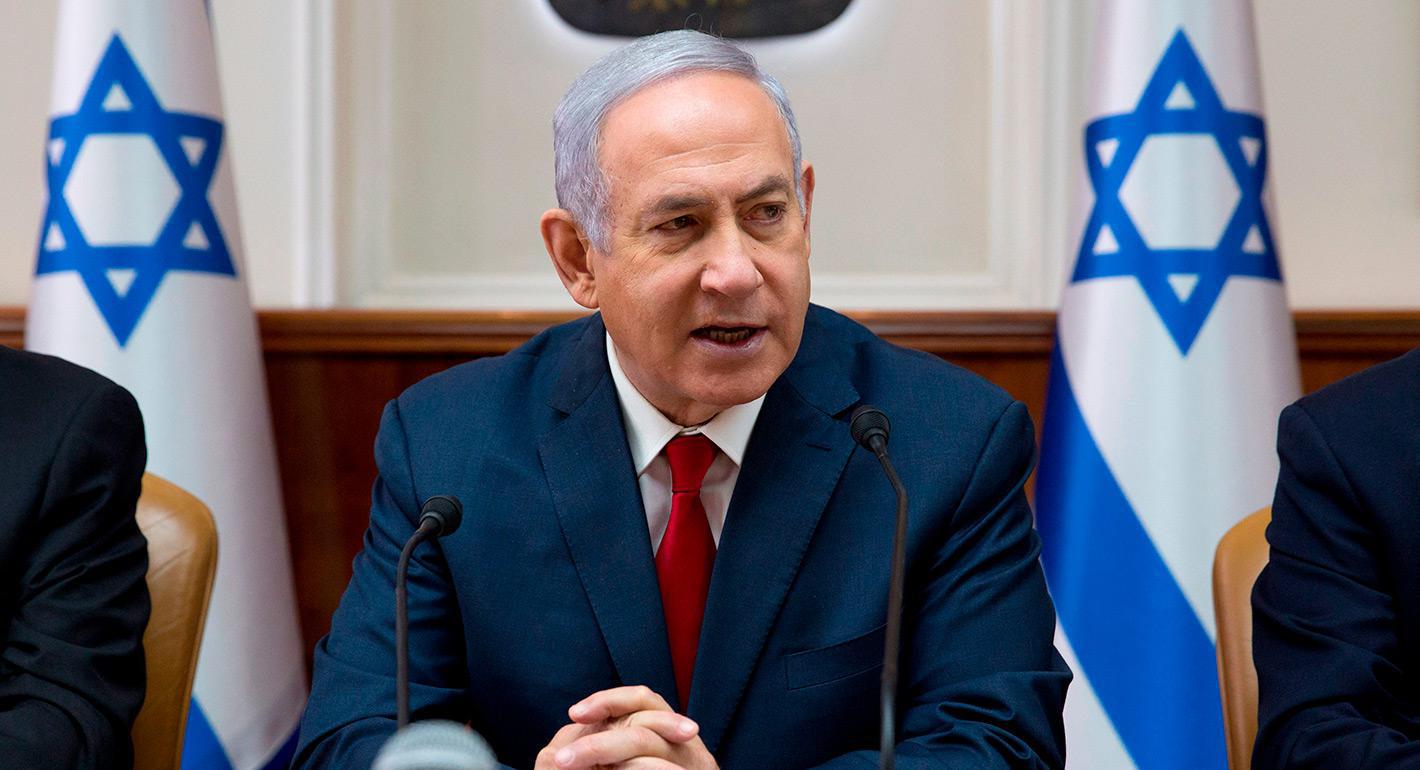
In 2016, Benjamin Netanyahu became the first Israeli prime minister in decades to travel to East Africa, where he met with leaders in Ethiopia, Kenya, Rwanda and Uganda. The next year, he became Israel’s first prime minister to visit South America. Israel has expanded trade relations in east Asia, and Netanyahu has established closer ties with Indian Prime Minister Narendra Modi, who, in 2017, became the first Indian prime minister to visit Israel. Israel now has better relations with all five permanent members of the U.N. Security Council than at any time in its history. MASHAV, Israel’s international development agency, has programs in medicine, agriculture and education in developing countries around the world. It may be the case that some of these countries see cooperation with Jerusalem as a way to stay in Washington’s good graces, especially during the Trump years. But it also suggests much of the international community is no longer prepared to tie their own interests to the Palestinian cause and they see real advantage in dealing with and benefiting from Israel’s technology and expertise.
Perhaps nowhere have veteran analysts and diplomats been more off the mark than in their predictions that Arab states would not normalize relations with Israel until there had been major progress on the Palestinian issue — even though key Persian Gulf nations such as the U.A.E. and Saudi Arabia were dealing quietly with Israel. Just this May, in an article on how Arab countries were making peace with Israel without the Palestinians, I still expressed doubts about the possibility of full-scale diplomatic relations.
But the stars were aligning: A shared fear of Iran’s Shia-dominated regime and violence from Sunni Muslim terrorist groups, combined with Israel’s aid in the security, technology and intelligence fields and an increasing impatience with the Israel-Palestinian conflict set the stage for a thaw between Israel and largely Sunni Arab nations. The advent of the Trump administration, with its pro-Israel and anti-Iran policies, its autocrat-friendly outreach, and its willingness to sell the smaller Gulf monarchies advanced weapons added incentive to move closer to the Israelis.
This doesn’t mean the Arab-Israeli conflict is over or that Israel has untethered itself from a dispute with Palestinians that could profoundly shape its character, demography and security — the Israeli and Palestinian futures are inextricably linked.
What’s clear, though, is that regional priorities are changing. The Bahrain-U.A.E.-Israel deal suggests the regional consensus on Israel and Palestinians has broken down. Key Arab countries may still nominally adhere to the goals of the 2002 Arab League peace initiative — a Palestinian state on something close to the June 1967 borders with east Jerusalem as a capital, a result Israel shows no signs of accepting — even while they negotiate their own relationships with Israel.
But analysts and diplomats should exercise care, and humility, in assessing the prospects for peace going forward. The experts didn’t think normalization of relations was possible without it, and now it’s becoming a reality. The Trump administration brushed the Israel-Palestinian issue aside but played its cards well with Gulf monarchs. The challenge for Trump or the next mediator — if that’s Democratic presidential nominee Joe Biden — is to try getting both right.
This article was originally published by the Washington Post.

Senior Fellow, American Statecraft Program
Aaron David Miller is a senior fellow at the Carnegie Endowment for International Peace, focusing on U.S. foreign policy.
Recent Work


Dara Massicot, Aaron David Miller, Andrew S. Weiss



Sophia Besch, Eric Ciaramella, Steve Feldstein, …
Carnegie does not take institutional positions on public policy issues; the views represented herein are those of the author(s) and do not necessarily reflect the views of Carnegie, its staff, or its trustees.

With its public finances in shambles, the far right polling at 35 percent ahead of the 2027 presidential election, and a growing protest movement, is France’s crisis a threat to the EU’s geopolitical awakening?

Rym Momtaz, ed.

Ahead of a tough winter for Ukraine, Donald Trump’s swing back toward Russia bodes ill. But instead of panicking, Kyiv’s European allies are focusing on action.
Rym Momtaz

Funding Ukraine remains a priority for European leaders. As Russia’s war of aggression heads into another winter, two feasible options to mobilize support for Kyiv should be fast-tracked.


Vladyslav Rashkovan, Gregory P. Wilson

While the EU and European governments are embracing the much-lauded middle-power moment, this entails three difficult conundrums.

Richard Youngs

Europe is facing rising populism internally as well as external pressures from Russia, China, Turkey, and the United States.

Dimitar Bechev