

Q&A
Eugene Rumer
{
  "authors": [
    "Eugene Rumer"
  ],
  "type": "commentary",
  "centerAffiliationAll": "dc",
  "centers": [
    "Carnegie Endowment for International Peace"
  ],
  "collections": [],
  "englishNewsletterAll": "ctw",
  "nonEnglishNewsletterAll": "",
  "primaryCenter": "Carnegie Endowment for International Peace",
  "programAffiliation": "russia",
  "programs": [
    "Russia and Eurasia"
  ],
  "projects": [],
  "regions": [
    "United States",
    "Russia",
    "Eastern Europe",
    "Ukraine",
    "Western Europe"
  ],
  "topics": [
    "Security",
    "Foreign Policy"
  ]
}
Source: Getty
Even if NATO avoids the worst in Ukraine this time, the allies should think beyond the immediate crisis.
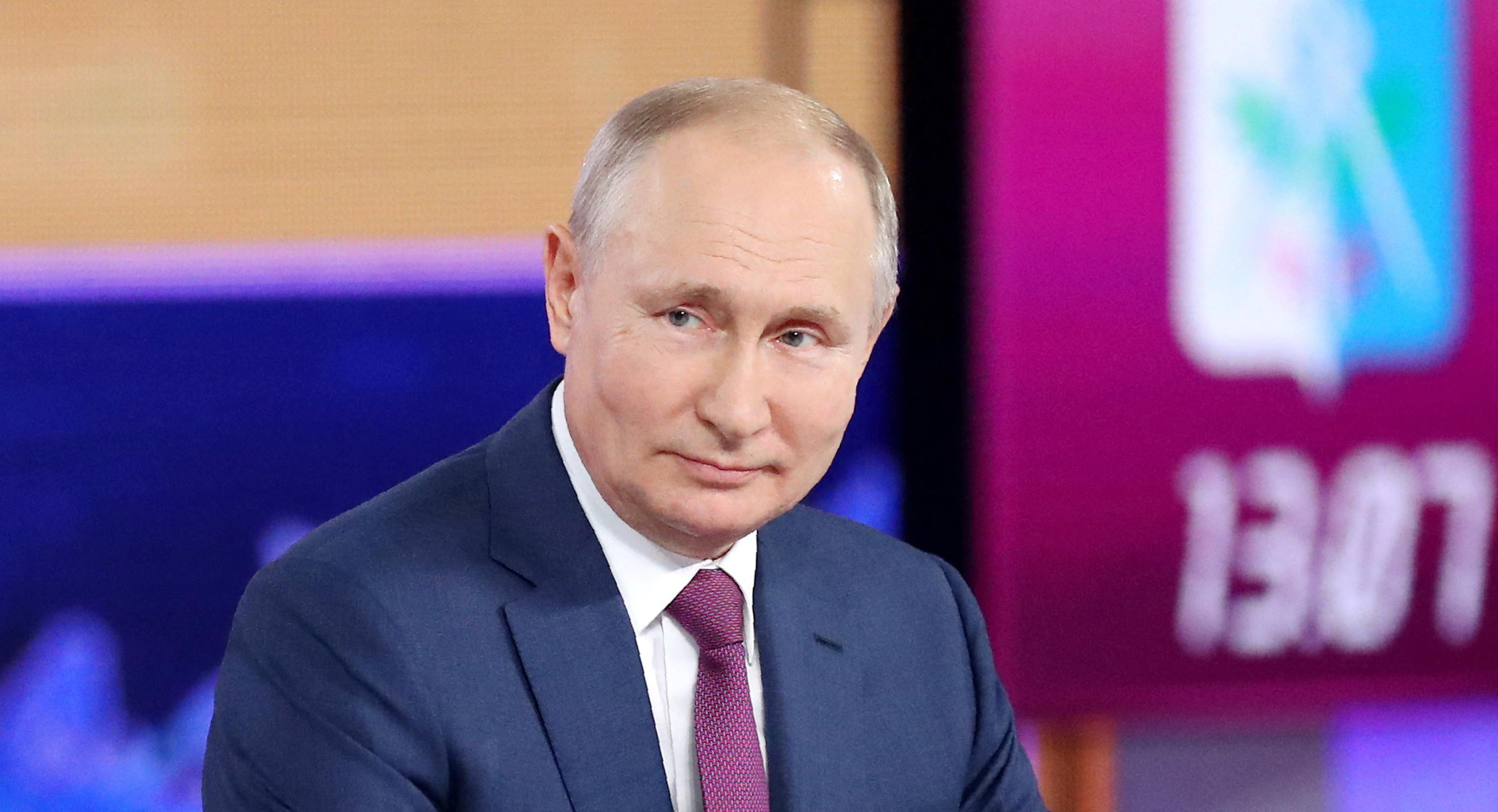
Russian President Vladimir Putin is threatening to start a war in Europe, the likes of which have not been seen since 1945. That is, unless he is granted suzerainty over Ukraine and Europe’s post–Cold War security order is remade to his liking. His boldness, coupled with a large military force deployed on the border with Ukraine, has shocked many into taking him at his word. But should he be? Is it possible that the international man of mystery has overreached this time, with his set of absurd and patently unfulfillable demands that no Western leader can even begin to negotiate in earnest?
Contrary to the headlines blaring that Putin has “many options” on Ukraine, after his bold move, he has only two: double down and start a war or climb down and be humiliated. The ball is in his court. And that is the problem.
Putin set the bar high with his demands. He wants the United States and its allies to recognize a Russian sphere of influence, which would violate the 1990 Charter of Paris and its core principle of nations having the right to make their own foreign policy choices. He wants NATO to remove its forces from states that have joined the alliance since 1997, when membership was offered to the first batch of previously Soviet-occupied nations. That would violate NATO’s pledge of equal security for all its members and leave the frontline states—Poland and the Baltics—to face the Russian military alone. And he insists that NATO close its door to Ukraine in violation of both the Charter of Paris and NATO’s charter. Last but not least, Putin wants NATO not to deploy weapons that could threaten the Russian heartland. This comes after Russia violated the Intermediate-Range Nuclear Forces (INF) Treaty that had banned such weapons and after the United States withdrew from it. To add an arrogant flourish to this bold set of demands, Russian diplomats have demanded—like a teacher ordering a student—that the United States submit its reply in writing. Or else.
This is where it gets dicey for Putin. After riding high for several weeks and forcing the United States and NATO into frantic talks, Putin has not gotten what he wants. His demands have been rejected repeatedly, most recently in Geneva on January 21, when U.S. Secretary of State Antony Blinken met with Russian Foreign Minister Sergey Lavrov. The only agreement reached so far is to keep talking, while the allies have sent more military aid to Ukraine and are looking to boost their forward presence regardless of how the current crisis is resolved. Blinken has promised to deliver next week the written reply, which will disappoint Lavrov’s boss, as his demands will be rejected again—this time in writing.
That reply will likely include an offer to negotiate new arrangements to address problems in European security created by the demise of the INF Treaty and the Conventional Forces in Europe Treaty, which Russia had effectively abandoned in 2007. A creative set of arrangements that could replace both treaties—in substance, if not in form—could go a long way toward addressing Russia’s and NATO’s security concerns.
U.S. President Joe Biden’s reply may also include an invitation to talk about a larger framework for European security in response to Russia’s long-standing claims that the post–Cold War security arrangements do not serve Russian interests. A pullback of the Russian troops poised to attack Ukraine is certain to be the key U.S. precondition. But given the fundamental differences between Washington and Moscow on this subject, the outlook for this effort is not promising.
Despite the secrecy that shrouds Kremlin decisionmaking, Putin surely is not blind to the risks of war, especially one without the pretense of it being a separatist movement. Those risks are obvious: loss of both Ukrainian and Russian lives; costs of occupying and governing a vast territory and millions of people; and ultimately rejection by a nation, having suffered from Russian aggression, that has only shown more resolve to build a democratic society and forge closer ties to the West. And despite being described as reckless, Putin is anything but. He has used military power in calculated ways: in Syria, where his brutal air campaign took the lives of countless civilians but minimized Russian military losses; in Libya, where he deployed mercenaries who could be written off as expendable if wounded or killed; or most recently in Kazakhstan, where his high-profile deployment was in reality small and very low-key.
Nobody, probably including Putin, knows how this crisis will resolve. Yet. Assembling a mighty force is the easy part, and conventional wisdom has already concluded that Putin’s war on Ukraine is likely to be a cakewalk. But unleashing that force on the country that Putin himself describes as “one people” with Russia is more difficult—as is holding onto it. The Americans learned that lesson in Afghanistan and Iraq. The Russians too learned it in Afghanistan in the 1980s and in Chechnya in the 1990s and early 2000s.
If Putin decides to go big and launch a ground invasion, as his military deployments suggest, the option before Western policymakers is obvious: condemnation, sanctions, support for Ukrainian resistance, and more NATO deployments to frontline states. But if he picks a lesser option short of a ground invasion, or punts on the military option altogether, Western leaders will face complicated choices. They will range from offering the arrogant KGB half-colonel a face-saving out if he takes up the U.S. offer to negotiate to some form of punishment calibrated to maintain unity among the allies—some of whom will push for harsher measures while others will want to go easy so as to not aggravate Putin.
In any event, the chances that this is Putin’s final attempt to regain control of Ukraine are low. He may step back this time, but like the Terminator, he’ll be back. It’s not too soon to think beyond the immediate crisis, even if the worst is avoided this time.
Director and Senior Fellow, Russia and Eurasia Program
Rumer, a former national intelligence officer for Russia and Eurasia at the U.S. National Intelligence Council, is a senior fellow and the director of Carnegie’s Russia and Eurasia Program.
Recent Work
Eugene Rumer
Eugene Rumer
Carnegie does not take institutional positions on public policy issues; the views represented herein are those of the author(s) and do not necessarily reflect the views of Carnegie, its staff, or its trustees.

Funding Ukraine remains a priority for European leaders. As Russia’s war of aggression heads into another winter, two feasible options to mobilize support for Kyiv should be fast-tracked.


Vladyslav Rashkovan, Gregory P. Wilson

While the EU and European governments are embracing the much-lauded middle-power moment, this entails three difficult conundrums.

Richard Youngs

Europe is facing rising populism internally as well as external pressures from Russia, China, Turkey, and the United States.

Dimitar Bechev

A notable degree of participative democracy has firmly arrived in Europe. But to have more far-reaching impact, democratic deliberation needs to move into a radically new phase.
Richard Youngs

Much has been said of the changes Brussels is trying to make to the EU enlargement process. Here’s why gradual integration might—or might not—be the answer.
Dimitar Bechev