

In The Media
Minxin Pei
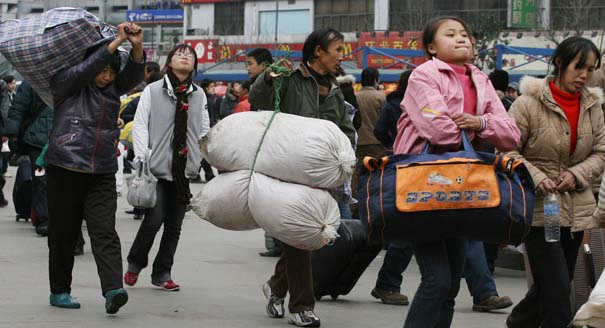
Source: Getty
Fears that the global financial crisis will generate political turmoil or cause the CCP to lose its grip on power are overblown.
The decline in China’s economic growth since the onset of the global financial crisis has raised the question of whether the Chinese Communist Party (CCP), which depends on delivering satisfactory economic performance as a source of political legitimacy, can manage the rising social tensions caused by a significant increase in unemployment. As of the end of 2008, more than 20 million migrant laborers had lost their jobs. In addition, approximately 25 percent of China’s 6.1 million new college graduates in 2009 will be unable to find employment.
The economic crisis occurred at a time when several key indicators of social instability—riots, demonstrations, strikes, and labor disputes—were already rising. In anticipation of greater unrest, the Chinese government has mobilized its local party organizations and law enforcement agencies. On the order of the Politburo Standing Committee (PSC), the CCP’s top policy-making body, the party launched a short-term training program in November 2008 for more than 2,000 county party chiefs from the provinces, with a special focus on tactics for maintaining local stability and responding to emergencies. In an unprecedented move in February 2009, the Ministry of Public Security started to rotate all the local police chiefs, 3,000 strong, through a ten-day course to prepare them for the expected increase in local disturbances.
Even so, fears that the crisis will generate political turmoil or cause the CCP to lose its grip on power are overblown, for two reasons. First, the CCP, which controls the Chinese state, possesses a strong repressive capacity—comprising 1.9 million policemen and a 660,000-member specialized internal security force—that has proved capable of containing large-scale local disturbances in the past. Second, incidents of social protest, such as riots and demonstrations, are usually sparked by specific economic grievances and are far less troubling to the state than organized movements inspired by political or religious ideas. Protestors typically have no leaders or political objectives. The demonstrations they stage may be violent, but seldom sustainable beyond a few hours. These disturbances are localized and their effects isolated. Of the tens of thousands of violent protest incidents reported each year, none has spilled over into a neighboring jurisdiction.
The real test for the CCP is to maintain elite unity and manage a complex process of leadership succession in a period of economic adversity.
To be sure, China’s ruling elites are more unified, and their political succession is more peaceful and rule-based, than during the Mao years. Nevertheless, succession arrangements are far from ironclad, and their outcomes are often unpredictable. The pending departure of both President Hu Jintao and Premier Wen Jiabao means that a succession process is effectively underway. On the surface, the Chinese leadership appears to have settled on two candidates, Messrs. Xi Jinping and Li Keqiang, who will succeed Hu and Wen respectively in 2012. However, the CCP’s succession process has many moving parts. Most important, the make-up of the next PSC will be a subject of intense bargaining and maneuvering among various factions and interests within the CCP. Departing senior leaders ensure the protection of their legacy and continuation of their policies by appointing their loyalists or protégés to this committee. In 2012, as many as seven vacancies on the PSC will need to be filled. Accordingly, President Hu’s highest priority for the remainder of his term is to build up the political capital required to manage this intricate and uncertain process.
For those high-level officials aspiring to top leadership positions in the next administration, the economic crisis actually presents a rare opportunity to gain support, both by building coalitions within the party and burnishing their public image as capable and decisive leaders. Such ambitious individuals need to differentiate themselves from the rest of the pack. They may be tempted to make populist appeals to demonstrate that they empathize with ordinary people. They may even become bold enough to challenge some of the current leadership’s policies. Powerful regional party chiefs may defy policies of the central government that threaten their regional interests (and hurt their performance record).
Such power jockeying would complicate the succession process and, should the perception of elite disunity take hold, create a negative feedback loop, thereby fueling further instability. The CCP’s rule would not be in jeopardy, but intensified political maneuvering will likely make the current leadership even more insecure, risk-averse, and focused on the short term.
Thus, the international community should anticipate a high potential price of maintaining the current political order. China’s human rights record is likely to deteriorate as local officials and security forces suppress protests and demonstrations by citizens with legitimate grievances. The interplay between economic difficulties, social tensions, and succession dynamics will make Chinese leaders more inward-looking and obsessively focused on their domestic political priorities. Recent reports suggest that China is adopting many protectionist measures at home even as it decries protectionism abroad, so disputes with major trading partners could escalate. Wariness about their political vulnerability will make Chinese leaders less receptive to calls from the international community to assume greater global responsibility—at a time when their country’s contribution is critical. Securing concessions or cooperation from China on critical global challenges, from macroeconomic imbalances to climate change, is likely to prove particularly difficult.
Former Adjunct Senior Associate, Asia Program
Pei is Tom and Margot Pritzker ‘72 Professor of Government and the director of the Keck Center for International and Strategic Studies at Claremont McKenna College.
Recent Work
Minxin Pei
Minxin Pei

With its public finances in shambles, the far right polling at 35 percent ahead of the 2027 presidential election, and a growing protest movement, is France’s crisis a threat to the EU’s geopolitical awakening?

Rym Momtaz, ed.

Ahead of a tough winter for Ukraine, Donald Trump’s swing back toward Russia bodes ill. But instead of panicking, Kyiv’s European allies are focusing on action.
Rym Momtaz

While the EU and European governments are embracing the much-lauded middle-power moment, this entails three difficult conundrums.

Richard Youngs

Europe is facing rising populism internally as well as external pressures from Russia, China, Turkey, and the United States.

Dimitar Bechev

A notable degree of participative democracy has firmly arrived in Europe. But to have more far-reaching impact, democratic deliberation needs to move into a radically new phase.
Richard Youngs