

Commentary
Uri Dadush
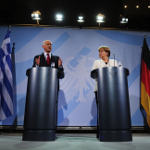
Source: Getty
Since bailouts alone are failing to end the European debt crisis, a new approach that pacifies markets, strengthens banks, mitigates moral hazard, and is politically acceptable to both core and periphery countries is urgently needed.
The many solutions proposed for the euro crisis now comprise three schools of thought: those that favor continuing with bailouts as in Greece, Ireland, and Portugal, without big institutional changes; those that would buy up or guarantee the debt through the European Central Bank (ECB); and those that propose issuing eurobonds. All three schools envisage shoring up banks across the eurozone either directly or indirectly by restoring the value of government bonds on their balance sheets. All three schools also require governments in the periphery to undertake spending cuts and reorient their economies toward the tradable sector, the so-called internal devaluation.
To work, any one approach has to not only pacify markets and strengthen the banks quickly, but also limit moral hazard that would prevent adjustment in the periphery. Additionally, a solution must be politically acceptable to the European core, which would bear large new costs, and to the periphery, which would confront many years of austerity and structural reforms.
These conditions are hard to agree on among seventeen nations, so politicians have their work cut out for them.
Continuing with the bailouts where needed is favored by many in Germany and others in the core because it limits their liability to the required short-term funds and places maximum and sustained pressure on the periphery to adjust quickly. ECB guarantees or eurobonds are favored by the periphery for diametrically opposite reasons.
When the crisis first hit in Greece, many observers believed that Greece was a special case and would be isolated (we warned against this—see Paradigm Lost), so the bailout-no-institutional-changes school of thought had no real competition. Perceptions have been transformed, however, as the interventions have not pacified markets and are in serious danger of failing in Greece, and spreads on Portugal and Ireland remain exorbitant. Moreover, a similar bailout of Spain and Italy would be politically and economically inconceivable unless combined with much larger International Monetary Fund (IMF) or G20 involvement. Even then, it would represent a huge leap into the dark.
So now Germany and others in the core are forced to consider the two more permanent and politically charged alternatives—eurobonds or ECB bond purchases and guarantees. Though most people think these are different, they ultimately amount to the same thing. Both approaches imply a claim on the pocketbooks of eurozone residents, the first through taxes (residents of the core would pay for higher interest costs and cover any missed payments by the periphery) and the second either through the prices residents pay (the inflation tax) or because national treasuries will need to recapitalize the central bank if the value of the bonds it buys declines. The ECB does not have a magic bullet.
The obvious advantage of eurobonds over ECB guarantees is that they maintain a clear separation between fiscal and monetary policy, and avoid placing the ECB council—composed of unelected technicians—in the absurd position of telling the governments who appointed them what to do, as they did recently in Italy. And while there are clear procedures for how to secure democratic endorsement of eurobonds, the ECB charter explicitly makes its deliberations independent of political processes.
There is one possible combined approach that would satisfy all conditions: pacify markets, mitigate moral hazard, and prove politically acceptable to the core and periphery.
First, as an emergency measure, eurozone countries would agree to finance half of all new borrowing requirements to the end of 2013 through eurobonds, mutually guaranteed as a function of their borrowing requirements (encouraging continued budget cuts). The contingent liability implied for Germany, should the periphery default on 30 percent of its debt, would be about 120 billion euros, not too different from its contribution to the current European Financial Stability Facility (EFSF). Many observers argue that, though eurobonds will eventually come, they represent a commitment that is far too open-ended and would take too long to negotiate at present.
A quicker procedure and one less invasive of sovereignty would be for the EFSF to guarantee all new bonds issued through 2013 against a loss of up to 30 percent of principal. The attraction of a scheme along these lines—apparently under consideration—is that it would leverage the EFSF by recognizing that countries would be highly unlikely to default on the totality of their debt. The implied contingent liability, should the periphery default, would be about 600 billion euros, of which Germany’s share might be as high as 240 billion euros.
Second, the ECB would, also as an emergency measure to the end of 2013, agree to backstop the new bonds issued by individual governments. By permitting the ECB to purchase government bonds—but allowing it to determine when and how it intervenes—errant governments would be assured of financing but could still face high spreads.
Third, countries would agree to force a recapitalization of selected banks through a combination of equity issuance, government equity injections, and, where needed, EFSF contributions.
Finally, in return for financial guarantees, countries would be required to include a balanced budget provision in their constitution and to agree to new binding peer review procedures on their budget.
These measures should be enough to quickly pacify markets. At the same time, countries would initiate negotiations of a new treaty on the monetary union, which would aim to make permanent changes by the end of 2013, and probably include eurobonds that ultimately would cover 100 percent of financing requirements, fiscal disciplines, as well a new ECB mandate, to be ratified by electorates.
An important feature under the new treaty would be to enable the ECB to act as a lender of last resort on eurobonds. Markets love such double guarantees by treasuries and central banks—one reason that Japan and the UK can borrow much more cheaply than Italy and Spain.
Many will argue that Europeans are not ready for such radical steps. Precisely. Politicians, having made the euro, must now quickly make Europeans.

Former Senior Associate, International Economics Program
Dadush was a senior associate at the Carnegie Endowment for International Peace. He focuses on trends in the global economy and is currently tracking developments in the eurozone crisis.
Recent Work
Uri Dadush
Uri Dadush
Carnegie does not take institutional positions on public policy issues; the views represented herein are those of the author(s) and do not necessarily reflect the views of Carnegie, its staff, or its trustees.

As the EU confronts profound challenges, several leaders have called for fundamental reform to the union’s model—but only modest, superficial changes have resulted. What if Europe really could be reimagined from zero today: What should such a redesigned European order look like?

Richard Youngs, ed.
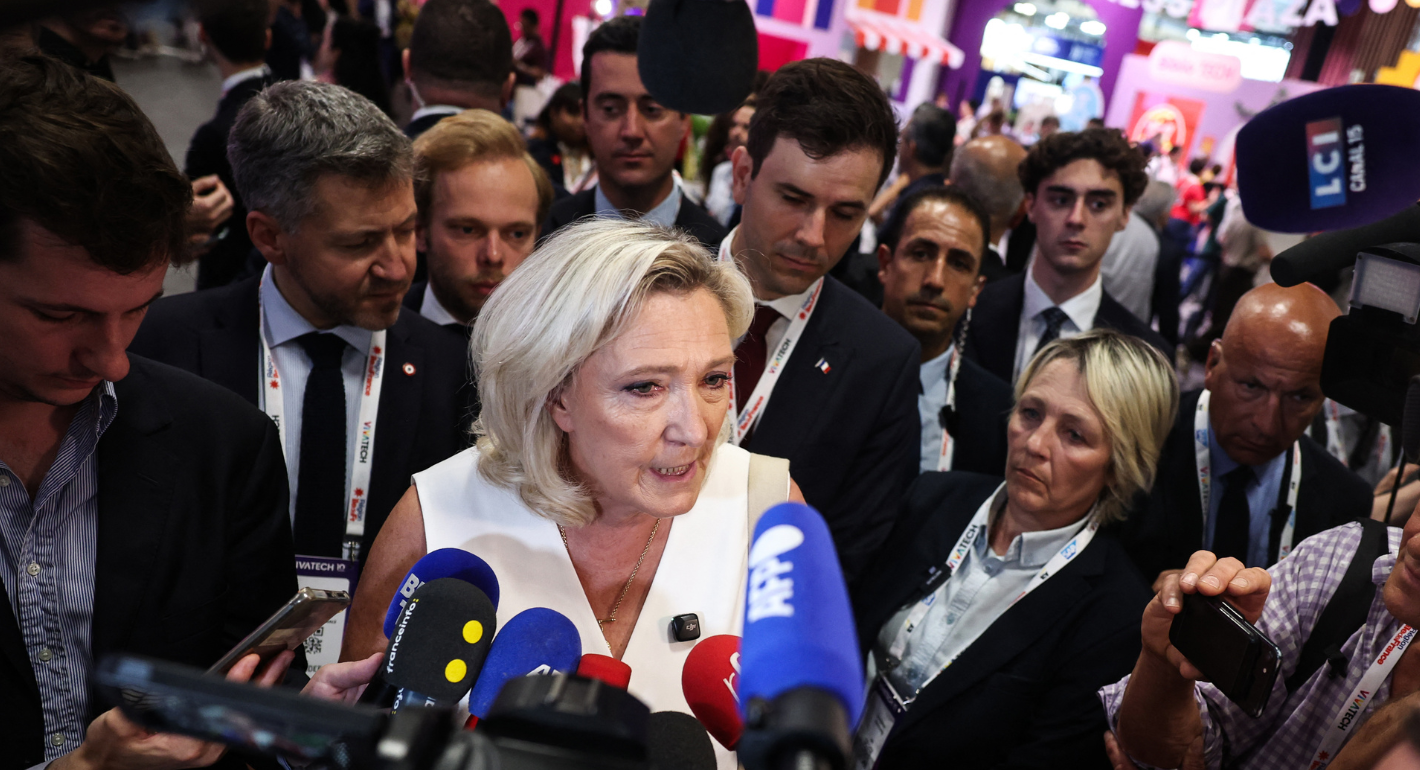
Far-right leader Marine Le Pen can—and will—run in France’s next presidential election. What does the outcome of her appeal against a 2025 embezzlement conviction mean for the country’s political future?

Catherine Fieschi

Western Europe’s dual-use infrastructure melted down during its latest heat wave. If a predicted hot weather event can take the continent by surprise, what chance does it have to withstand unexpected geopolitical crises?

Rym Momtaz
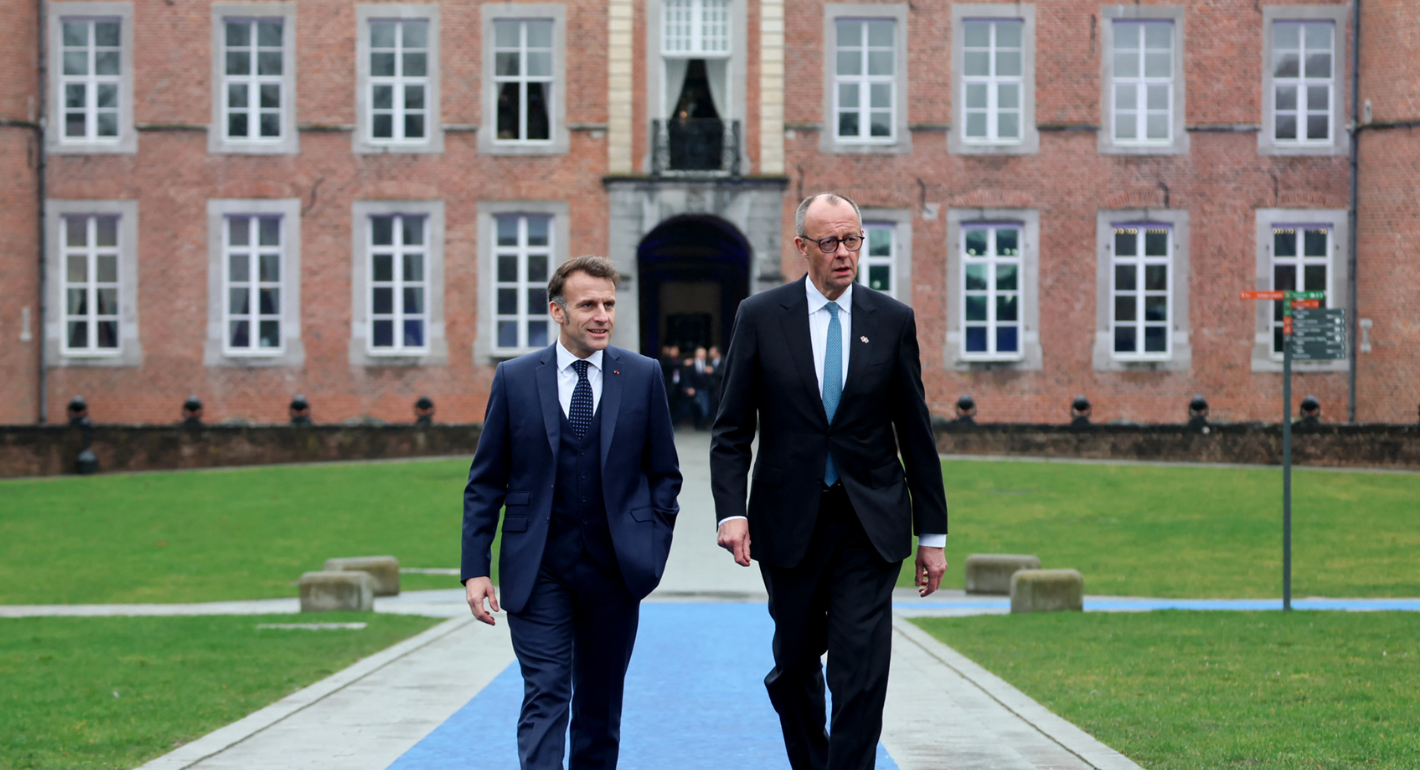
The Franco-German relationship is on the rocks again. But unlike previous moments of tension, the epochal changes on the world stage require that both step up investment in their bilateral ties.
Rym Momtaz
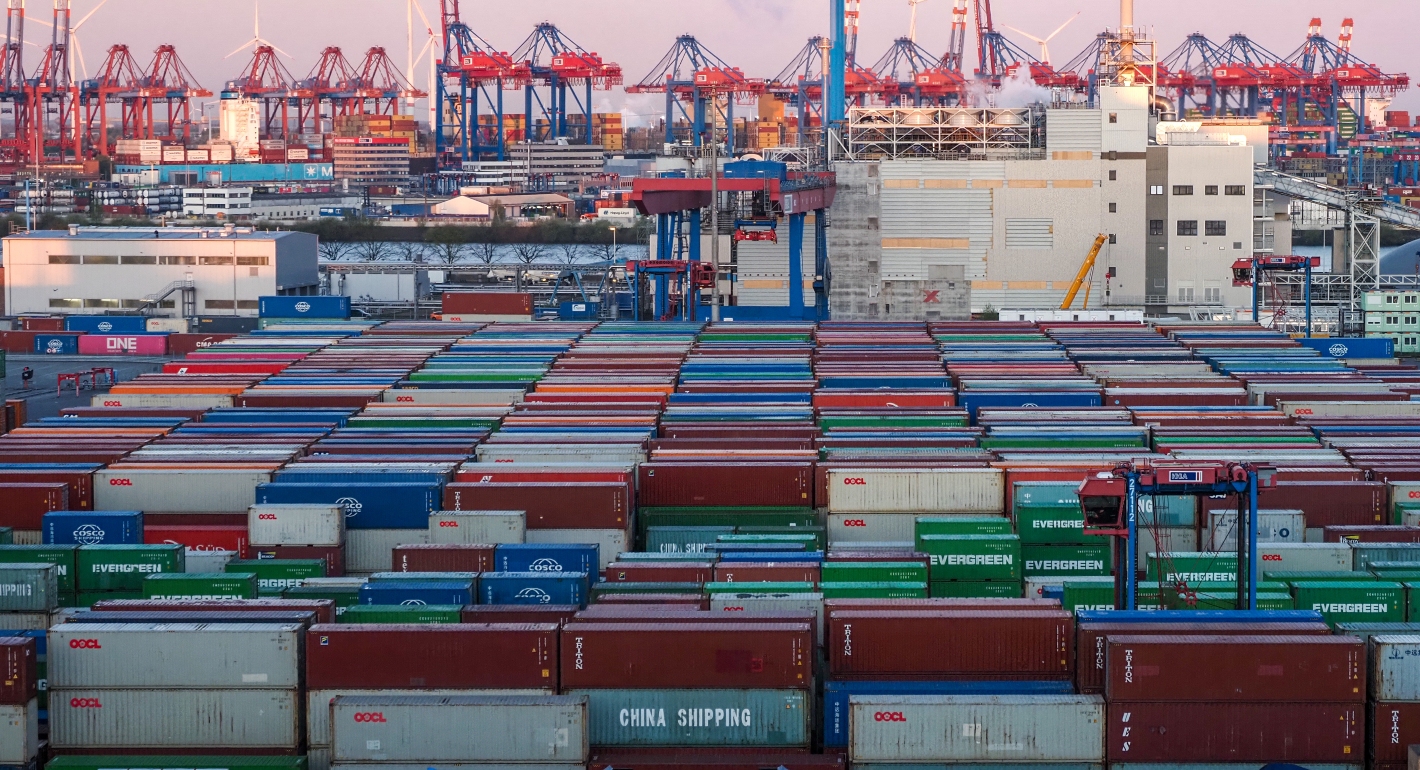
As geopolitical rivalry weaponizes global supply chains, the EU’s true vulnerability lies in emerging-risk imports. For these goods, suppliers are growing more concentrated, substitution more difficult, and political risk is looming.

Sinan Ülgen