Alexey Malashenko
Source: Getty
Exploring Uzbekistan’s Potential Political Transition
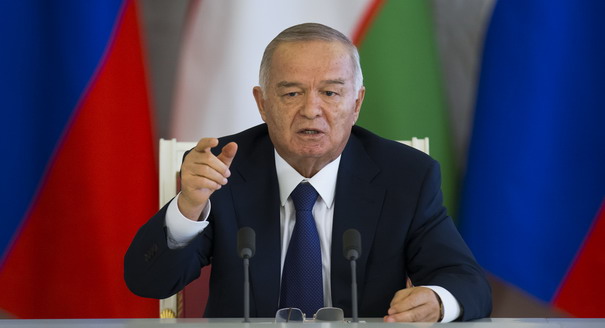
Though it is still too early to talk about the chances specific candidates have of replacing Uzbekistan’s President Islam Karimov, it is important to look closely at the current ruling elite and the president’s possible successors to see where the country might be heading.
Islam Karimov has essentially been in power in Uzbekistan since 1989. Rumors abound that Karimov will not take part in the country’s next presidential election in 2015, but it seems likely that he will participate. If he does, he is guaranteed to win. Though it is still too early to talk about the chances specific candidates have of replacing Karimov, it is important to look closely at the current ruling elite and the president’s possible successors to see where the country might be heading.
Possible Successors
- The president’s eldest daughter, Gulnara Karimova, and the National Security Service chief, Rustam Inoyatov, are seen as the main actors in the struggle to gain the presidency after Karimov’s departure, though there are a number of other potential candidates from both Uzbekistan’s powerful clans and the government.
- The president’s daughter is one of the richest people in the country. She has conducted local and foreign business transactions in violation of both national and European laws, expecting her father’s protection. This undermined Uzbekistan’s image, drawing father and daughter into conflict.
- Inoyatov is Uzbekistan’s second most influential figure. He dismantled Gulnara’s business empire and placed her under house arrest at the president’s behest. Some experts believe that he is staking a claim to Karimov’s seat and considers the president’s daughter his main rival.
- Two other potential candidates are the current prime minister, Shavkat Mirziyoyev, and the deputy prime minister and finance minister, Rustam Azimov.
Conclusions
- Karimov will decide when and to whom to transfer power. The president recently proposed constitutional changes that would give some presidential powers to the legislative and executive branches. This may signify his gradual exit from power, but the changes could also provide Karimov with legal grounds for running for president again.
- Inoyatov is likely to remain one of the key players during the power transition. Gulnara Karimova has little public support and is unlikely to succeed as an opposition figure or to be the successor.
- External actors are likely to have limited influence on the transition.
- Regardless of who emerges as the next president, regional clans and their political representatives will have a significant influence on the balance of power in the country.
- The eventual power transition is most likely to be peaceful, with interest groups and clans coming to an agreement to avoid instability. Yet, if a clan is dissatisfied with the new arrangement, it may appeal for public support and provoke social protests with an Islamist core.
Read Full Text
About the Author
Former Scholar in Residence, Religion, Society, and Security Program
Malashenko is a former chair of the Carnegie Moscow Center’s Religion, Society, and Security Program.
- What Will Uzbekistan’s New President Do?Commentary
- Preserving the Calm in Russia’s Muslim CommunityCommentary
Alexey Malashenko
Recent Work
Carnegie does not take institutional positions on public policy issues; the views represented herein are those of the author(s) and do not necessarily reflect the views of Carnegie, its staff, or its trustees.

More Work from Carnegie Europe
- The EU Needs a Third Way in IranCommentary
European reactions to the war in Iran have lost sight of wider political dynamics. The EU must position itself for the next phase of the crisis without giving up on its principles.
Richard Youngs
- Can Europe Still Matter in Syria?Commentary
Europe’s interests in Syria extend beyond migration management, yet the EU trails behind other players in the country’s post-Assad reconstruction. To boost its influence in Damascus, the union must upgrade its commitment to ensuring regional stability.
Bianka Speidl, Hanga Horváth-Sántha
- Europolis, Where Europe EndsCommentary
A prophetic Romanian novel about a town at the mouth of the Danube carries a warning: Europe decays when it stops looking outward. In a world of increasing insularity, the EU should heed its warning.
Thomas de Waal
- Armenia’s Election Is a Foreign AffairCommentary
As the 2026 Armenian election approaches, Prime Minister Nikol Pashinyan is facing fierce opposition from both Russia and the diaspora. He will need the help of Europe, the United States, and regional neighbours to advance his ambitious foreign policy.
Thomas de Waal
- Moldova’s Election Is a Test for Russian Influence in EuropeArticle
Moldova’s parliamentary election is make-or-break for the country’s European future. The outcome will test whether Chișinău will stay on the EU accession path or fall prey to Russia’s multi-domain interference campaign.
Oana Popescu-Zamfir