

Commentary
While Russia is not ready to sue for peace on Europe’s terms, it could still either seek a ceasefire in Ukraine or try escalation. Brussels needs to prepare for both and prioritize that preparation over normative discussions.
Kadri Liik
Source: Getty
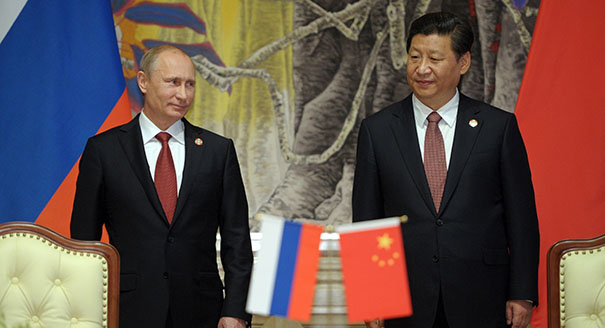
China recognizes the complex historical dimensions of the situation in Crimea and remains committed to a diplomatic solution that considers the interests of all parties involved.
On March 16, 2014, Crimea held a referendum in which 97 percent of voters opted to leave Ukraine and join Russia. Western countries dismissed the measure as illegitimate. Meanwhile Moscow announced that it would respect Crimea’s decision, paving the way for the territory to enter the Russian Federation.
As these events unfolded, the UN held two important votes. One day before Crimeans cast their ballots, the UN Security Council considered a resolution to declare that the referendum’s results would not be valid. Western member states voted in favor of the measure, but Russia’s veto kept it from passing. Meanwhile, China abstained from voting. Chinese UN Ambassador Liu Jieyi maintained China’s position that the situation in Crimea involves a “complex intertwinement of historical and contemporary factors” and that passing such a resolution would only have complicated matters on the ground. In late March, the UN General Assembly voted on a resolution that discouraged the recognition of any change in Crimea’s international status. Again, Western countries affirmed the resolution, Russia rejected it, and China abstained.
Why did China take this position on these two resolutions? A closer analysis suggests that China’s decision was based on three considerations: Western double standards on similar referendums in the past, Beijing’s longstanding commitment to noninterference in other countries’ domestic affairs, and the complexity of historical factors at play in Crimea.Western countries’ dismissal of the Crimean referendum last March does not appear consistent with their positions on similar votes held by former Soviet territories. For instance, the United States and Western Europe supported and quickly recognized Ukraine’s and Georgia’s independence referendums in 1991, when they separated from the Soviet Union as it was experiencing upheaval. The West also actively backed Estonia, Latvia, and Lithuania when these former Soviet territories established independence in the early 1990s. In doing so, the United States and its European allies likely accelerated the Soviet Union’s disintegration. A more recent example occurred in 2008, when the West gave significant assistance to Kosovo as it was declaring independence from Serbia.
These historical examples seem to suggest that the United States and Europe hold a double standard when choosing whether to support or oppose this kind of referendum in former Soviet territories, backing secession movements that reflect their own interests and opposing those that do not.
To China, the U.S. and European states’ opposition to the Crimean referendum has appeared to be based more on these countries’ own efforts to secure greater influence in Eastern Europe than on Ukraine’s best interests. Because of this, China did not vote in favor of the U.S.-proposed UN draft resolutions.
China’s diplomacy is based on the Five Principles of Peaceful Coexistence: mutual respect for territorial integrity and sovereignty; mutual nonaggression; noninterference in each other’s internal affairs; equality and mutual benefit; and peaceful coexistence. Of these, noninterference in particular is an important and long-observed feature of Chinese foreign policy.
From China’s perspective, interfering in the internal matters of other countries is counterproductive because doing so often exacerbates existing disorder, in effect adding fuel to the fire. This is especially true when powerful states seek to further their own interests by meddling in the domestic affairs of less influential states. Since the Cold War ended, U.S. readiness to intervene overseas and even to go to war has exacerbated complex tensions and conflicts not just in Eastern Europe but also in the Middle East.
The Crimean referendum was an internal Ukrainian issue. Using China’s principle of noninterference as a guide, other countries should not strongly interfere with this decision. The West’s condemnation of the referendum could be interpreted as a form of meddling.
At the same time, Moscow’s support of the referendum and annexation of Crimea has intensified Russia’s conflict with Ukraine and has triggered a crisis amid the armed conflict of the past year and long-term unrest. Russian actions in Crimea seem reminiscent of the Soviet Union’s support for Mongolia’s independence bid in 1945, which helped the territory separate from China.
Based on these considerations, China does not support Russia’s approach either. Because Beijing has sided with neither Russia nor the West, China abstained from voting on the March 2014 UN resolutions rather than casting a ballot in favor of either party.
Traditional Chinese yin and yang philosophy makes the case that everything that exists contains elements of both yin and yang. This mentality is reflected in the saying “one yin and one yang is the way” (yiyin yiyang zhiwei dao, 一阴一阳之谓道), which suggests that the two sides must be balanced and given due consideration. On each of these sides, events occur for specific reasons and have particular consequences, and a multitude of interrelated factors affect their outcomes.
In the same way, countries have different perspectives on various situations, and their viewpoints involve many different motivations and interests. Examining such issues requires not only seeing all sides of a matter but also understanding the factors that affect how events develop and how countries react to them, as well as how such things can change.
These ideas shed light on the case of Crimea. Ambassador Liu Jieyi has emphasized a balanced approach to resolving the situation—a strategy that both pays respect to “the legitimate rights and interests” of all parties and that also carefully considers the issue’s complex historical dimensions.
Russia and Ukraine share a complicated history. Before 1991, they were both integral territories of the Soviet Union. Crimea itself belonged to the Russian Republic until 1954. Only then, under former Soviet leader Nikita Khrushchev, did Crimea join Ukraine. From Moscow’s perspective, Crimea was traditionally a part of Russia. Even though Ukraine became independent as the Soviet Union fell apart, with Crimea becoming part of that country, Moscow and Kiev have still debated who controls the territory.
In 2001, Ukraine’s most recent census data showed that 58 percent of the Crimean population was ethnically Russian. Ukrainians themselves are an East Slavic people that share close ties of kinship with Russians. The Russian nation has always had a special bond with Kiev, which is where it originated. Today, Ukraine is geographically located at the intersection between the EU and Russia.
Based on these historical ties and this strategic position, it is not surprising that Russia consistently has viewed Ukraine as a part of its sphere of influence and as a defensive zone between itself and the EU. In 2013, Russia saw the Ukrainian government’s pro-Western policy as a major threat to Russian core interests and security. Therefore, when calls surfaced in Crimea to leave Ukraine for Russia, Moscow spared no effort in offering its full support.
While Russia supported Crimea in breaking away from Ukraine, the West and Kiev saw the move as an act of secession. The United States and Western Europe, however, seem to have a double standard in this area, as they actively supported Ukraine’s own independence referendum in 1991—behavior that was not consistent with the Chinese principle of domestic noninterference.
As far as Crimea is concerned, China has stood neither on the side of Russia nor on the side of the United States and Europe. Consequently, China abstained from voting on the March 2014 UN resolutions. As the second year of the Ukrainian crisis unfolds, the Chinese government calls on Ukraine, Russia, the United States, and other European countries to engage in diplomatic negotiations, to avoid armed conflict, and to resolve the issue by political means.
This article was published as part of the Window into China series

Zhang Lihua
Former Resident Scholar, Carnegie-Tsinghua Center for Global Policy
Zhang Lihua was a resident scholar at the Carnegie-Tsinghua Center until June 2020.
Carnegie does not take institutional positions on public policy issues; the views represented herein are those of the author(s) and do not necessarily reflect the views of Carnegie, its staff, or its trustees.
While Russia is not ready to sue for peace on Europe’s terms, it could still either seek a ceasefire in Ukraine or try escalation. Brussels needs to prepare for both and prioritize that preparation over normative discussions.
Kadri Liik

Autonomous AI agents are increasingly prevalent in cyberspace. The EU needs a real-time monitoring strategy, to invest in AI defenses, and to reduce its strategic dependence on U.S. frontier models.


Raluca Csernatoni, Patryk Pawlak
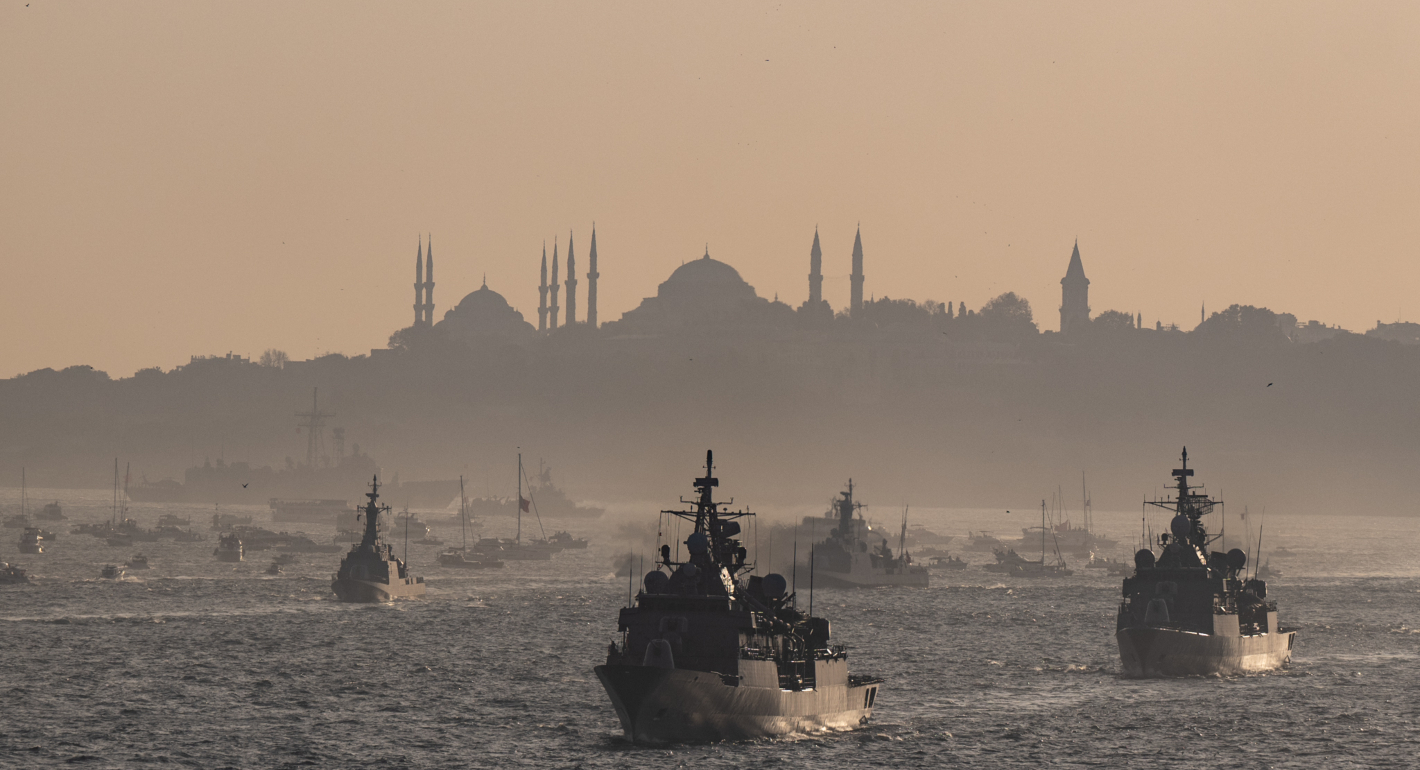
For ninety years, Turkey has been positioned as the principal gatekeeper of Black Sea security. As a result, European and NATO efforts to support Ukraine will require closer engagement with Ankara.

Thomas de Waal

Western Europe’s dual-use infrastructure melted down during its latest heat wave. If a predicted hot weather event can take the continent by surprise, what chance does it have to withstand unexpected geopolitical crises?

Rym Momtaz
There is an elephant in the room when it comes to the EU’s upcoming security strategy: Donald Trump. Unless European leaders acknowledge the depth of the transatlantic crisis, true autonomy will remain out of reach.

Stefan Lehne