

Commentary
Surya Valliappan Krishna, Ashima Singh
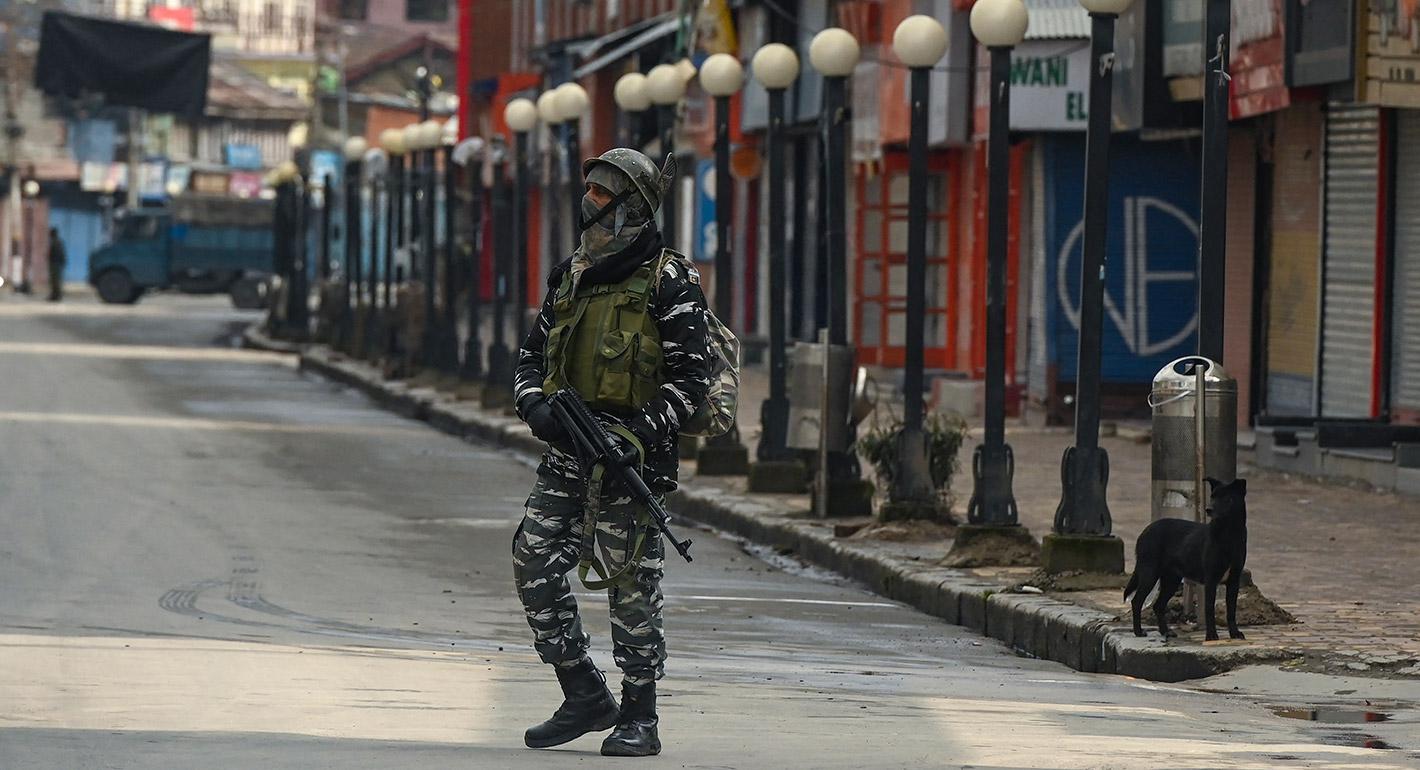
Source: Getty
A ceasefire along the Line of Control and International Border has lasted a year. It brought relief to civilians, reduced forced displacement, increased access to schools, and allowed construction and development projects to resume.
On February 25, 2021, in a joint statement, the directors general of military operations of India and Pakistan agreed to “strict observance of all agreements, understandings and cease firing along the Line of Control and all other sectors with effect from midnight 24/25 Feb 2021.” This represented significant progress toward “achieving mutually beneficial and sustainable peace” along the border in light of the record number of ceasefire violations (CFVs) in the years prior. These incidents represent violations of the ceasefire between India and Pakistan along the Line of Control (LoC) and International Border (IB). This piece looks at the efficacy of the ceasefire, impact on border populations on the Indian side of the IB and LoC, and the way forward.
According to Indian Ministry of Home Affairs data, there were 2,140 CFVs by Pakistan in 2018, 3,479 in 2019, and 5,133 in 2020. In 2021, there were only 664 incidents as of June 30 (see figure 1). Of those 664 violations, almost all occurred prior to the joint statement. In contrast, only six violations were reported from February 25, 2021, to June 30, 2021, per official government data. Newspaper reportage for the second half of the year and early 2022 shows reduced ceasefire violations compared to previous years.

For civilians, firing and shelling incidents often result in casualties and fatalities; destruction of property and livestock; curfews and restrictions on movement, agriculture, and commercial activities; and impaired or no access to schools, hospitals, and other institutions.
Despite heavy civilian and security personnel casualties in the years prior (see figure 2), some reports note that not a single civilian was killed in 2021 by cross-border gunfire. The ceasefire has also had a positive impact on the socioeconomic conditions along the border in the form of increased development efforts, rise in workdays, and a respite from constant fear.

While it was business as usual for security forces in the region, who prepare for all eventualities and continue to guard against violations while fortifying their positions, the ceasefire provided local administration an opportunity to undertake development projects, build community bunkers, and step up efforts to vaccinate people against COVID-19. Jammu and Kashmir (J&K) has been exemplary with reference to vaccination targets: on January 12, 2022, J&K achieved 100 percent second dose coverage for residents ages eighteen and above, with many border villages achieving full vaccination coverage much earlier due to special door-to-door vaccination drives.
The pandemic did not affect the Jammu districts of Poonch and Rajouri as drastically as it affected the Kashmir Valley. Therefore, the reduction in violence had a significant impact on access to schools, bringing some relief to the two districts, which often see school closures for weeks on end due to cross-border violence.
In addition to discouraging private investment into the region and creating adverse effects on industrial and tourist activity, CFVs impact the administration’s ability to govern, by delaying delivery of public services and usage of developmental funds. For example, before the February 2021 ceasefire, road and power projects along the LoC were often delayed, as new transformers or spare parts for power lines could not be brought to the border areas because of targeting of vehicles and machines such as earthmovers by Pakistani security personnel, often injuring civilians. After the ceasefire, in Kanga village near Poonch, road repair work took place under the Border Area Development Programme and Pradhan Mantri Gram Sadak Yojana. In Datot village in Mendhar Tehsil, residents got electricity for the first time last year.
In another example, in the Hiranagar sector along the border, the relatively peaceful atmosphere enabled farmers to return to thousands of acres of land—spread across twenty-two border villages—which had remained fallow due to continued firing and shelling. The return was also encouraged by the Department of Agriculture and Border Security Force personnel, who sensitized locals to the latest agreement, allayed their fears, and provided material and equipment to promote farming. For a region that is dependent on agriculture for economic livelihood and farmers who bear —without financial compensation—the brunt of crop loss due to cross-border skirmishes, the impact of the ceasefire is overwhelmingly positive.
It is also significant that forced displacement on account of heavy cross-border violence has not occurred since the ceasefire. Before the ceasefire, border populations in villages along the LoC and IB were often moved, in some cases for long durations, from their homes to other locations by security forces, causing disruption of everyday life. For example, between late September and early December 2016, 27,449 individuals were moved from border regions to other locations during continued CFVs and cross-border kinetic action.
The low number of cross-border skirmishes has allowed authorities to engage in a record number of bunker constructions along the IB and LoC. Approximately 8,500 individual and community bunkers, out of a sanctioned 14,460 bunkers, have been completed in Jammu, Kathua, and Samba on the IB and in Poonch and Rajouri on the LoC. These bunkers usually fall within five kilometers of the border and are often areas of refuge for civilians during CFVs.
Besides resumption of uninterrupted daily activities, the period also saw the return of celebrations of special occasions like festivals and marriages —a semblance of normalcy. The ceasefire also saw the arrival of tourists, including for religious tourism and adventure tourism, to more remote destinations along the border. Both local administrations and the central administration have expressed a commitment to boosting tourism along the border. In fact, buoyed by relative peace, the Indian Army recently opened a cafeteria for the public at its forward position in the Uri sector —something that would have been unimaginable until last year.
Efforts are also being made to make border regions (such as Keran in Kupwara and Uri in Baramulla, among others) attractive for investment through the J&K Industrial Policy 2021-30 and the Industrial Land Allotment Policy, which divide the union territory into over 250 zones with the aim of promoting investment in the areas of food processing, pharmaceuticals, high-grade raw silk, woolen fabrics, education, tourism, health, and information technology.
This is important because over the last decade, the constant threat of ceasefire violations has loomed large over the fragile peace, which has not yet lasted as long as the conflict. While this does not signal broader peace and improvement in the overall security situation in Jammu and Kashmir as a whole, the fact that the ceasefire has held up for twelve months is a significant achievement—and a sign of political will in New Delhi and Islamabad.
India and Pakistan have still reported some ceasefire violations over the last year. These have been limited and sporadic; the important takeaway is that violations by state actors (from military post to military post or military post to civilian areas) are markedly reduced. Pakistan too reported fewer violations by Indian troops. Whether the Indian forces initiated or retaliated to firing has little significance for the residents on either side of the border, who are unfortunate victims in the crossfire.
While ceasefire violations by Pakistan security personnel have been reduced, similar trends are not observed in infiltration by militants. Infiltration incidents are attempts by militants at crossing the LoC or IB and are sometimes accompanied by covering fire from Pakistan security personnel. In 2021, twenty-eight infiltrations were reported by India until October as compared to fifty-one in the whole of 2020. Successful infiltration bids result in extensive combing and security operations, including encounters by the Indian security forces, which in some cases cause curfews and shutdowns that affect everyday life.
To understand what could go wrong, one does not have to look too far. In 2002, the year before an earlier ceasefire between India and Pakistan, there were 8,376 ceasefire violations by Pakistan. The 2003 ceasefire was vital for peace along the border and the next three years saw little or no cross-border kinetic action. However, violations returned in 2007 and continued to climb in the following years, rising from twenty-one violations in 2007 to 347 in 2013.
Going forward, India’s engagement with Pakistan will be determined by Pakistan’s own behavior and its intent and ability to end cross-border terrorism and violence. However, with the success of the February 2021 ceasefire, there is a possibility of restarting other confidence-building measures along the border such as trade, should there be political will to do so. On the other hand, continued infiltrations across the LoC may test India’s patience.
The February 2021 ceasefire was a welcome development for civilians living along the border who only wished for the ordinary—a life without the reverberations of gunfire and mortar shells. In the likely event that this ceasefire doesn’t lead to further bonhomie, continued peace along the border would be welcome.

Former Deputy Director, Projects and Operations
Surya Valliappan Krishna was the deputy director of projects and operations at Carnegie India.
Recent Work
Surya Valliappan Krishna, Ashima Singh

Surya Valliappan Krishna, Saheb Singh Chadha
Carnegie does not take institutional positions on public policy issues; the views represented herein are those of the author(s) and do not necessarily reflect the views of Carnegie, its staff, or its trustees.
Europe’s industrial supply chains leave it vulnerable to global shocks. The EU needs a pragmatic green industrial strategy that balances durable partnerships and bolsters homegrown clean tech without sacrificing low-carbon ambition.


Milo McBride, Pauline Gerard
Defense tech innovations will be at the heart of Europe’s new security strategy. But so far, Brussels has been making moves without a broader plan, undermining readiness and credibility.

Raluca Csernatoni

When the U.S.-Iran memorandum of understanding was announced, the UK, France, Germany, and Italy declared their readiness to help demine the Strait of Hormuz and lift nuclear sanctions on Tehran. But does Europe need new tools to recover a diplomatic role?

Rym Momtaz, ed.

The Franco-German relationship is on the rocks again. But unlike previous moments of tension, the epochal changes on the world stage require that both step up investment in their bilateral ties.
Rym Momtaz

As geopolitical rivalry weaponizes global supply chains, the EU’s true vulnerability lies in emerging-risk imports. For these goods, suppliers are growing more concentrated, substitution more difficult, and political risk is looming.

Sinan Ülgen