

Commentary
Judy Dempsey
{
  "authors": [
    "Judy Dempsey"
  ],
  "type": "commentary",
  "blog": "Strategic Europe",
  "centerAffiliationAll": "",
  "centers": [
    "Carnegie Endowment for International Peace",
    "Carnegie Europe"
  ],
  "collections": [],
  "englishNewsletterAll": "",
  "nonEnglishNewsletterAll": "",
  "primaryCenter": "Carnegie Europe",
  "programAffiliation": "",
  "programs": [],
  "projects": [],
  "regions": [
    "Europe"
  ],
  "topics": [
    "Climate Change"
  ]
}
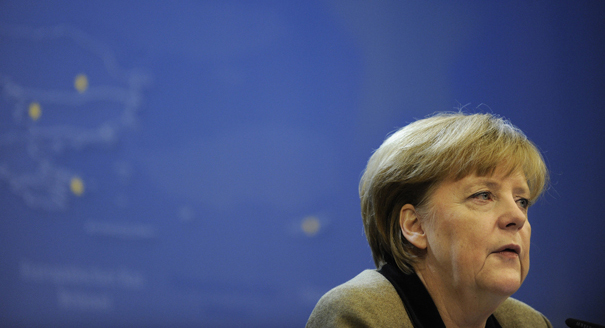
Source: Getty
Every week leading experts answer a new question from Judy Dempsey on the international challenges shaping Europe's role in the world.
Every week leading experts answer a new question from Judy Dempsey on the international challenges shaping Europe's role in the world.
This of course depends on what one means by “integration”. France and Germany have traditionally had a very different understanding of this concept, with France adopting a highly intergovernmental vision of integration while Germany was willing to see a stronger role for supranational institutions. While we see grand plans for “integration” in the sense of handing ever greater authority to the European level, this transfer of authority, at Merkel’s insistence, is very much going down the intergovernmental path. Consider, for example, the outcome of the most recent euro summit: rather than make efforts to legitimize the transfer of power to European institutions, the talk is of bilateral “contracts” between particular member states and of ensuring accountability to national legislatures. At the same time, the European Council, rather than supranational bodies, continues to call the shots in setting and approving the Union’s legislative agenda. We have “integration,” but ironically at the cost of one of its foremost original ideals: that European integration, to succeed, could not be the creature of the member states alone but required democratic governance “beyond the state.”
The way I understand this week’s question is: has Chancellor Merkel turned her back on integration in the sense of supranational integration when it comes to finding remedies to the crisis?
The best answer to this comes from Merkel herself. In her November 2010 speech at the College of Europe in Bruges she said:
“[A] coordinated European position can be arrived at not just by applying the community method; sometimes a coordinated European position can be arrived at by applying the intergovernmental method. The crucial thing is that on important issues we have common positions.”
She strongly believes that working together as Europeans can take different shapes and forms, and that the “good Europeans” are not necessarily those who intuitively look for transfers of competencies to Brussels—that’s the essence of her “Union method”.
In the course of the crisis, commentators have often stressed what they see as Merkel’s preference for intergovernmentalism, referring to the Bruges speech. I am not sure that this is the full story. I wouldn’t rule out that Chancellor Merkel and her team are sincere when they think about strengthening the community pillar and talk about a stronger Commission or European Parliament—where necessary and feasible.
The challenge for Europeans will be to come up with a system of governance that reflects the fact that Europe’s nation-states simply won’t go away and that at the same time is reconcilable with the urgent need to work together more, and better, as Europeans. The “United States of Europe” are neither realistic nor desirable. Europeans have to come up with something more imaginative.
Despite a slow start, Merkel has been the stable anchor during the euro crisis. However much she has been the public face of brutal austerity cuts in countries such as Greece (remember the shouting protesters and Nazi drawings at her visit...), she has nonetheless managed to navigate the complicated interplay between financial markets (the Chinese primarily trusted her advice), European players, and her own lukewarm public opinion. Her detractors, led by Paul Krugman at the New York Times and Gideon Rachman at the Financial Times, will claim that Keynes’ visible hand should have been enacted, with extra public spending rather than the fiscal austerity that is apparently causing bigger deficits and economic slump.
The verdict is still out. Europe might prove to be the unexpected economic success story of 2013 because, as president of the European Central Bank, Mario Draghi pointed out in the European Parliament, the eurozone has the “best fundamentals”. Of course, the competition is somewhat weak with a deflating Japan, a “cliff-hanger” United States, and a fundamentally unsustainable China.
The year 2013 will also test Merkel's willingness to proceed with new steps on political union. If the eurocrisis recedes, then there might be the temptation, particularly in a German election year, to slow the move towards political union beyond fiscal and banking policies.

Nonresident Senior Fellow, Carnegie Europe
Judy Dempsey is a nonresident senior fellow at Carnegie Europe
Recent Work
Judy Dempsey
Judy Dempsey
Carnegie does not take institutional positions on public policy issues; the views represented herein are those of the author(s) and do not necessarily reflect the views of Carnegie, its staff, or its trustees.
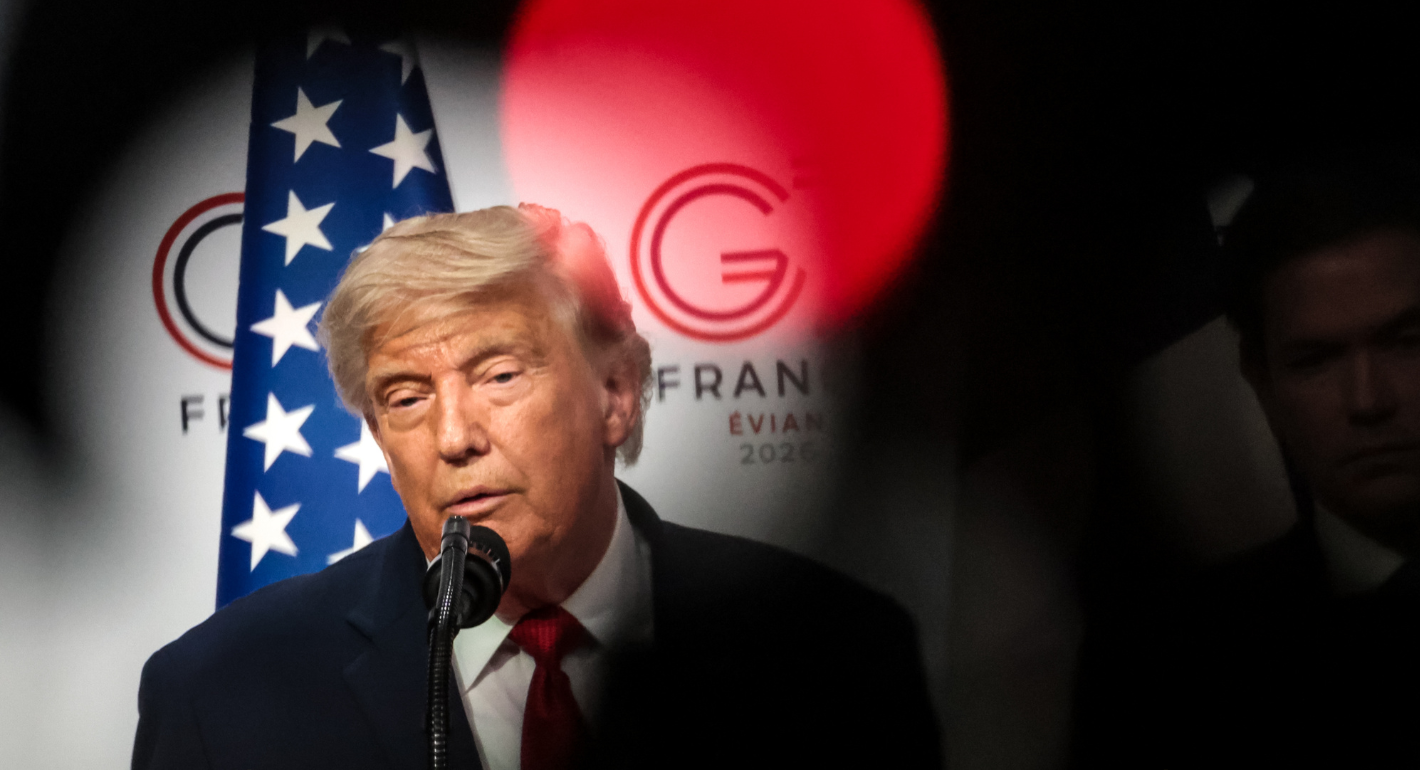
There is an elephant in the room when it comes to the EU’s upcoming security strategy: Donald Trump. Unless European leaders acknowledge the depth of the transatlantic crisis, true autonomy will remain out of reach.

Stefan Lehne
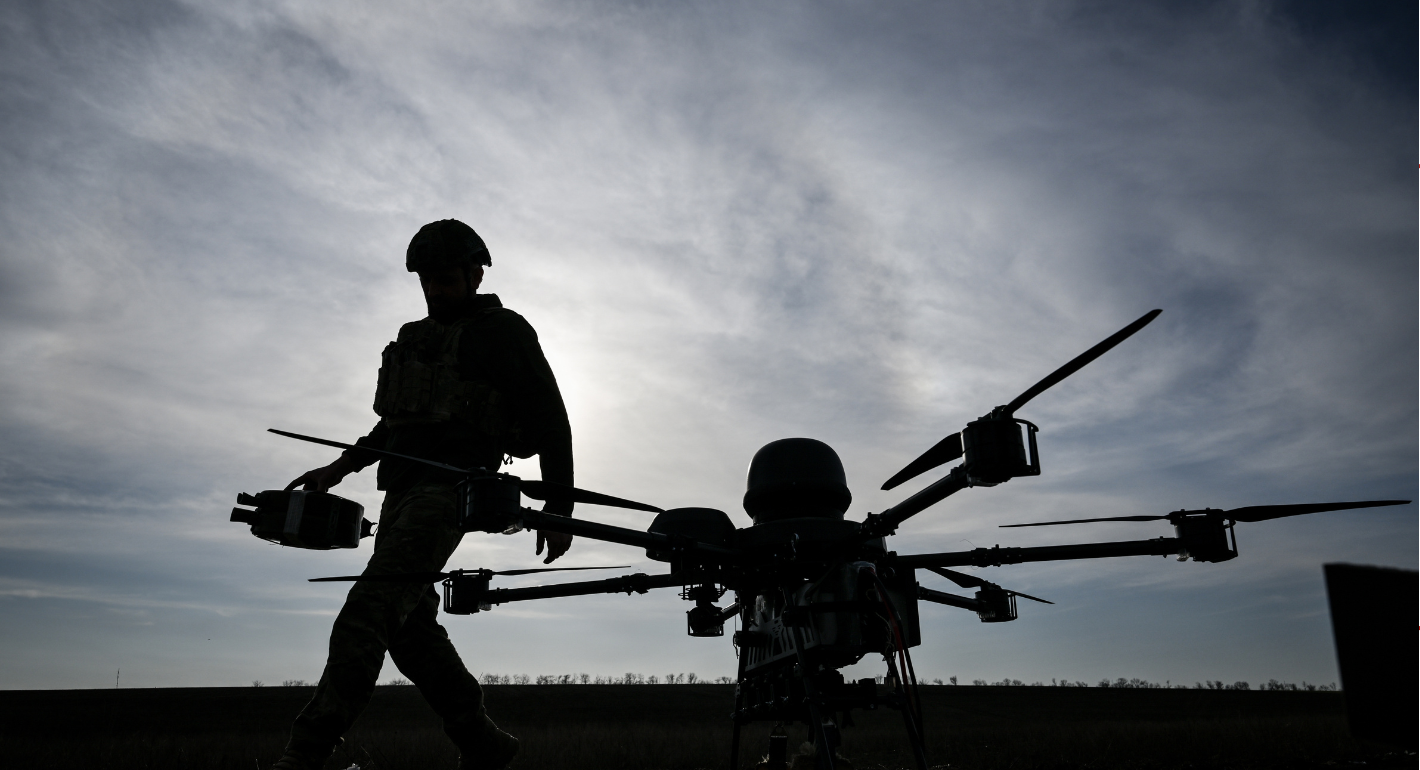
Defense tech innovations will be at the heart of Europe’s new security strategy. But so far, Brussels has been making moves without a broader plan, undermining readiness and credibility.

Raluca Csernatoni

When the U.S.-Iran memorandum of understanding was announced, the UK, France, Germany, and Italy declared their readiness to help demine the Strait of Hormuz and lift nuclear sanctions on Tehran. But does Europe need new tools to recover a diplomatic role?

Rym Momtaz, ed.
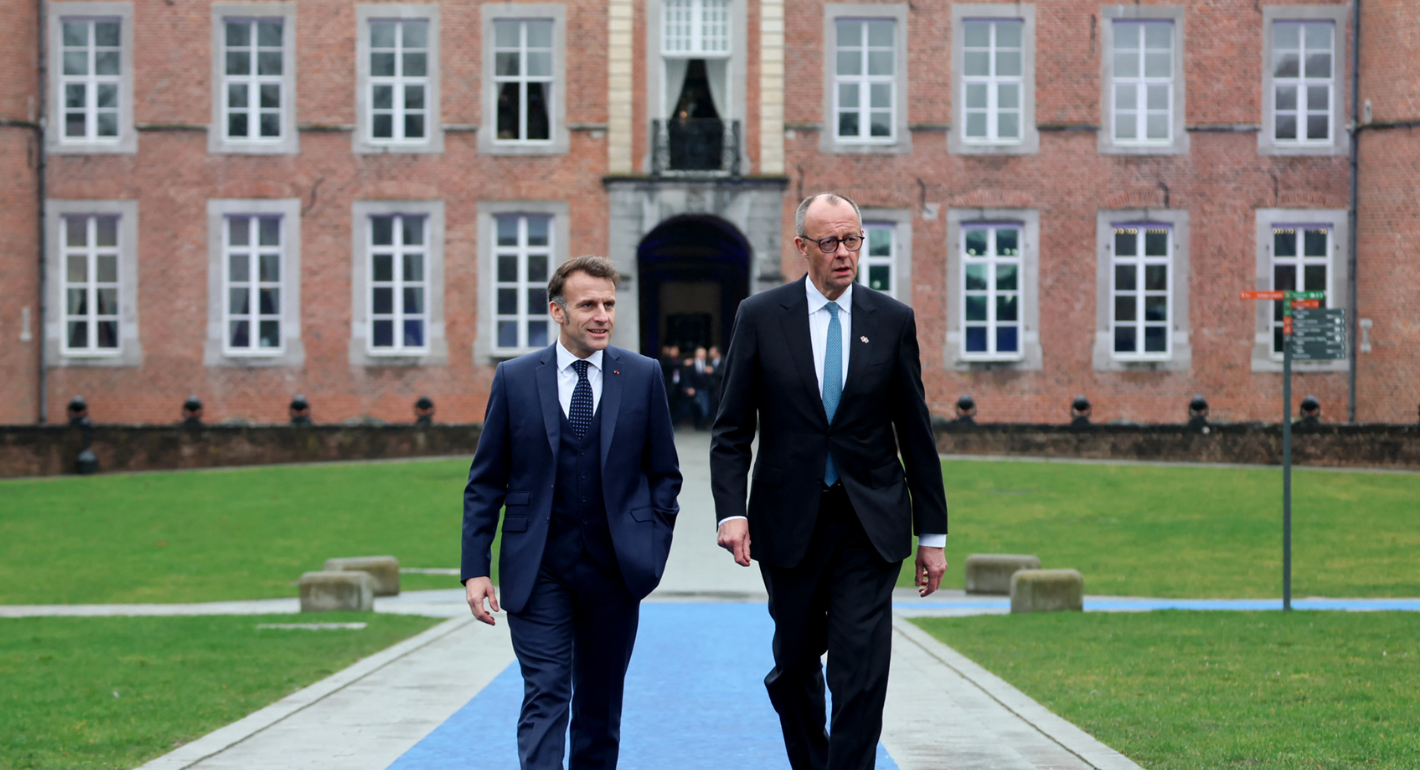
The Franco-German relationship is on the rocks again. But unlike previous moments of tension, the epochal changes on the world stage require that both step up investment in their bilateral ties.
Rym Momtaz
The EU is putting together a new security strategy to meet today’s myriad challenges. But for any proposal to be effective, the union needs to grapple with its identity and ambitions.

Pierre Vimont