

Commentary
Judy Dempsey
{
  "authors": [
    "Judy Dempsey"
  ],
  "type": "commentary",
  "blog": "Strategic Europe",
  "centerAffiliationAll": "",
  "centers": [
    "Carnegie Endowment for International Peace",
    "Carnegie Europe"
  ],
  "collections": [],
  "englishNewsletterAll": "",
  "nonEnglishNewsletterAll": "",
  "primaryCenter": "Carnegie Europe",
  "programAffiliation": "",
  "programs": [],
  "projects": [],
  "regions": [
    "Europe"
  ],
  "topics": [
    "Climate Change",
    "EU"
  ]
}
Source: Getty
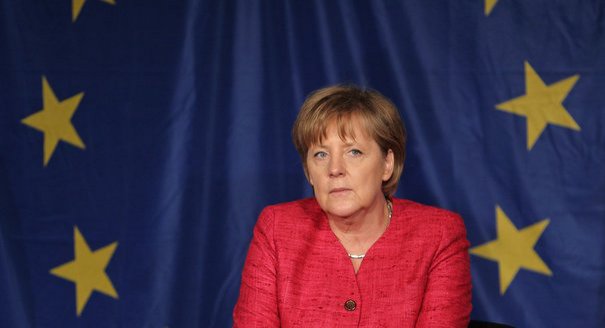
The countdown to Angela Merkel’s re-election as German chancellor for a third term has begun.
The countdown to Angela Merkel’s re-election as German chancellor for a third term has begun. On January 20th, voters go to the polls in the important north-western state of Lower Saxony. The outcome there is seen as a bellwether for the federal elections due in September.
The Lower Saxony elections are so important for Merkel and for her Social Democratic opponent, Peer Steinbrück, a former federal finance minister, that both politicians this past week held rallies there. There is much at stake for Europe, too.
The outcome of this regional election will reflect something of the public’s attitude towards the euro crisis and Europe’s future. So far, Merkel has been reluctant to tell voters about her views on where the EU should go. Instead, she has focused on her record in creating jobs, Germany being one of the few European countries to be spared a rise in unemployment.
Yet that might not be enough for Merkel’s center-right coalition of Christian Democrats and Free Democrats to hold on to power in Lower Saxony. Opinion polls show the Social Democrats and Greens leading. If they win in Lower Saxony, we can expect a ferocious federal election campaign between herself and Steinbrück.
Steinbrück was Merkel’s finance minister during her first government (2005-2009) when she shared power with the Social Democrats. From all accounts, they got on very well.
These days, Merkel doesn’t even mention Steinbrück by name. She doesn’t have to, either. Her challenger, as if he was not trailing far behind in the polls already, has been attracting bad press. Always something of a loose cannon, Steinbrück is now hitting the headlines with ill-judged remarks ranging from saying that Merkel has benefited from being a woman, to calling for the German Chancellor to be paid as much as bank directors.
So it is not Steinbrück who is Merkel’s biggest headache. It is her coalition partners, the Free Democrats who have been paralyzed by infighting.
Polls show that the public is fed up with this party obsessed with personalities; a party that has walked away from its values of reducing the role of the state and strengthening individual freedoms and rights; and a party whose economic policies have unashamedly favored the business lobbies.
If opinion polls are proved right, the Free Democrats might not even win five percent of the vote in Lower Saxony, the minimum to enter the parliament. And the same might be true, nine months later, for federal elections, possibly forcing Merkel into another grand coalition with the Social Democrats.
Between now and then, Merkel will have to balance her role as leader of Europe’s biggest and most successful economy, with her need to keep public opinion on her side.
So far, at least when it comes to German opinion polls, Merkel’s leadership and popularity are unassailable.
Voters like the way she has insisted on stringent cutbacks in those eurozone countries that have received loan guarantees— after all, it is the German taxpayer who will have to cover a large part of those loans in case of default. And as long as inflation remains low, voters here will not worry about the European Central Bank’s generous money and credit policy. But even beyond Merkel’s contribution to contain the euro crisis, Europe needs Germany.
It needs Berlin to shape a new strategic relationship with Russia, given that President Vladimir Putin will be in power for another five years. With her government now taking a much more critical stance towards the Kremlin, this is the time to build a strategic policy around Berlin’s tougher attitude.
Europe also needs Germany to influence the bloc’s energy policy, particularly since Merkel is committed to ending nuclear power by 2022.
Europe, too, needs Merkel to put pressure on Germany’s big gas energy companies to renegotiate their long-term contracts with Russia’s state-owned company Gazprom. Cheaper gas would benefit consumers and give Europe’s economy a boost.
Europe also needs German support on immigration issues as political and social developments on Europe’s southern and eastern flanks remain highly unpredictable.
Merkel, even if she is not a European visionary, at least has proven herself to be a safe hand as far as policy choices in Brussels are concerned. If she wins a third term, as seems likely now, it would not be bad news for Europe.

Nonresident Senior Fellow, Carnegie Europe
Judy Dempsey is a nonresident senior fellow at Carnegie Europe
Recent Work
Judy Dempsey
Judy Dempsey
Carnegie does not take institutional positions on public policy issues; the views represented herein are those of the author(s) and do not necessarily reflect the views of Carnegie, its staff, or its trustees.
Defense tech innovations will be at the heart of Europe’s new security strategy. But so far, Brussels has been making moves without a broader plan, undermining readiness and credibility.

Raluca Csernatoni
When the U.S.-Iran memorandum of understanding was announced, the UK, France, Germany, and Italy declared their readiness to help demine the Strait of Hormuz and lift nuclear sanctions on Tehran. But does Europe need new tools to recover a diplomatic role?

Rym Momtaz, ed.
The Franco-German relationship is on the rocks again. But unlike previous moments of tension, the epochal changes on the world stage require that both step up investment in their bilateral ties.
Rym Momtaz
The EU is putting together a new security strategy to meet today’s myriad challenges. But for any proposal to be effective, the union needs to grapple with its identity and ambitions.

Pierre Vimont
The EU’s new migration policy is not suited to today’s realities. With climate change increasingly becoming a driver of displacement, Europe needs to rethink its deterrence-focused approach.

Shana Tabak